52
Chapter 4
CHAPTER 4: OPERATION PROCEDURES
Theory Of Operation
Before discussing the specifics of the
Burford
®
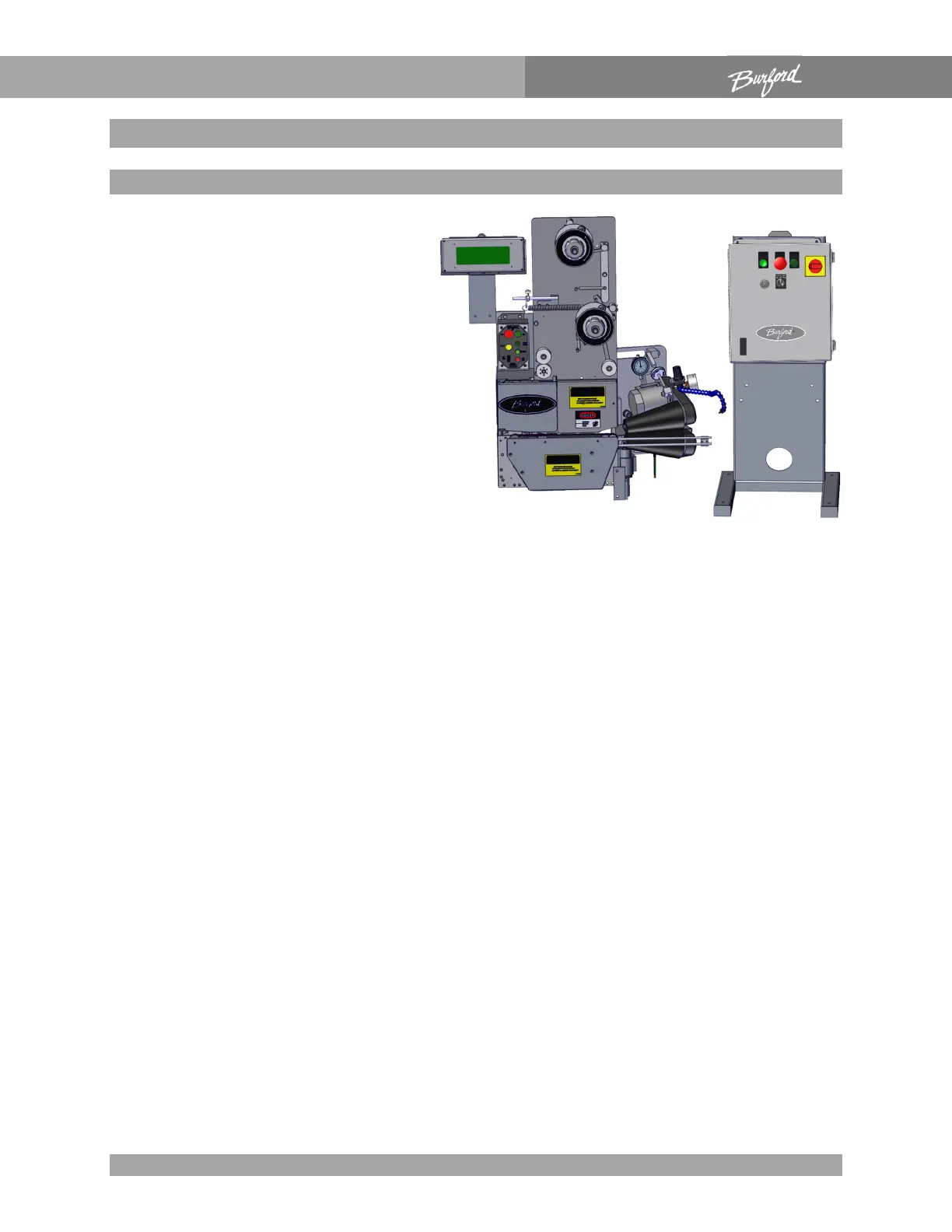
Model 2000/2100 Electronic
Servo Tyer, the overall operation of
the Servo Tyer will be described to
illustrate the principles of the tying
cycle. The Servo Tyer is designed to
gather and securely close the neck of
a plastic bag by twist tying it with a
piece of reinforced ribbon.
The plastic bag first encounters a set
of gathering brushes, which are
turning at a constant speed, that assist
in flattening and straightening the bag
neck. The brushes gently pull the bag
neck and product against the inlet guide and main plate of the Servo Tyer. As the bag
neck exits the brushes it is directed towards the gathering belts. The gathering belts,
which move at a selectable continuous rate of speed, transport the bag neck towards the
tying position. As it approaches the tying position, the bag neck depresses the bag switch,
which readies the electronics for the start of the tie cycle. When the bag neck releases
the bag switch, the Servo Tyer controller waits for a short time before commencing the tie
cycle. This delay allows the bag neck to gather against the ribbon for a more secure tie.
Then the needle begins to move downward and allows the spring-loaded bag stop to
engage, thereby restraining the end of the bag neck. The needle continues to rotate and
wraps the ribbon around the neck of the bag. As the needle nears its full stroke, the twister
hook begins rotating. The twister hook catches the end of the ribbon held in the holder
shear, and the part of the ribbon that is wrapped around the bag neck by the needle. As
the hook twists the ribbon together, the holder shear transfers to cut and hold the part of
the ribbon held by the needle, and simultaneously releases the end of the twist tie. The
twister hook completes its selectable four or five rotations while the needle returns to the
home position, releasing the bag stop. After the twister hook has tightly secured the neck
of the bag, it reverses rotation for one revolution to discharge the tie from the throat of the
hook. The tied package is then carried away by the conveyor.


 To Next Page