94
Chapter 6
CHAPTER 6: COMMUNICATIONS
Terminal Option
The Servo Tyer is capable of communicating with a terminal over the serial port located
on the edge of the CPU board. The terminal must be connected to the CPU using a serial
cable. Using the terminal, the Servo Tyer can be queried as to its status and controlled
manually for troubleshooting. This terminal is not required for normal operation.
Communicating With the Controller
The Burford
®
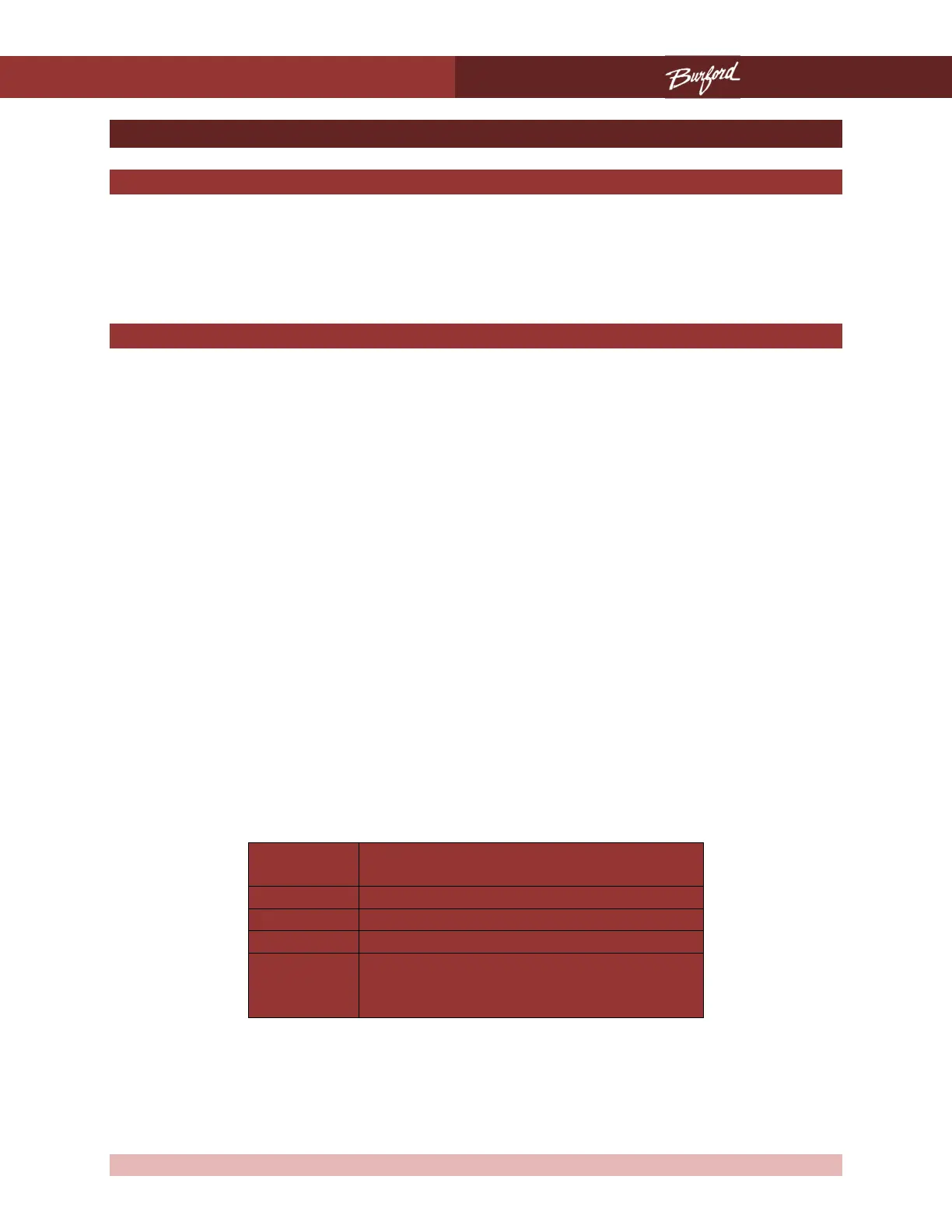
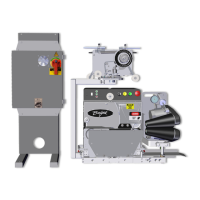
Model 2000/2100 Twist Servo Tyer has the ability to communicate with a
terminal or a personal computer, which is running a terminal emulation program. When
the Servo Tyer controller detects an unusual situation or an error, the controller sends
diagnostic information to the terminal through its serial port. In addition, the Servo Tyer
controller maintains a record of problems that have occurred. This information can be
called up later and displayed on screen. It is also possible to capture this information into
a text file on the PC. This text file can be viewed or printed at a later time. For these
reasons, it is sometimes desirable to communicate with the Servo Tyer controller.
This section is intended to provide the basic information needed to communicate with the
Servo Tyer. It is assumed that you are using a PC and that you have experience with the
basic operation of a PC. A communications program and, a proper, cable for connection
between the PC and Servo Tyer serial ports will also be needed.
Before a PC can communicate with the Servo Tyer controller, the PC must be running a
terminal emulation program. Many different programs could be used, but this document
will concentrate on two options, the Burford
®
Terminal program, and the terminal program
in Microsoft Windows. No matter what program is being used, it must be configured with
the proper settings for the Burford
®
Servo Tyer listed below.
Baud Rate
4800 (9600 if using Burford
®
Servo Tyer
Prom Version 1.14 or earlier)
Com Port
Choose whichever serial port on the PC
you will be using. This will usually be


 To Next Page