116 User’s Manual INNOMAR Parametric Sub-Bottom Profilers / SESWIN
116 Innomar Technologie GmbH (2023-01)
8.1 Hardware Handling and Maintenance
8.1.1 Transducer
For transducer handling and installation, see section 3.2 on page 26.
Check the transducer and cable before using.
Do not use a transducer with damaged face or damaged cable!
The transducer should be clean while using. If the transducer is situated in water for a
longer time without using it, please check if the active area of the transducer is clean
before using the system again. The transducer can be damaged if you work with it and
there are for instance mussels, seaweeds, filth or mud on the active area. In any case
there will be a high loss of the acoustical power!
Be careful during cleaning the active area of the transducer. Don’t use sharp tools.
The surface of the transducer must not be damaged! No paint, anti-fouling (if not
approved by INNOMAR, see next page), oil or grease should be on the active area of the
transducer.
Do not expose the active area of the transducer to strong sunlight for a longer period
since UV light affects the chemical and mechanical properties of the material used.
Avoid thermal stress (e.g. putting sun-heated transducers into cold water).
After usage rinse the transducer with fresh water and dry the transducer before storage.
If a transducer is placed into water for a longer period of time, use zinc anodes to
prevent corrosion.
If a transducer is used in tropic waters for a longer period, it is strongly recommended to
use an anti-fouling paint (also on mobile transducer installations) to prevent biofouling,
see section on hull-mounted transducers next page.
8.1.2 Transducer Visual Inspection
Before putting the transducer in store make sure it is cleaned, rinsed with fresh water and dried.
Please also check if the anti-shock foam within the transport box is dry. It is best to keep the
transport box open in store to have some air exchange.
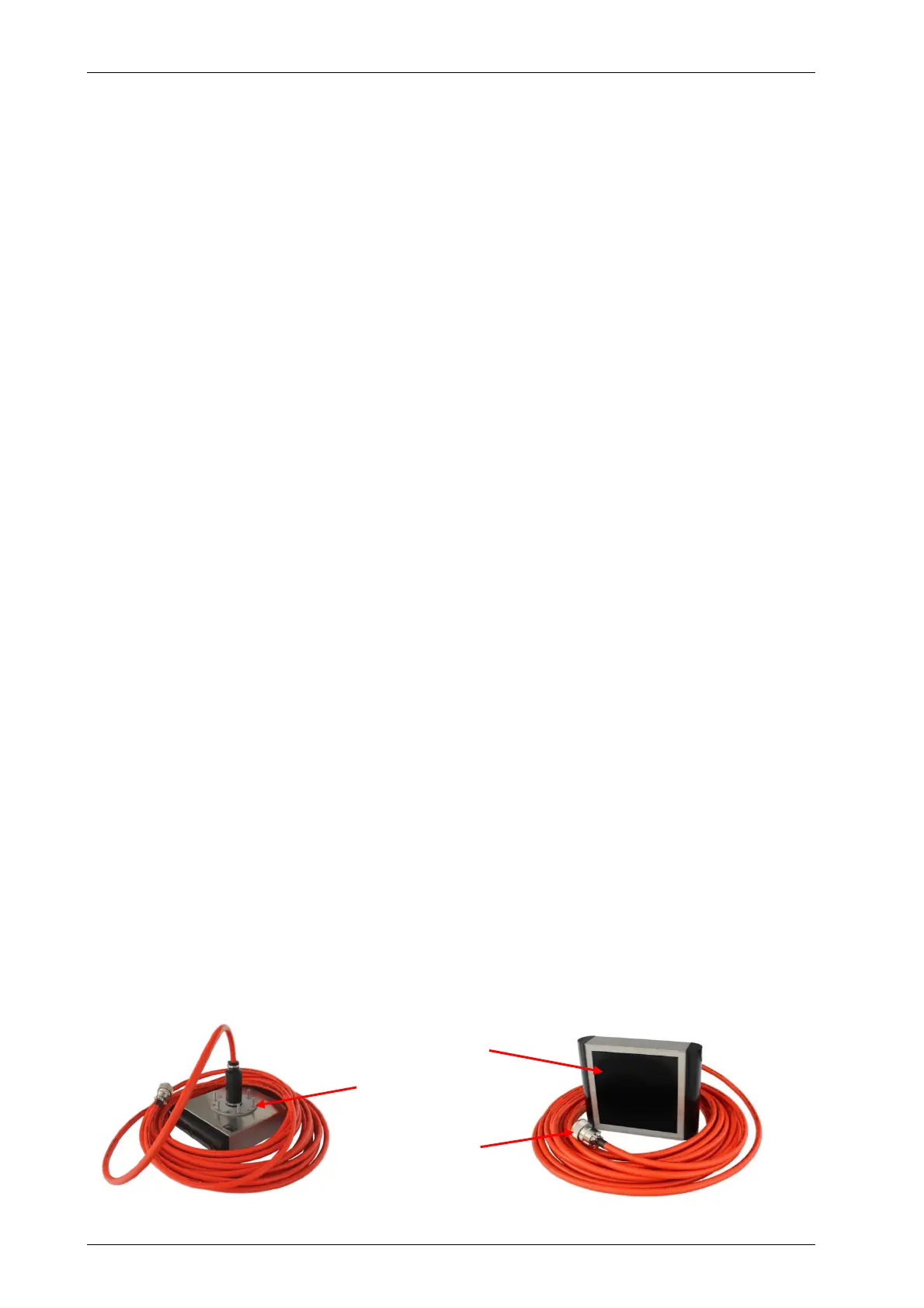
Before and after each survey the transducer should be visually checked for any damages:
Inspect the transducer for nicks, scratches and dents. Pay particular attention to the
transmitting face as impacts here can damage the internal elements.
Check also the cable for any damages. The transducer is operated at high voltages, a
damaged cable insulation might be lethal.
Check the connector contacts for corrosion and damages.
Check the transducer mounting bolts for damaged threads.
Check the rubber washers used on the bolts for vibration damping and replace missing
or damaged ones. Each bolt is equipped with two rubber washers, one steel washer and
one nut.
transmitting face
cable with plug
six mounting bolts



 To Next Page