71
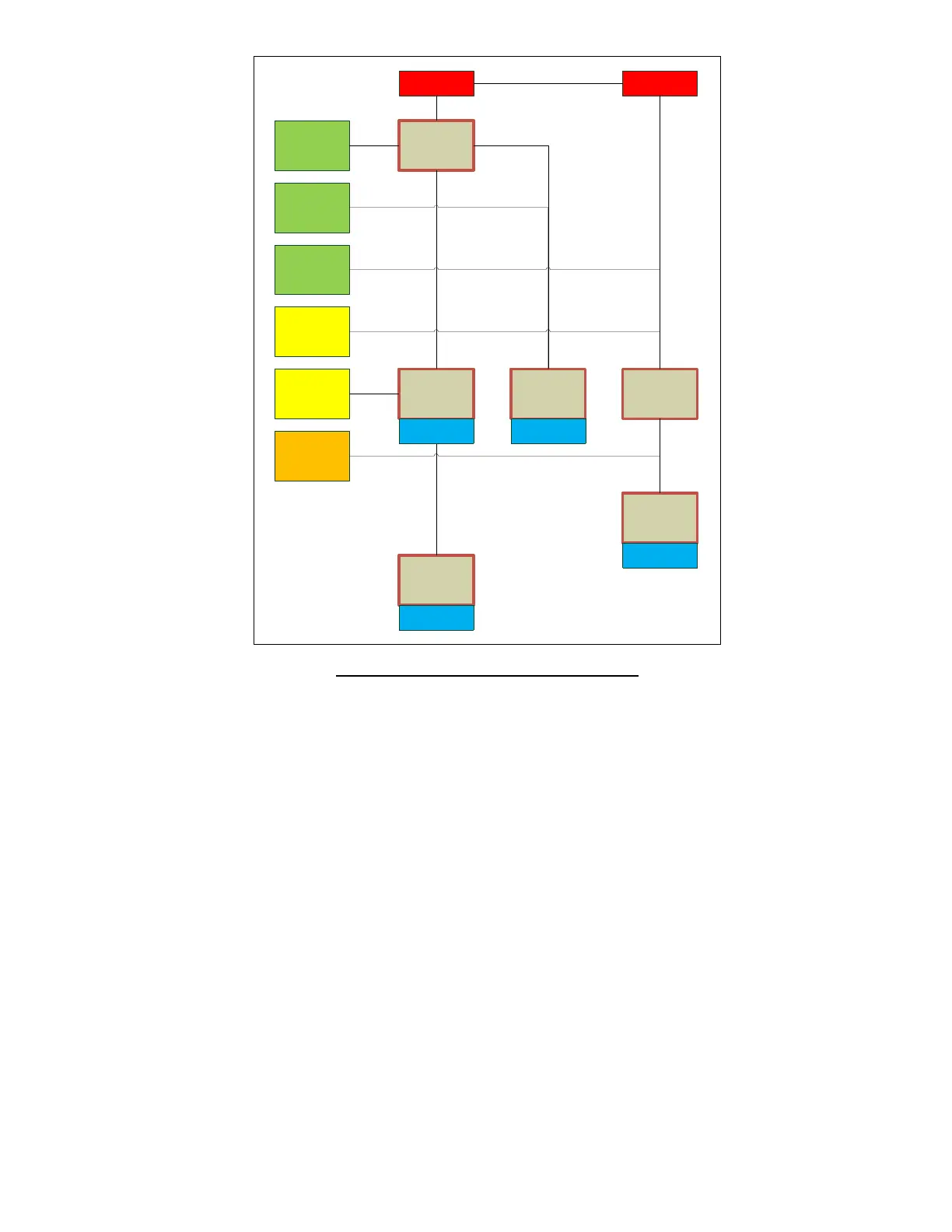
WHOLE BLOOD
SAMPLE
WHOLE BLOOD
SAMPLE
MIX DILUTION
IMPEDANCE
MEASUREMENT
+
LIGHT
ABSORBEANCE
DILUENT
LYSE
IMPEDANCE
MEASUREMENT
DILUENT
DILUENT
TEMPERATURE
CONTROLLED
INCUBATION
LYSE
LYSE2
OPTICAL
MEASUREMENT
OPTICAL
MEASUREMENT
TOTAL WBC, HGB RBC, PLT
4DIFF
BASO
Figure 45. ‘Abacus 5’ Measurement Process
When you present the sample tube and press the Start button, the ‘Abacus 5’ rotates the sample rotor and takes the
sample tube inside the analyzer. The piercing needle pierces the sample tube cap (if present) and aspirates
approximately 110 µL of primary blood sample. Blood sensors ensure that the primary blood sample is continuous
and free of major bubbles as it is moved to the shear valve. The shear valve separates the primary sample into
further samples of exact volumes of blood that are distributed to provide dilutions for the RBC, WBC, HGB and 5 Diff
population measurements. Lysing reagents are used to eliminate RBCs for dilutions that measure WBCs.
RBC/PLT and WBC are measured with impedance technology through 70 and 80 µm apertures respectively. Two
portions of the sample are used for determining a five subpopulation differential of WBC in two independent 4DIFF
and BASO measurements.
Sample results are displayed on the screen as the process is nearing completion. Results are stored in the internal
database and transmitted to an external LIS if configured to do so. The ‘Abacus 5’ performs a cleaning rinse of the
internal pneumatic components and prepares to measure the next sample.


 To Next Page