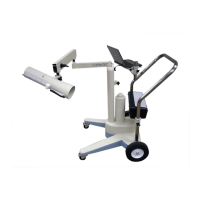
CAPINTEC, INC. CAPTUS
®
600
FUNCTIONAL DESCRIPTION
Thyroid Uptake
The CAPTUS
®
600 Thyroid Uptake / Well System is intended to be used by trained Nuclear
Medicine Technologists for performing Thyroid Uptake, Thyroid Bioassay, Wipe Test, Blood
Volume (with Cr-51 or I-125) Test, Shillings Test and RBC Survival Test.
Many of the Thyroid Uptake measurements are performed in exactly the same way at a
particular institution for a certain set of patients. To take advantage of this fact, the CAPTUS
®
600 Thyroid Uptake System is organized using the concept of protocols.
By using protocols, a set of measurement and data inputs can be defined in advance of
patient requirements. At the time of measurements, the system will prompt the technician for
the necessary patient data, dose information, dose administration times, and prompt the user
for which measurements are to be taken.
Upon taking the measurements, the CAPTUS
®
600
will perform the uptake calculations,
including any decay correction.
The basic concept of the Thyroid Uptake measurement with the CAPTUS
®
600
remains the
same for any protocol used. The uptake of the thyroid gland is equal to some portion of a
dose previously administered to the patient. However, there are three methods of calculation
to choose from.
Thyroid Uptake Nuclides
Thyroid Uptake Studies may be performed on the CAPTUS
®
600 using I123, I131 or Tc99m.
The nuclide is chosen when entering the protocol.
Pre-Dose Measurement
When a patient has been given the same nuclide that will be used in the Thyroid Uptake
Study, a more accurate result can be obtained by measuring the neck and thigh before the
dose is given. The result of this measurement will be subtracted from the actual neck and
thigh measurements.
The option to perform this Pre-Dose Measurement is chosen as part of the protocol.
Choosing this option does not force you to perform the measurement. It can be skipped if it is
not necessary.
Thyroid Uptake Protocols
The calculation method is chosen when the protocol is entered. The three calculation
methods follow.
November 07 FUNCTIONAL & TECHNICAL DESCRIPTION 2-7


 To Next Page