GENERAL INFORMATION
- 28 -
install a bearing.
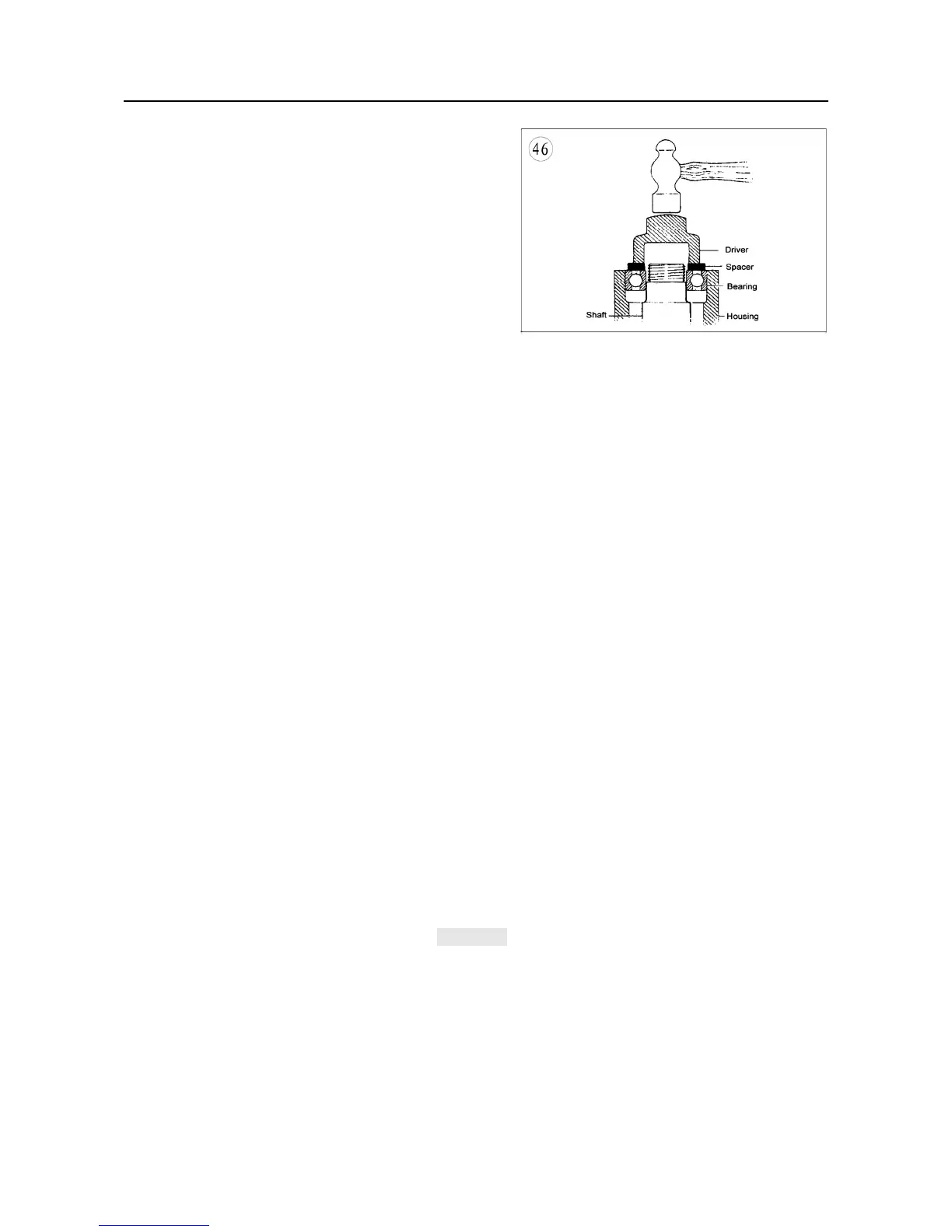
3. Step 1 describes how to install a bearing in a
case half or over a shaft However, when installing
a bearing over a shaft and into the housing at the
same time, a tight fit is required for both outer and
inner bearing races. In this situation, install a
spacer underneath the driver tool so that pressure
is applied evenly across both races. See Figure
46. If the outer race is not supported as shown,
the balls will push against the outer bearing race
and damage it
Interference fit
1. Follow this procedure when installing a bearing over a shaft. When a tight fit is required, the
bearing inside diameter is smaller than the shaft. In this case. Driving the bearing on the shaft
using normal methods may cause bearing damage. Instead, heat the bearing before installation.
Note the following:
a. Secure the shaft so it is ready for bearing installation.
b. Clean all residues from the bearing surface of the shaft. Remove burrs with a file or
sandpaper.
c. Fill a suitable pot or beaker with clean mineral oil. Place a thermometer rated above
120℃(248°F) in the oil. Support the thermometer so it does not rest on the bottom or side
of the pot.
d. Remove the bearing from its wrapper and secure it with a piece of heavy wire bent to hold it
in the pot. Hang the bearing in the pot so it does not touch the bottom or sides of the pot.
e. Turn the heat on and monitor the thermometer. When the oil temperature rises to
approximately 120℃(248°F), remove the bearing from the pot and quickly install it. If
necessary, place a socket on the inner bearing race and tap the bearing into place. As the
bearing chills, it will tighten on the shaft, so install it quickly. Make sure the bearing is
installed completely.
2. Follow this step when installing a bearing in a housing. Bearings are general installed in a housing
with a slight interference fit Driving the bearing into the housing using normal methods may
damage the housing or cause bearing damage. Instead, heat the housing before the bearing is
installed. Note the following:
CAUTION
Before heating the housing in this procedure, wash
the housing thoroughly with detergent and water.
Rinse and rewash the cases as required to remove
all traces of oil and other chemical deposits
a. Heat the housing to approximately 100℃ (212°F) in an oven or on a hot plate. An easy way to
check that it is the proper temperature is to place tiny drops of water on the housing; if they
sizzle and evaporate immediately, the temperature is correct. Heat only one housing at a time.


 To Next Page