EasyManua.ls Logo

LSIS SV-IS7 - Input and Output Specifications (200 V & 400 V Classes)

LSIS SV-IS7
255 pages
Print Icon
To Next Page IconTo Next Page
To Previous Page IconTo Previous Page
Loading...
Technical Specifications
Technical
Specifications
7
2
Technical Specifications
2.1
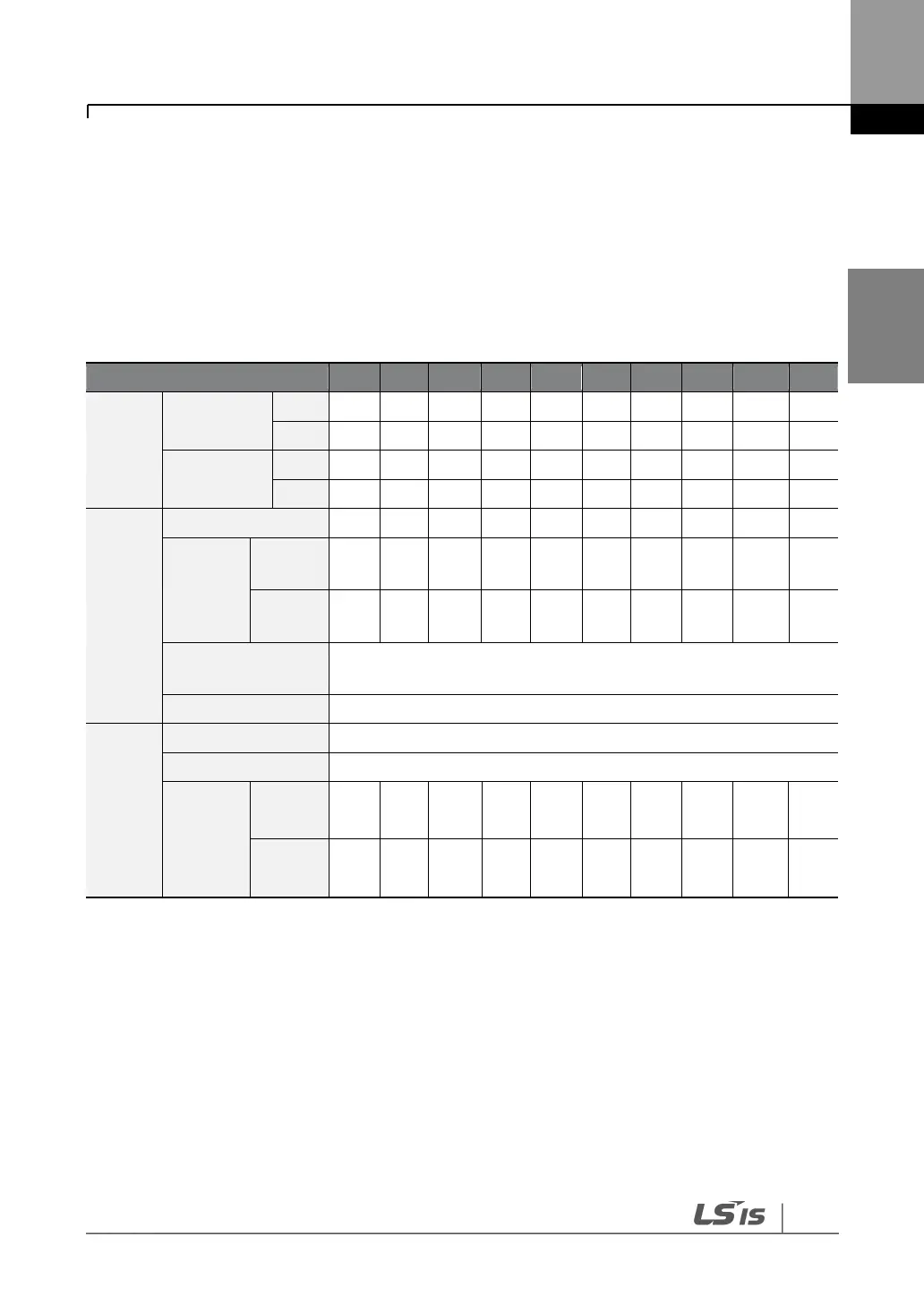
Input and Output Specifications 200 V Class (0.75–
22 kW)
Model SV xxx iS7–2x
0008
0015
0022
0037
0055
0075
0110
0150
0185
0220
Applied
Motor
Normal load
HP
2
3
5
7.5
10
15
20
25
30
40
kW
1.5
2.2
3.7
5.5
7.5
11
15
18.5
22
30
Heavy load
HP
1
2
3
5
7.5
10
15
20
25
30
kW
0.75
1.5
2.2
3.7
5.5
7.5
11
15
18.5
22
Rated
output
Rated Capacity (kVA)
1.9
3.0
4.5
6.1
9.1
12.2
17.5
22.9
28.2
33.5
Rated
Current
(A)
Normal
load
8
12
16
24
32
46
60
74
88
124
Heavy
load
5
8
12
16
24
32
46
60
74
88
Output Frequency
0–400 Hz (Sensorless-1: 0–300 Hz, Sensorless-2, Vector: 0.1–120
Hz)
Output Voltage (V)
3-Phase 200–230 V
Rated
input
Working Voltage (V)
3-Phase 200–230 VAC (-15%–+10%)
Input Frequency
50–60 Hz (5%)
Rated
Current
(A)
Normal
load
6.8
10.6
14.9
21.3
28.6
41.2
54.7
69.7
82.9
116.1
Heavy
load
4.3
6.9
11.2
14.9
22.1
28.6
44.3
55.9
70.8
85.3
• Only the heavy duty ratings apply to model types without a built-in DC resistor (NON-DCR).
• The standard used for 200 V inverters is based on a 220 V supply voltage.
• The rated output current is limited based on the carrier frequency set at CON-04.
• The output frequency is limited to 0–300 Hz if DRV-09 (control mode) is set to “3
(Sensorless-1),” and to 0–120 Hz if DRV-09 (control mode) is set to “4 (Sensorless-3).”
• The maximum output voltage cannot exceed the input voltage of the power source.

Table of Contents