268
Polyend Tracker+ Manual
NOTES
10.3 Master Delay
Delay is one of the two send effects. A send effect basically routes an
adjustable amount of audio in parallel to its main signal path and is sent to
a common audio effect. In this case delay. This delay affected audio is then
returned back to the main audio path. The effect itself is a common
function, managing several send / return signals. Any delay parameter
adjustments will therefore also affect other send signals. The ‘Send /
Return’ conguration is a common application for delay effects.
What is a delay effect?
A delay is a common production effect used to delay an incoming signal to
the output. While this is a simple principle there are many effects that use
delay as a foundation. Some examples are echo (creating dened repeats)
and chorus (short delay taps to give a thicker rather than echo style feel) as
well as delay types such as ping-pong delay spreading the delay points
across the stereo eld left to right and slap-back delay emulating old tape
delays which are used successfully to thicken vocals.
Delay is a time based effect and synchronisation (or not) with the track
tempo should also be considered depending on the output required.
▌ ACCESSING MASTER DELAY PARAMETERS
1. Press [Master] to select master section. Press again if needed, until the
‘Master’ Page 1/3 is displayed.
2. Press [Delay], 3
rd
Screen button.
3. The six delay parameters are presented on the master delay page.
4. Press [Back], 8
th
Screen button to return to the master page.
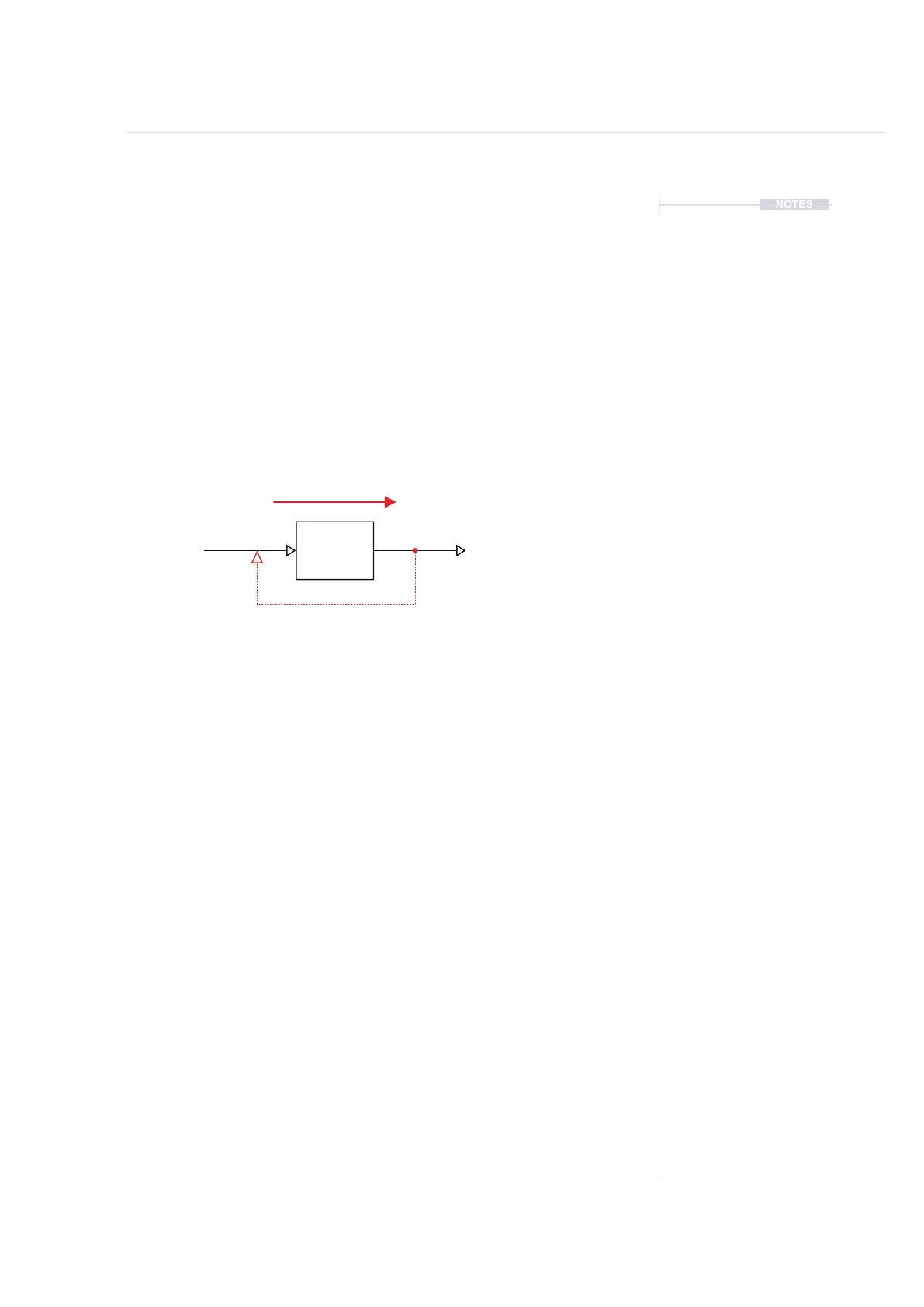
Input Output
Delay Time
Time delay between input and output.
Connecting the output to the input creates feedback
and increases the delay ‘events’.
Delay Line
Master Effects
10


 To Next Page