275
Polyend Tracker+ Manual
NOTES
10.7 EQ
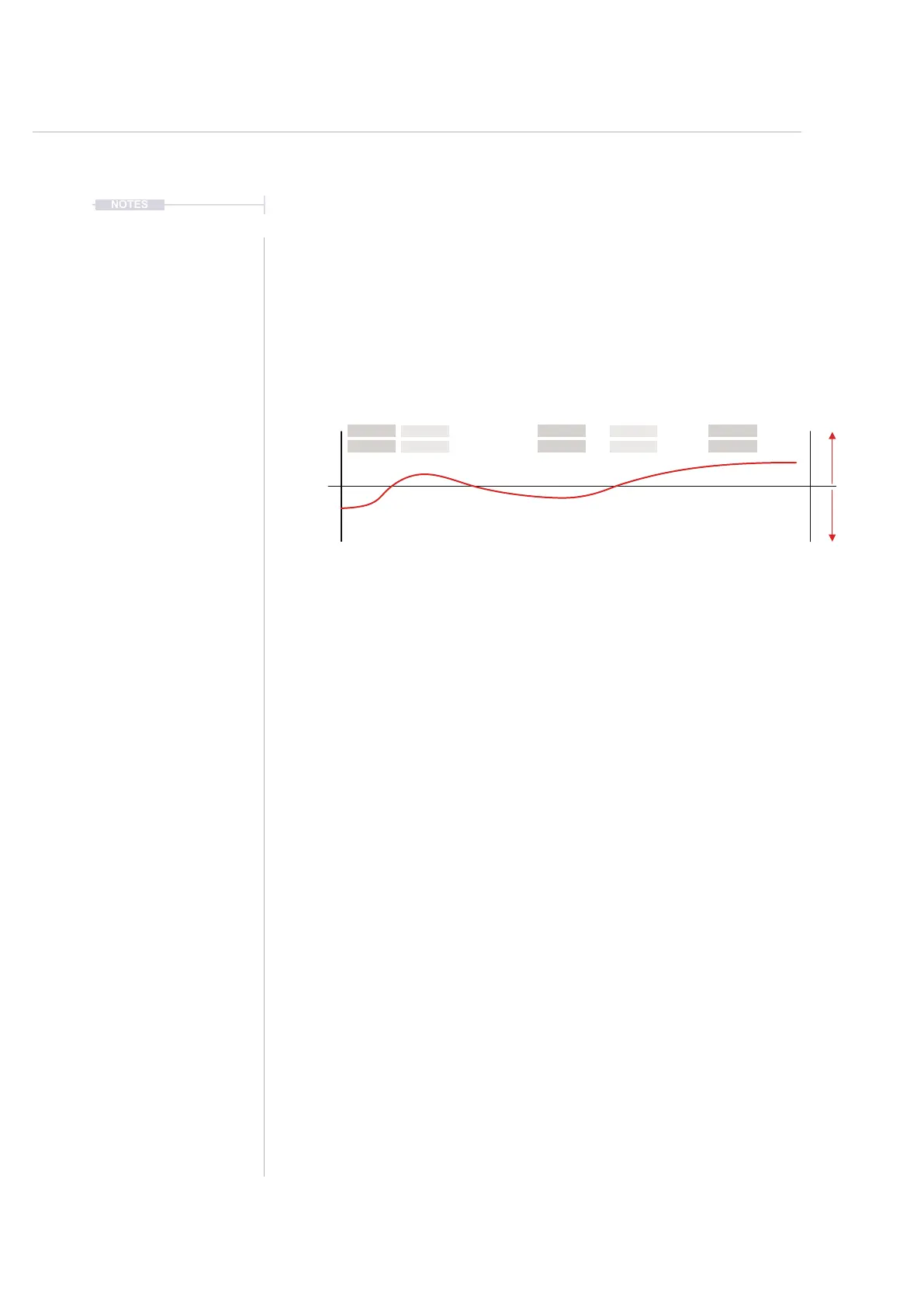
Equalization, also called EQ, is an effect which allows the adjustment of
specic frequency bands to shape the sound spectrum. This can adjust the
tone and have an audible creative effect for sound design.
What is a EQ?
An EQ is set up with a number of frequency bands. Many models have
adjustable frequency, width of band and the ability to boost or attenuate at
the given frequency. Tracker’s EQ is the last master effect in the chain and
has 5 xed frequency bands.
The adjustment is based on a dB Boost or Attenuation with a range of -
12dB to +12dB. A setting of 0.00dB across the range mans no EQ is
applied and the audio will be unaffected.
A normal human hearing range is 20Hz to 20kHz. This is the range an EQ
therefore operates with specic ranges affecting sound elements. Some
examples are:-
• Vocal sibilance occurs around 3-7kHz. Try cutting at 3kHz or 9.9kHz
to de-ess and remove any stand out ‘S’ elements.
• Mic rumble can be removed around 70-150Hz.
• Boost around 9kHz to give a sound more ‘air’ and brilliance.
• A cut at 1kHz can help vocals by removing ‘honkiness’
• Cut at 300Hz to remove muddiness
• Boost at 115Hz to add warmth.
Band 1
115 Hz
Band 3
990 Hz
Band 5
9900 Hz
Band 2
330 Hz
Band 4
3000 Hz
Fixed frequency bands, adjustable +/-12dB
Normal human hearing is in the range of 20Hz - 20KHz
20Hz
-12dB
0dB
+12dB
20KHz
BoostAttenuate
12KHz200Hz 500Hz 800Hz 1KHz 5KHz 8KHz
Master Effects
10


 To Next Page