Operating Instructions Model 100E Instruction Manual
102 045150102 Rev XB1
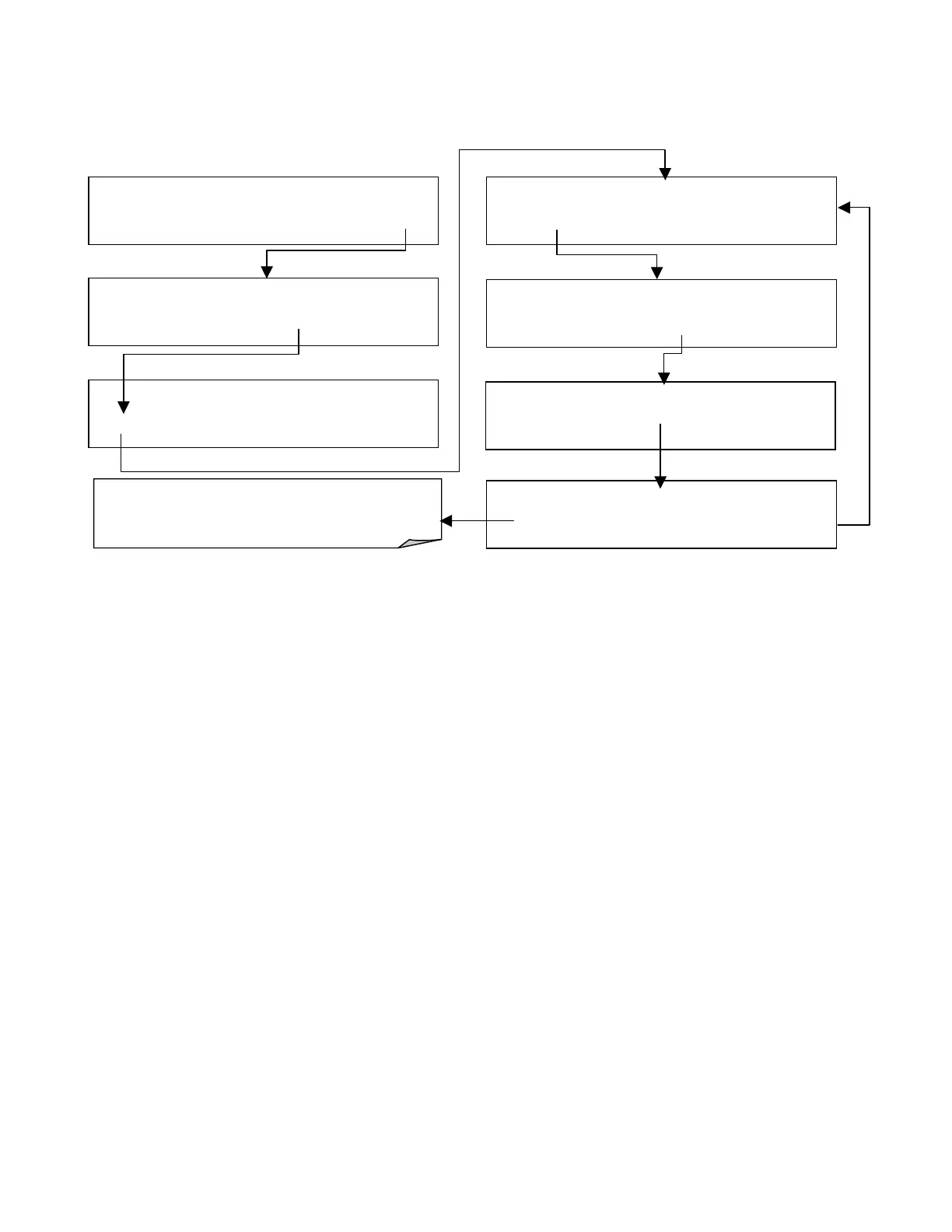
Step three in the configuration process is to restart the pass-through mode for normal
operation.
SETUP X.X
PRIMARY SETUP MENU
CFG DAS RNGE PASS CLK
MORE
EXIT
SETUP X.X
SECONDARY SETUP MENU
COMM
VARS DIAG EXIT
SAMPLE* RANGE = 500.000 PPB SO2 =X.XXX
< TST TST > CAL
SETUP
ETHERNET STOPPED
SETUP X.X
COMMUNICATIONS MENU
ID
INET
COM1
COM2 EXIT
INTERNET CONFIGURATION
GTWY IP SNET PORT
STRT
STOP
EXIT
STOPPING ETHERNET
If the message
ETHERNET NOT STARTED
appears here, the Ethernet card either was already
in configuration mode or might not be responding.
6.10. Using the Data Acquisition System (iDAS)
The M100E analyzer contains a flexible and powerful, internal data acquisition system
(iDAS) that enables the analyzer to store concentration and calibration data as well as a
host of diagnostic parameters. The iDAS of the M100E can store up to about one million
data points, which can, depending on individual configurations, cover days, weeks or
months of valuable measurements. The data are stored in non-volatile memory and are
retained even when the instrument is powered off. Data are stored in plain text format
for easy retrieval and use in common data analysis programs (such as spreadsheet-type
programs).
The iDAS is designed to be flexible, users have full control over the type, length and
reporting time of the data. The iDAS permits users to access stored data through the
instrument’s front panel or its communication ports. Using APICOM, data can even be
retrieved automatically to a remote computer for further processing.
The principal use of the iDAS is logging data for trend analysis and predictive diagnostics,
which can assist in identifying possible problems before they affect the functionality of
the analyzer. The secondary use is for data analysis, documentation and archival in
electronic format.
To support the iDAS functionality, T-API offers APICOM, a program that provides a visual
interface for remote or local setup, configuration and data retrieval of the iDAS (Section
6.10). The APICOM manual, which is included with the program, contains a more detailed
description of the iDAS structure and configuration, which is briefly described in this
section.



 To Next Page