Model 100E Instruction Manual Theory Of Operation
045150102 Rev XB1 195
rejection, but poor response times. Conversely shorter filter lengths result in poor signal
to noise rejection, but quicker response times.
10.7.2. Calibration - Slope and Offset
Calibration of the analyzer is performed exclusively in software. During instrument
calibration (Chapters 7 and 8) the user enters expected values for zero and span through
the front panel keypad and commands the instrument to make readings of sample gases
with know concentrations of SO
2
. The readings taken are adjusted, linearized, and
compared to the expected values as input. With this information the software computes
values for instrument both slope and offset and stores these values in memory for use in
calculating the SO
2
concentration of the sample gas.
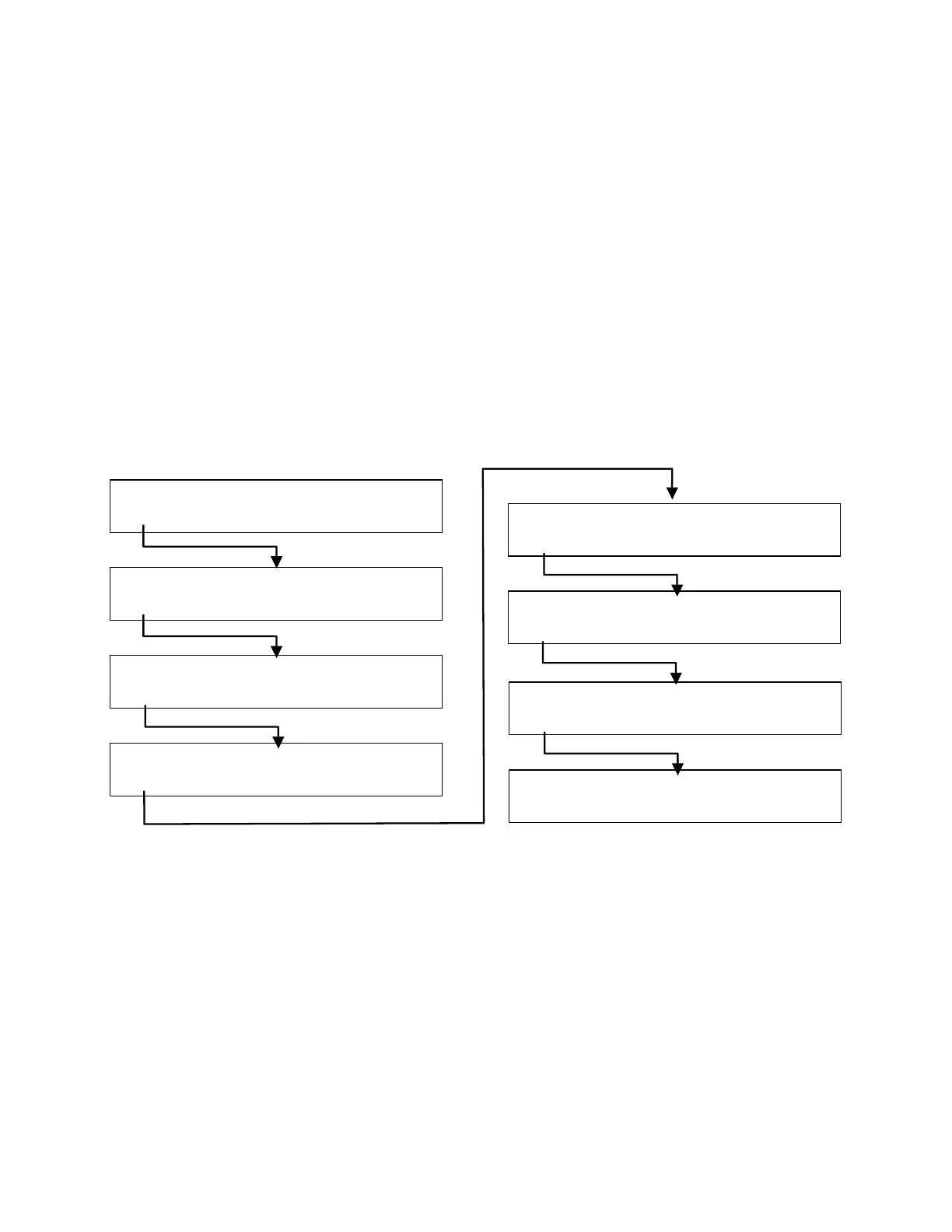
Instrument slope and offset values recorded during the last calibration can be viewed by
pressing the following keystroke sequence
SAMPLE RANGE = 500.000 PPB SO2 = X.XX
< TST
TST > CAL SETUP
SAMPLE
TIME = HH:MM:SS
SO2 = X.XX
< TST
TST > CAL SETUP
SAMPLE PMT TEMP=0.0C SO2 = X.XX
< TST
TST > CAL SETUP
SAMPLE BOX TEMP=0.0C SO2 = X.XX
< TST TST > CAL SETUP
SAMPLE RCELL TEMP=0.0C SO2 = X.XX
< TST
TST > CAL SETUP
SAMPLE HVPS 553 VOLTS SO2 = X.XX
< TST TST > CAL SETUP
SAMPLE OFFSET=XX.X MV SO2 = X.XX
< TST TST > CAL SETUP
SAMPLE
SLOPE=XXX
SO2 = X.XX
< TST
TST > CAL SETUP
10.7.3. Temperature and Pressure Compensation (TPC) Feature
As explained in the Theory of Operations (Section 10) changes in temperature can
significantly effect the amount of fluoresced UV light generated in the instruments
sample chamber. To negate this effect the Model 100E maintains the sample gas at a
stable, raised temperature.
Pressure changes can also have a noticeable, if more subtle, effect on the SO
2
concentration calculation. To account for this, the Model 100E software includes a feature
which allows the instrument to compensation of the SO
2
calculations based on changes in
ambient pressure.



 To Next Page