DESCRIPTION AND OPERATION
Page 43
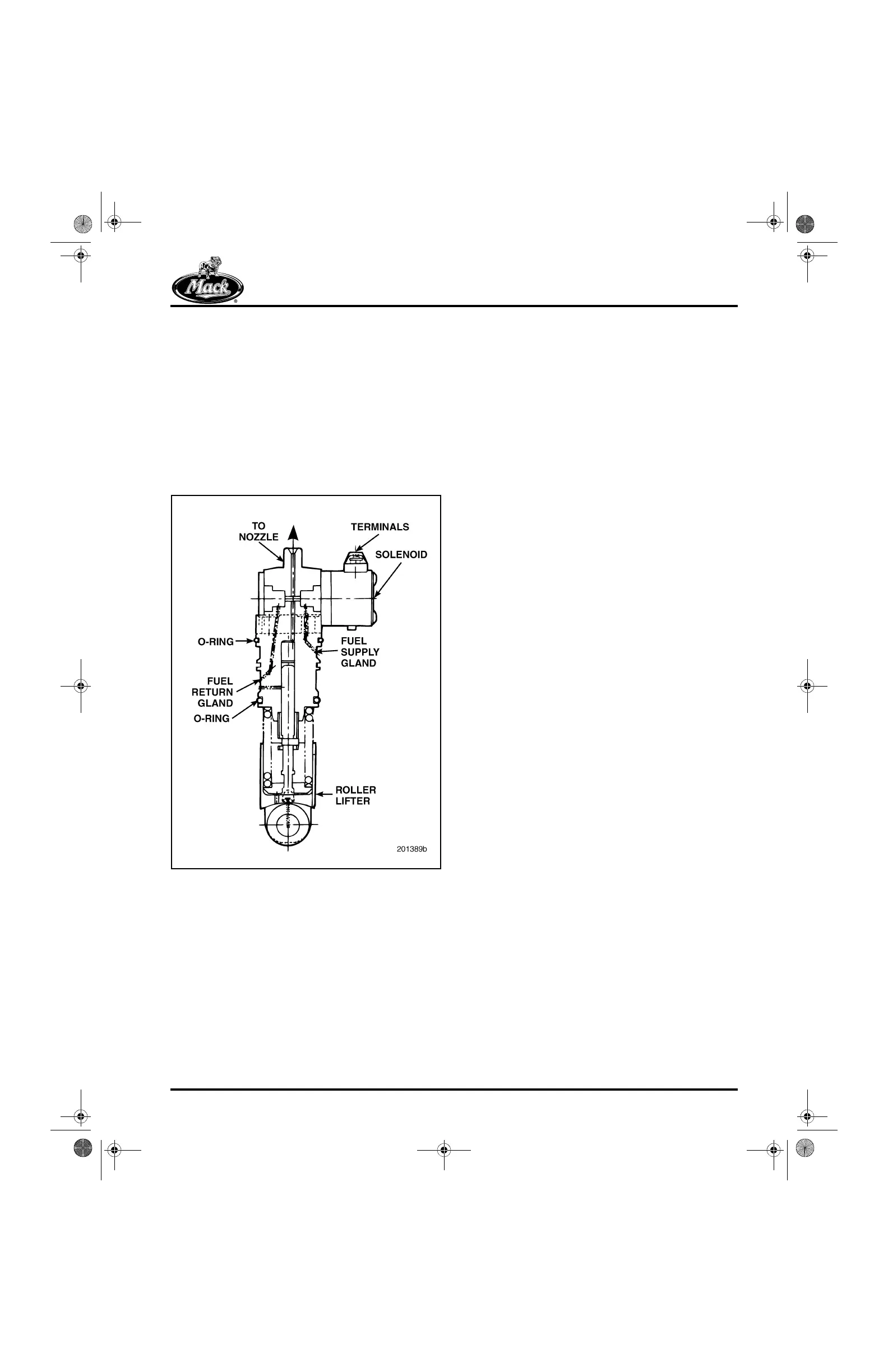
The EUP design does not include a helix on the
pump plunger. Fuel delivery is controlled entirely
by the solenoid valve. To start fuel delivery, the
V-MAC III control system allows current to flow to
the solenoid, closing the solenoid valve and
trapping fuel in the pump. As the plunger moves
upward, fuel is delivered through the
high-pressure line to the fuel-injector nozzle
assembly. When current flow to the solenoid is
stopped, the solenoid valve opens and fuel in the
pump then flows to the cylinder block fuel return
gallery. Refer to Figure 40.
40
Figure 40 — Electronic Unit Pump
The EUP system, using proven industry
technology, is well adapted to troubleshooting.
When required, an individual EUP can be
replaced with a minimum of downtime.
Because the unit pumps are located in close
proximity to the exhaust manifold, heat shields
(Figure 15) have been added to prevent
excessive heat from reaching the EUP
components. If removed during any maintenance
or repair operations, the heat shields must be
replaced to avoid damage to the sensitive
electronic components.
Engine Brake
The optional MACK PowerLeash™ and J-Tech™
engine brakes are vehicle-slowing devices that
allow the engine to act as an air compressor,
producing retarding horsepower that helps slow
the vehicle. The engine braking action is
accomplished through hydraulics. When the
engine brake is operated, a single exhaust valve
opens near top dead center of the compression
stroke, releasing high-pressure air out the
exhaust. Opening one exhaust valve, instead of
two, significantly reduces load to the engine
brake and the valve train without adversely
affecting braking power. Releasing compressed
air to the exhaust prevents the return of energy to
the engine piston on the expansion stroke. The
result is a net power loss from the engine, or
retarding horsepower, used to slow the vehicle.
MACK POWERLEASH™ ENGINE BRAKE
FEATURES AND OPERATION
The MACK PowerLeash™ engine brake has the
hydraulically controlled valve train components
integrated into the exhaust rocker arms. During
engine brake operation, one of the exhaust
valves in each cylinder is opened just as the
pistons approach top dead center of the
compression stroke, allowing the compressed
charge in each cylinder to be released and
vented to the engine’s exhaust system. The
energy of compression is then lost. This loss of
energy is what increases the braking effect of the
engine and allows the vehicle to slow down while
minimizing the need to use the service brakes to
slow the vehicle. The service brakes must always
be used to control the vehicle and bring the
vehicle to a complete stop.
5-111.bk Page 43 Monday, July 10, 2006 2:26 PM



 To Next Page