240
Polyend Tracker+ Manual
NOTES
Audio
8
Equalizer Frequency Ranges
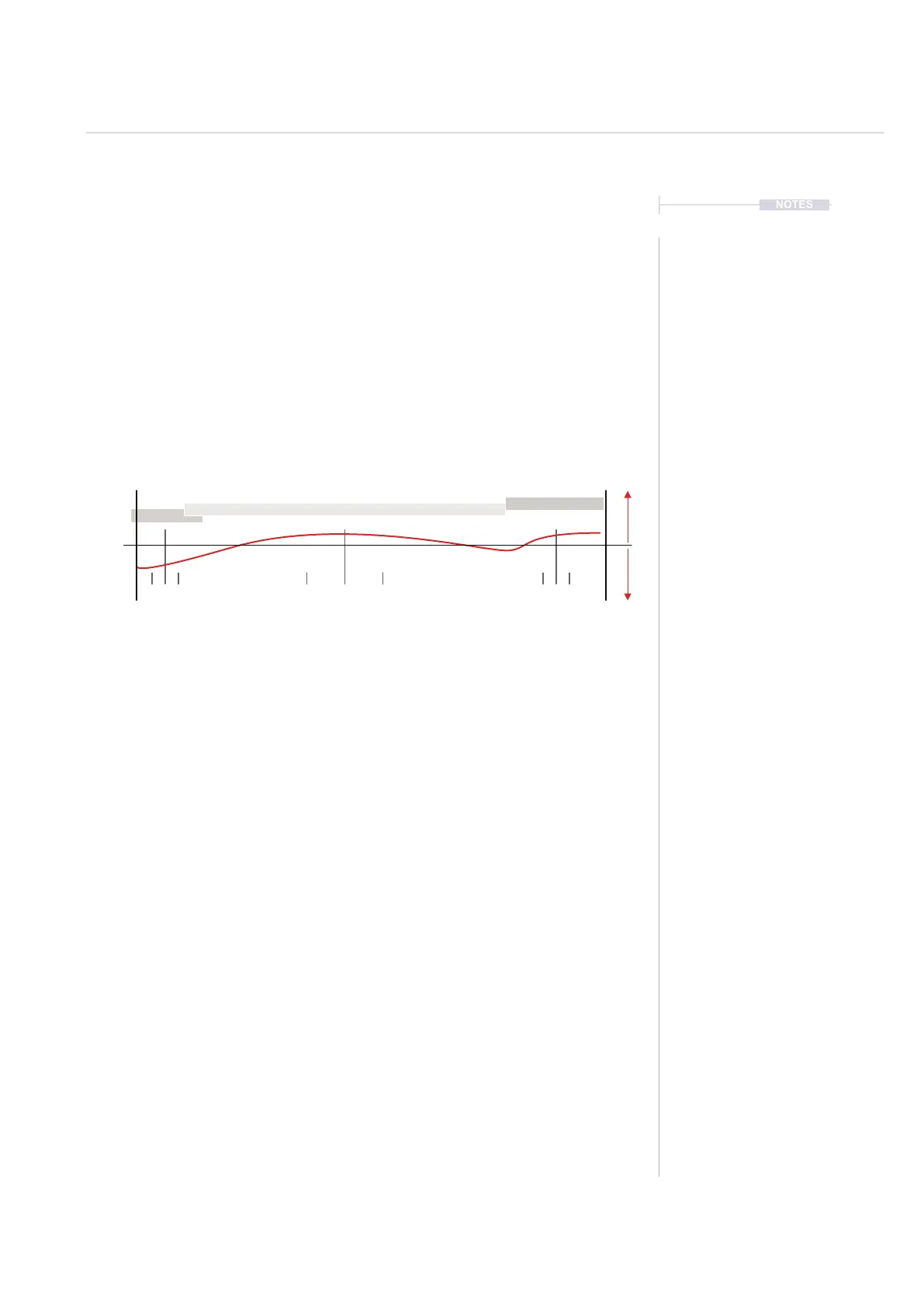
An equalizer can boost or attenuate frequencies across a range. The range
of normal human hearing considered in music production is 20Hz to 20kHz.
The character and tonal shape of a sound can be affected by the
adjustment either boosting or attenuating at points on the frequency range.
This is possible within Tracker+ using the EQ function.
SUB BASS
High levels of energy, often a low cut removes some ‘unheard’ energy and helps create
headroom.Typically frequencies would be cut in this area to create clarity. Emphasis for Sub
Bass, Bass and Kick Drums. Sub bass is considered the low frequencies up to 80Hz.
BASS
Typically an area which contains melodic and rhythmic elements. The mix can be changed to
be fat or thin by adjustments around this area. Muddiness occurs around 300Hz so a small
cut can help clarity of the mix. The mix can be warmed up around 120Hz.
MIDS
Low Mids can be overloaded with frequencies as many instruments cover this range and
muddiness is a common outcome. Honkyness can creep in around 500-1K and tinniness 1-
2K. Cuts can help. Vocal frequencies appear in the high mid range around normal words. 3K
boost on vocals can help push through the mix. Ensure the balance between instruments
and vocals is correct.
HIGH
Sibilance occurs between 5-10K and letters such as S, T can stand out. De-essing can help.
Typically a high shelf can add air and presence to the mix around 6K+. EQ’ing around 4-6K
will affect the denition and bring the sound closer or push them further back.
Low
High
MID
Frequency bands 1,2 (adjustable) & 3 (xed) positioned across the spectrum.
Normal human hearing is in the range of 20Hz - 20KHz
Width
Freq
20Hz
-12dB
0dB
+12dB
20KHz
BoostAttenuate
12KHz200Hz 500Hz 800Hz 1KHz 5KHz 8KHz


 To Next Page