Document Conventions
Document Conventions
This section lists the common typographical conventions and symbols used throughout
this documentation.
Typographic Conventions
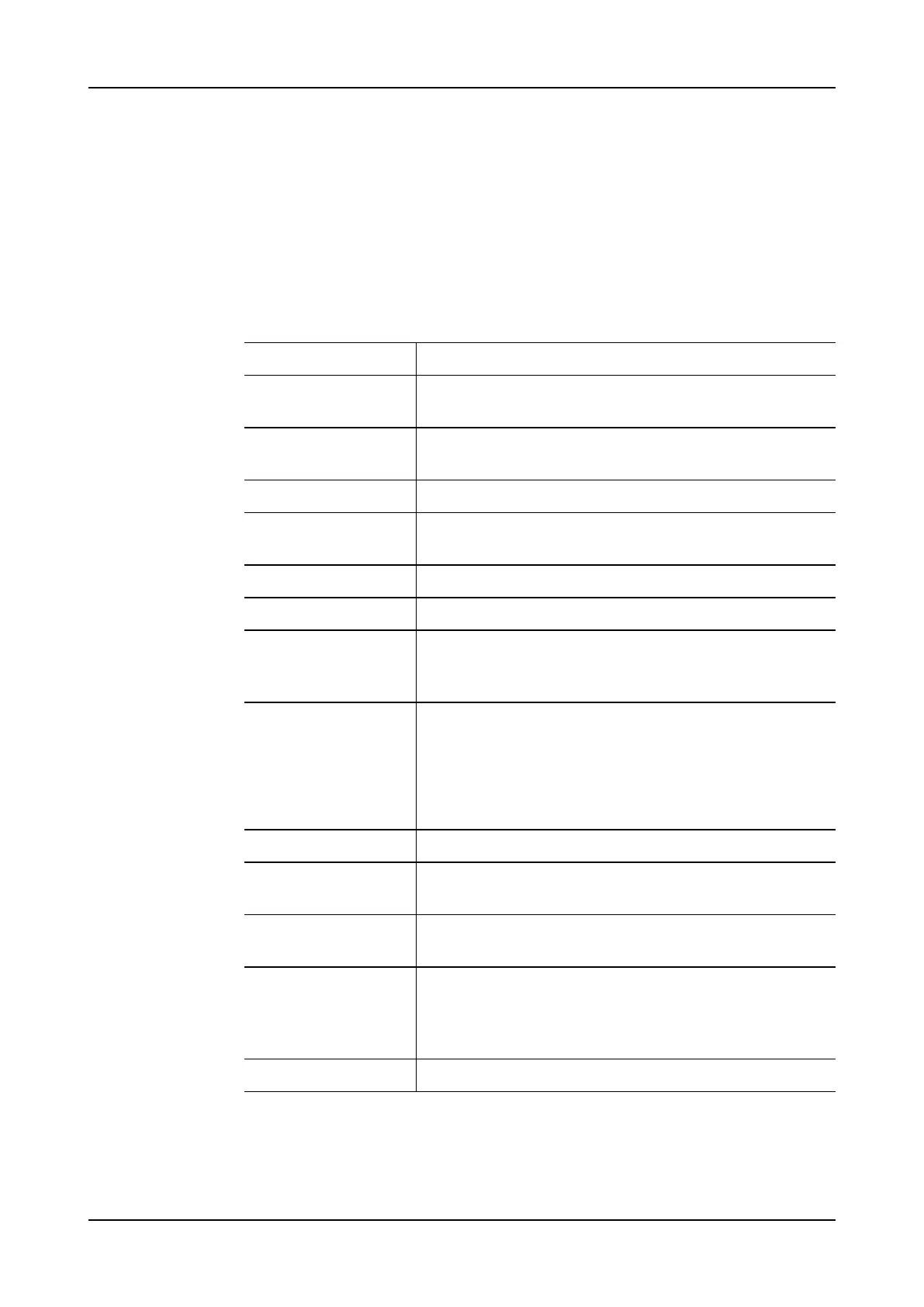
The documentation follows these typographic conventions:
Convention Description
boldface font Indicates keywords and emphasized words when appearing
in main text areas. All warnings are in boldface font.
blue font Indicates a reference to a chapter, section, figure, table or
related documentation when appearing in main text areas.
CAPITALIZED font
Refers to the keys on your keyboard, e.g. ENTER marked ↵.
courier Courier font is used to identify words that can be read from
or typed into the command line interface.
[] Elements in square brackets are optional.
| Alternative elements are separated by a vertical bar.
^ The symbol ^ represents the key labeled Control - for
example, the key combination ^D means that you have to
hold down the Control key while you press the D key.
< > References are enclosed in angle brackets, for example:
<Esc> The escape key, marked Esc
<Enter> The Enter key, marked ↵
<username> This reference, including the angle brackets, is
replaced by the appropriate user name.
Nonprinting characters, such as passwords.
“” Double inverted commas are used to enclose quoted text.
• (bullet symbol) Used in bulleted list of items where the sequence of items is
not relevant.
1, 2, 3 ...or
a), b), c)...
These numbering styles are used in lists of items where the
sequence of items is relevant.
* or
1, 2
etc. These are used to point to table footnotes. The markers in
the text are arranged as continuous superscript numbers.
Footnote text (in smaller typeface) is placed at the bottom of
a table and starts with a superscript number.
-> Refers you to additional information.
FSP 3000R7 Maintenance and Troubleshooting Manual - Product Release 16.2 - Document Issue A 23


 To Next Page