Standing Conditions
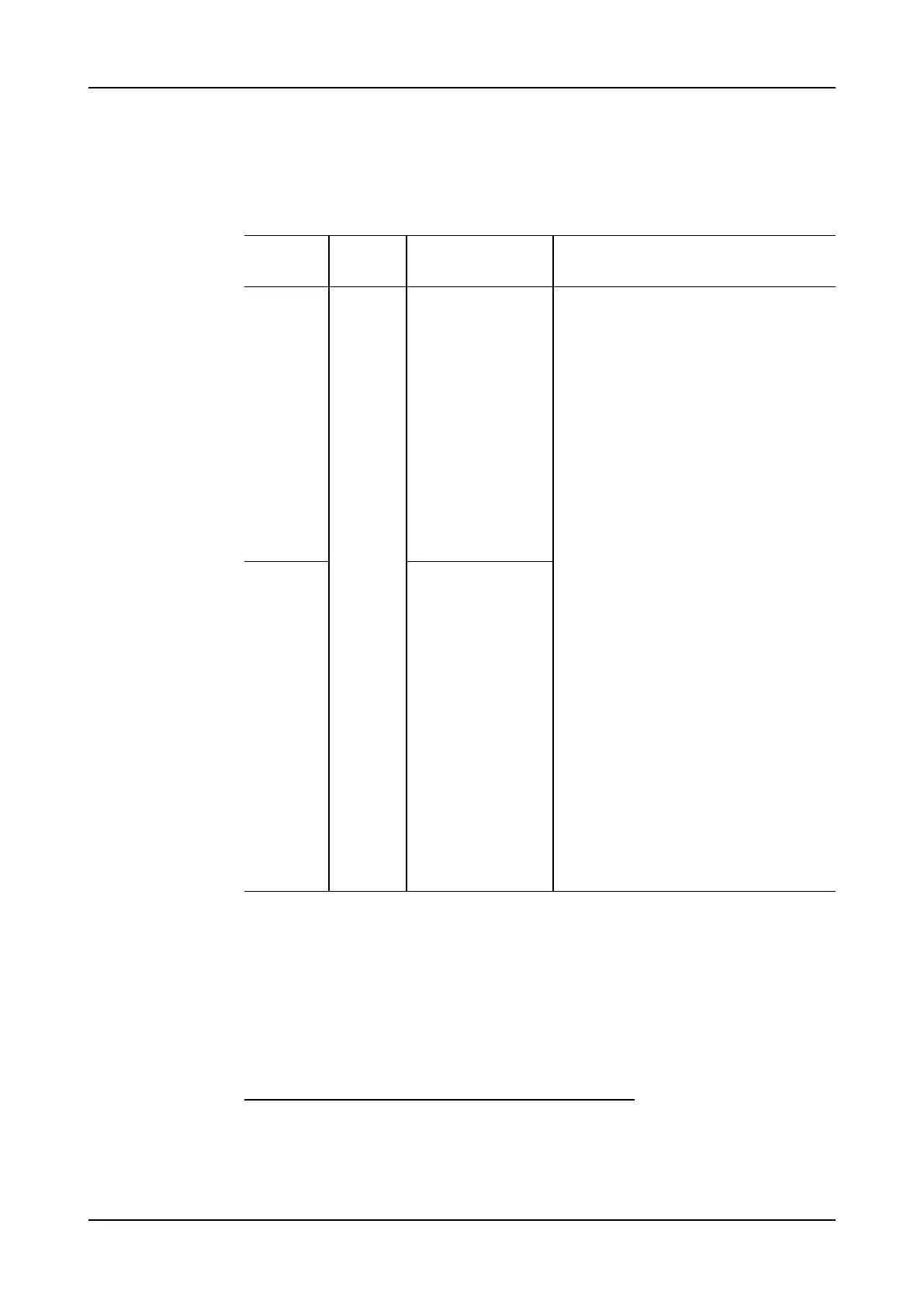
T-ATRCV-LT (Attenuation Rx Low)
The corresponding SNMP name for this condition is
“attOnReceiverFiberLowerThanMonitor”.
AIDTYPE Default
Severity
Probable Cause Suggested Corrective Action
DCN MN The signal level at
the receiver input
after allowing for
the expected span
loss is such that
the amount of
attenuation on the
incoming fiber has
been determined to
be below the
provisioned
threshold level.
1 Verify that the facility is provisioned
correctly and that the low
attenuation threshold level is set to
the intended value.
2 Verify that the incoming cable
carrying the facility is the correct
cable and that the transmit and
receive ports are connected to their
proper respective portions of the
cable (i.e. that the fibers are not
swapped between transmit and
receive).
3 Verify that a signal is present at the
cable termination and that the
signal conforms to the required
specifications (e.g. minimum and
maximum power levels)
1
. If the
signal meets the required
specifications proceed to the next
step below, otherwise locate the
source of the signal problem
upstream and repair the problem. It
may be necessary to pad the
optical line using a fixed or variable
attenuator to bring the attenuation
within the specified minimum range
required by the system.
4 Replace the plug or module
supporting the facility.
OM The signal level
detected by the
receiver for the
optical line monitor
signal on the RSM-
OLM module, after
allowing for the
expected span
loss, is such that
the amount of
attenuation on the
incoming fiber has
been determined to
be below the
provisioned
threshold level.
Table 418: T-ATRCV-LT (Standing Condition)
1
In order to separate the DCN signal from the traffic carrying signals optically
multiplexed together within the line side fiber, it may be necessary to employ optical
filters in addition to any external optical power measuring devices employed to
perform these measurements.
992 FSP 3000R7 Maintenance and Troubleshooting Manual - Product Release 16.2 - Document Issue A


 To Next Page