Electronic Expansion Valves (EEV)
Electronic expansion valves differ to the normal thermostatic expansion valves in
their ability to maintain control of the suction superheat at reduced head pressures.
This can lead to signicant energy savings particularly at reduced loading and low
ambient temperatures.
Using an EEV allows for good refrigeration control whilst operating at part load and
lower ambient conditions with a reduced condensing pressure. By tting an EEV and
adjusting the head pressure control setting an increase in the system EER (Energy
Efciency Ratio) can typically be seen at lower ambient conditions.
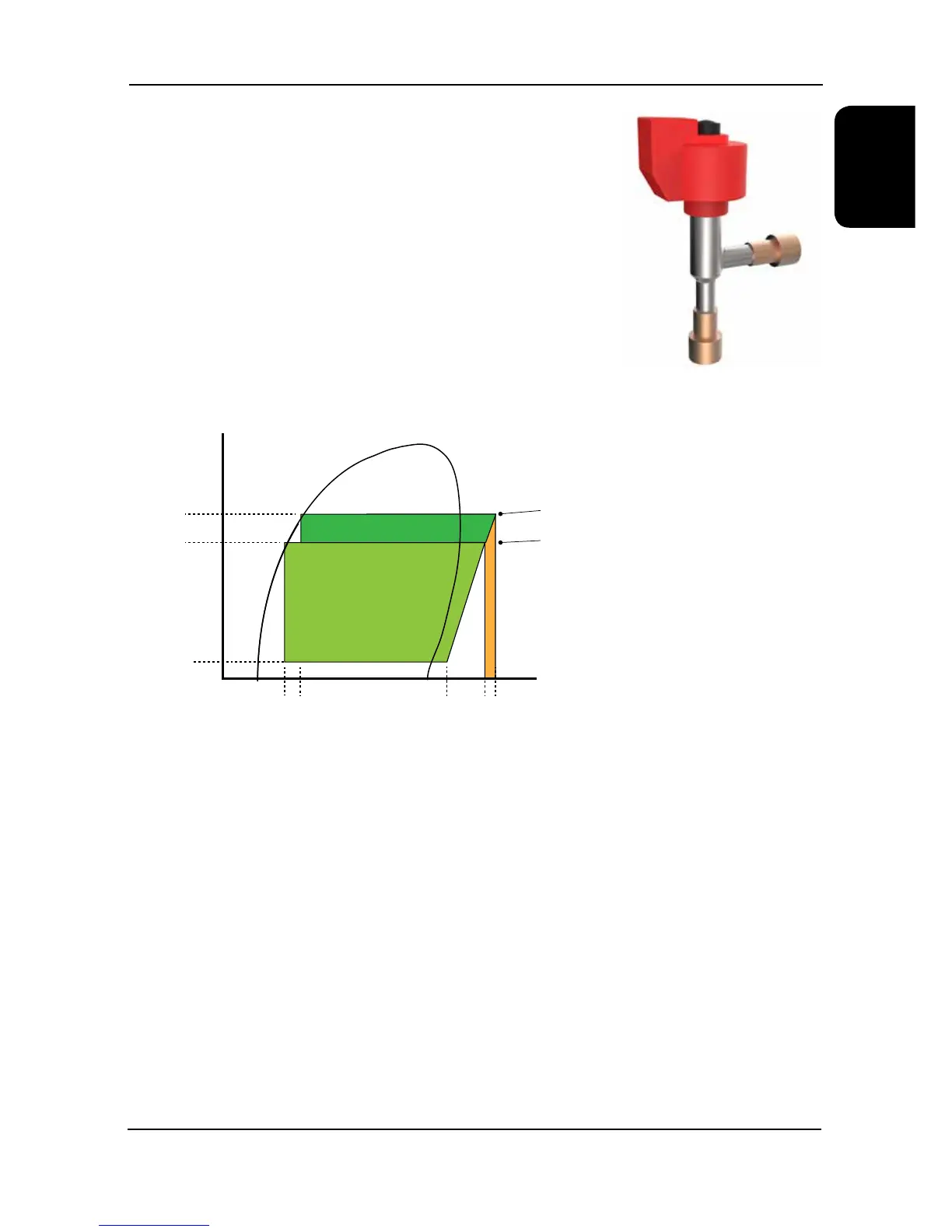
The Mollier diagram shown below helps to illustrate how this increase in efciency is
achieved.
Electronic expansion valves differ to normal thermostatic expansion valves in their
ability to maintain control of refrigerant ow and the suction superheat at reduced
head pressures. The turn-down rate of a typical EEV is superior to that of its
thermostatic equivalent, such that a reduced optimum condensing pressure can be
maintained at low compressor load. However low the load is on the compressor,
from zero to 100%, there will not be a problem with turn down, even down to 30% of
the valves rated capacity.
Key:
TEV Cooling cycle @ 22°C ambient with a conventional TEV tted.
EEV Cooling cycle @ 22°C ambient, demonstrating a typical EEV condensing temperature taking full advantage of
lower ambient air temperatures (below 30°C).
Heat of Rejection
Reduction in
Compressor Input
Power
Enthalpy kJ/kgIncrease in
Cooling Duty
Evaporating
Pressure
Reduced
Condensing
Pressure
Presssure
Bara
Thermostatic Expansion Valve (1)
Electronic Expansion Valve (2)
1
2
3
4
1. Compression
2. Condensation
3. Expansion
4. Evaporation




 To Next Page