CHAPTER 6 EXPANDED EMERGENCY AND ABNORMAL PROCEDURES
EFD1000/500 MFD Pilot’s Guide
Page 6-6 091-00006-001 REV B
EFD1000/500 MFD Pilot’s Guide
Page 6-7091-00006-001 REV B
6.6. GPSS Operation, Annunciations, and Autopilot
Modes
GPSS is available from the EFD1000 PFD. Three modes, Enabled, Wings Level, and
Disabled, are possible and annunciated in the EFD’s lower display. When enabled, the
congured GPS source not only provides the basemap and ight plan data in the lower
display, but also provides GPSS as the heading input to a congured autopilot. When
engaged, a congured autopilot will interpret GPSS commands as heading inputs and
follow the active GPS ight plan, including anticipated turns, if provided. The GPSS
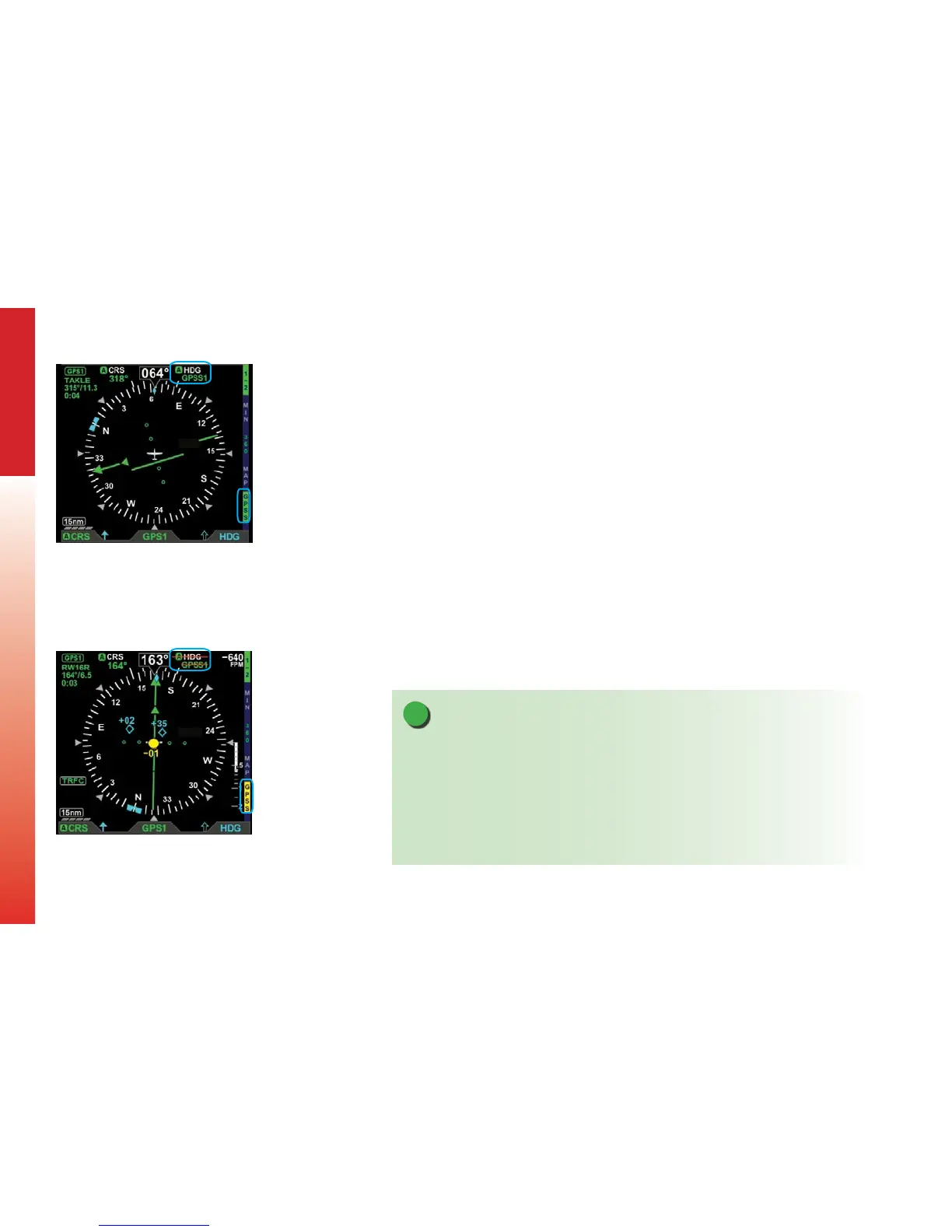
Enabled mode is indicated by a green “GPSS” hotkey annunciation and a “GPSS1” with an
inverted “A” placed next to the “HDG” reference in the lower display to detail the source
(Figure 6-4) .
If GPSS is enabled and the GPS source is lost or changed, the GPSS mode automatically
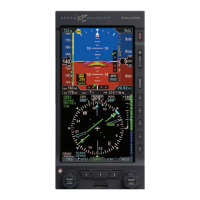
changes to the Wings Level mode and annunciates as shown in Figure 6-5.
This removes roll steering inputs to the autopilot, causing the aircraft to roll wings level.
The red slash through the annunciated “A HDG” and “GPSS#” source. The amber “GPSS”
hotkey annunciation requires pilot action. If this occurs use the following steps:
NOTE
When using GPSS with combined GPS / VLOC navigators (e.g., GNS-430/530), VLOC may
be selected as the navigation source while GPSS is engaged. To avoid confusion, note that
the EFD1000’s selected navigation source controls the CDI and the autopilot’s navigation
and approach modes when engaged. GPSS reects the heading commands required
to navigate the active ight plan leg and controls the autopilot’s heading mode when
engaged. Complete understanding of autopilot mode functions and their proper selection
is recommended.
Figure 6-5
GPSS in Wings Level Mode
Figure 6-4
Operating in GPSS Mode


 To Next Page