Because RFL™ and Hubbell® have a policy of continuous product improvement, we reserve the right to change designs and specifications without notice.
Section 8. TROUBLESHOOTING
8.1 INTRODUCTION
This section contains a general approach to troubleshooting the IMUX 2000 M-DACS system, CM4
Common Module diagnostics and DACS module diagnostics. The general troubleshooting section
includes an introduction to the use of multiplexer loopbacks, T1 test equipment, and channel test
equipment for in-service or out-of-service testing. This information is helpful when troubleshooting an
existing system, or when trying to isolate a problem during the check-out phase of a new system
installation. The M-DACS is a complicated device that can have significant interaction with the other
equipment it is connected to through the eight ports. As such, this is a generalized approach and cannot
cover every possible system configuration or problem. If you have reached what appears to be a dead
end, or if the information in this section does not seem to apply to your case, please contact RFL for
assistance in troubleshooting your IMUX 2000 M-DACS system.
8.2 GENERAL TROUBLESHOOTING
8.2.1 TROUBLE TYPES
IMUX 2000 M-DACS system troubles generally fall into three categories:
1. Setup Errors
2. T1 Network Problems
3. IMUX 2000 M-DACS Equipment Problems
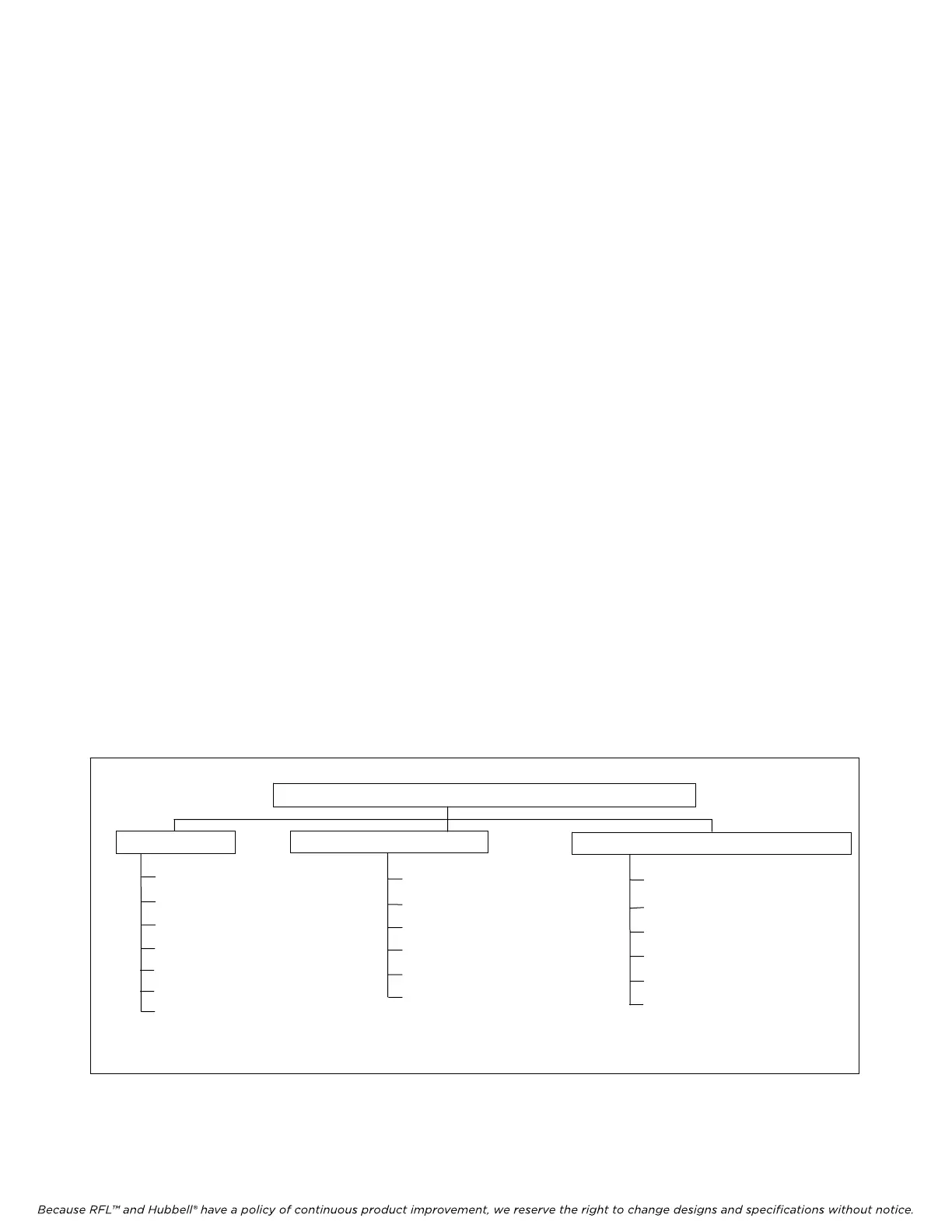
Details of these three major categories appear in Figure 8-1.
SET-UP ERRORS
T1 NETWORK PROBLEMS
IMUX 2000 M-DACS EQUIPMENT PROBLEMS
T1 TRANSMIT TIMING MODE
T1 FRAME FORMAT
T1 LINE CODE
CM4 SETUP
DACS MODULE SETUP
DACS MAPPING
CHANNEL MODULE SETUP
NO SIGNAL OR LOW LEVEL
ALARM INDICATION SIGNAL (AIS
BIT ERRORS
EXCESSIVE JITTER OR WANDER
SENSITIVITY TO 1S DENSITY
TIMING
POWER SUPPLY
CM4 COMMON MODULE
DACS MODULE
FIBER INTERFACE
CHANNEL MODULE
WIRING OR
IMUX 2000 SYSTEM OR CHANNEL TROUBLE REPORTED
Figure 8-1. Basic troubleshooting categories
M-DACS-T1 RFL Electro
nics Inc.
October 25, 2004 8-1 (973) 334-3100



 To Next Page