Because RFL™ and Hubbell® have a policy of continuous product improvement, we reserve the right to change designs and specifications without notice.
9.3 ALARM I/O MODULE
9.3.1 DESCRIPTION
The Power Supply Alarm I/O module consists of an EMI filter, an SWC filter, relay logic, an alert relay
and a fail relay. These components can be seen in Figure 2-11 which also includes the power supply
module and the system status indicators that are associated with the IMUX 2000 M-DACS. These
indicators and relays respond to fault conditions on Common Modules, channel modules, or the power
supply module itself.
When a Main Shelf is equipped with a main power supply and a redundant power supply it will have
only one Power Supply Alarm I/O module. The relays on the Power Supply Alarm I/O module will
respond to alarm and alert conditions from both power supply modules. This insures that Fail and/or
Alert monitoring continues even if one or the other supply is removed. Note that because the
corresponding relay contacts on the Main and Redundant supplies are connected in parallel, the ACO
switches on both must be switched “on” to activate the alarm cut-off, and both must be switched “off” to
de-activate the alarm cut-off.
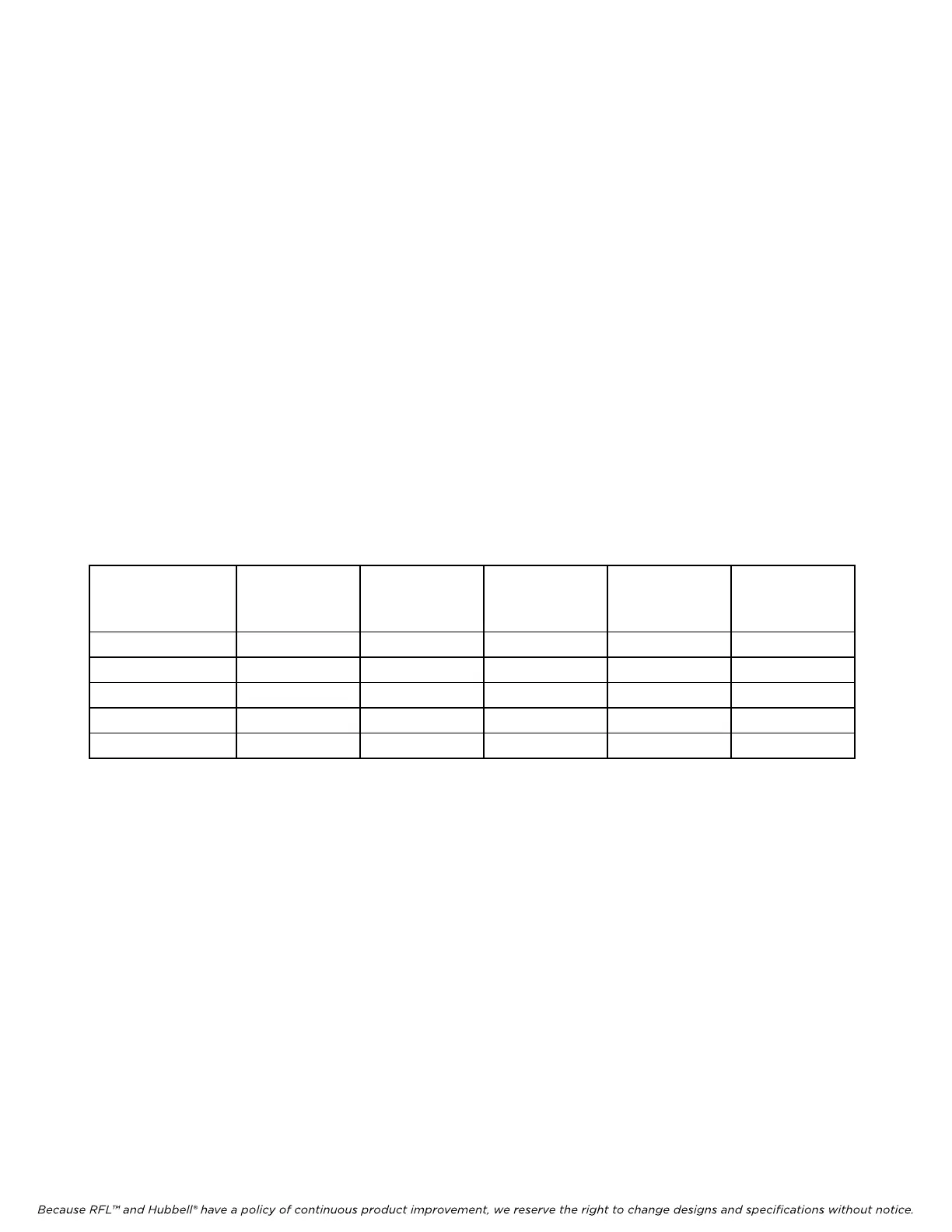
Each Alarm I/O module operates with a specific Power Supply module. Refer to Table 9-3 for
application information.
Table 9-3. Power Supply Alarm I/O Application Information
Power Supply→
Alarm I/O
↓
9547-840 9547-930 9547-965 9547-975 9547-985
9547-18801 X
9547-18804 X
9547-18805 X
9547-18807 X
9547-18808 X
9.3.2 THEORY OF OPERATION
U51, U52, K51, K52, and their associated components form the alarm I/O circuitry for the IMUX 2000
M-DACS multiplexer. Operation of relays K51 and K52, as well as annunciation indicators DS1 through
DS5 are described in Section 2 of this manual.
Logic signals controlling the alarm circuitry are interfaced with the chassis motherboard through edge
connector terminals (See P2 in Figures 9-4). After processing, normal and alarm conditions are
annunciated by LED indicators DS1 through DS5 and relays K51 and K52. The indicators are mounted
along the front edge of the power supply board, and can be viewed with the shelf door closed.
The relay contacts are wired to TB2 as shown in Figure 9-4. One Form C contact per relay is provided,
rated 100 mA @ 300 Vdc (resistive).
M-DACS-T1 RFL Electronics Inc.
August 7, 2012 9-9 (973) 334-3100



 To Next Page