Because RFL™ and Hubbell® have a policy of continuous product improvement, we reserve the right to change designs and specifications without notice.
FUNCTIONAL DESCRIPTION
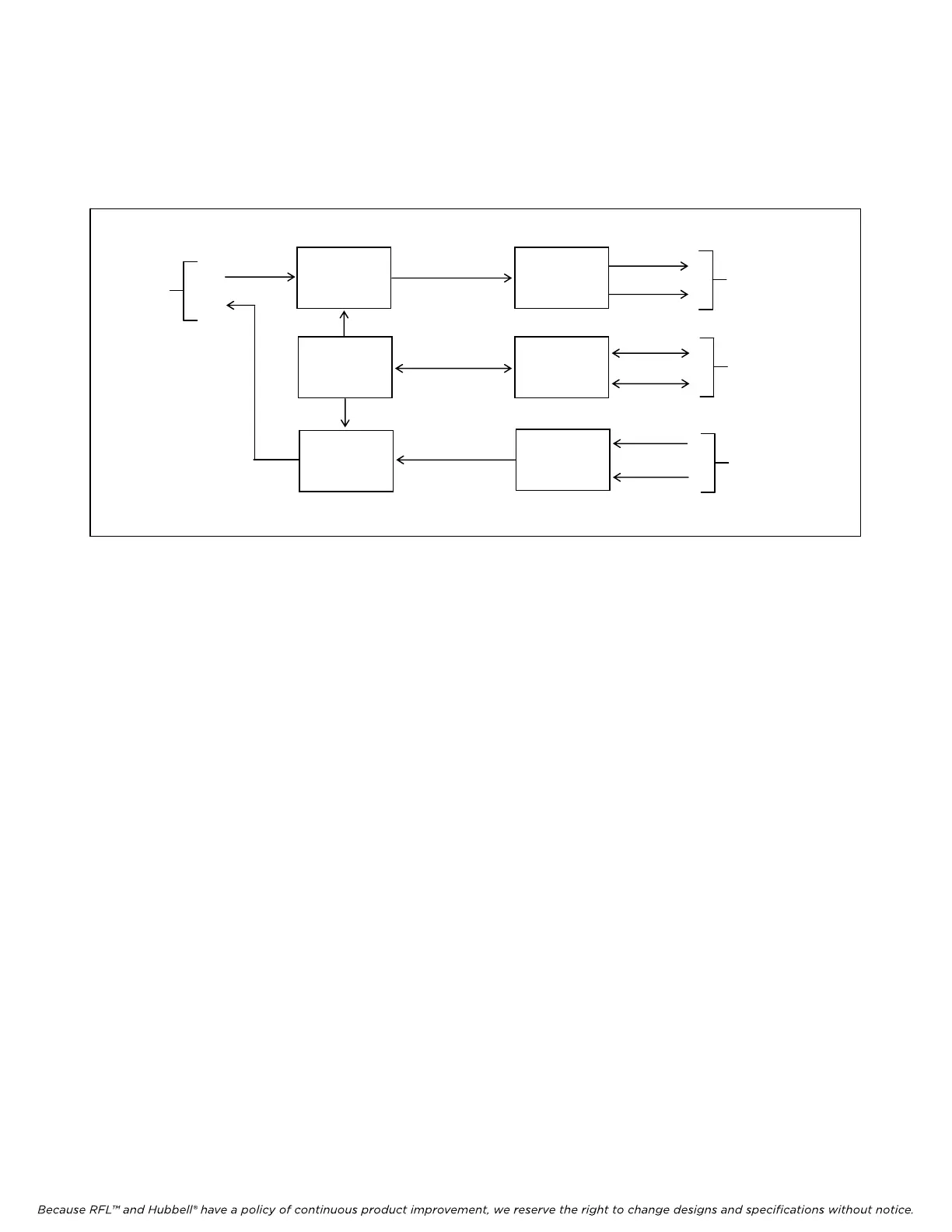
Figure 3 is a functional block diagram of the RFL DA-121I module. It is provided to familiarize the
user with the RFL DA-121’s signal flow and interfacing. The figure shows signal flow in the transmit
and receive modes of operation.
RS-232 TX
DATA I/O
PORT 1 * RX
MULTIPLEXER
TIMING
DEMULTIPLEXER
BUFFER
BUFFER
ADDRESS
SELECTION
TO TRANSMIT
DATA BUS
TO/FROM
CHANNEL
ADDRESS
BUS
FROM RECEIVE
DATA BUS
A
B
A
B
A
B
* DATA I/O CONNECTIONS ARE SHOWN FOR PORT 1 ONLY. CONNECTIONS FOR PORTS 2 THROUGH 7 ARE THE SAME.
Figure 3. Functional block diagram, RFL DA-121I module.
The RFL DA-121I can provide up to seven 1.2 kbps data channels incorporating transmitter/receiver
pairs in one T1 time slot. It can be used in IMUX 2000 Terminal or Drop/Insert multiplexers. The
seven 1.2 kbps data channels are interfaced to the RFL DA-121I through the MA-405I Module
Adapter. A cable adapter plugs into the MA-405I to provide seven 9-pin D-subminiature (DB-9S)
connectors. Each 9-pin connector is wired in a standard RS-232 configuration, as shown below, and is
labeled to show the corresponding channel on the RFL DA-121I.
Transmit Data (TxD) Pin 2
Receive Data (RxD) Pin 3
Ground Pin 7
Connections to and from the RFL DA-121I is accomplished through an edge connector on the module,
the motherboard bus, and an RS-232 interface to the IMUX 2000 control and monitor modules. The
received data contains the data extracted from the T1 line, and the transmit data contains the data to be
inserted into the T1 line. Transmit and receive bus directions and time slot selections are independently
selectable by DIP switches SW1 and SW2.
The RFL DA-121I does not provide control signals, and may be needed to be looped at the RS-232
connector for some configurations. Once the control signals have been established, the transmitted data
is sampled at 8 kHz in 1.2 kbps per channel operation. This data is multiplexed and inserted into the
T1 line. The received data from the T1 line is demultiplexed, separating the data through the interface.
The asynchronous data is decoded, retimed, and sent through one or more RS-232 interfaces for
distribution.
RFL DA-121I RFL Electronics Inc.
February 10, 2000 10 (973)
334-3100



 To Next Page