U.2.9
Date Code 20090715 User’s Guide SEL-421 Relay
Installation
Shared Configuration Attributes
Fast Hybrid (Fast High-Current-Interrupting) Control Outputs
In addition to the Standard control outputs and the Hybrid control outputs, the
INT4, INT5, and INT8 I/O interface boards offer Fast Hybrid (fast high-
current-interrupting) control outputs. These control outputs have a resistive
load pickup time of 10 µs (microseconds), which is much faster than the 6 ms
pickup time of the Standard and Hybrid control outputs. The Fast Hybrid
control outputs drop out at a maximum time of 8 ms. The maximum voltage
rating is 250 Vac/330 Vdc. See Control Outputs on page U.1.13, for complete
Fast Hybrid control output specifications.
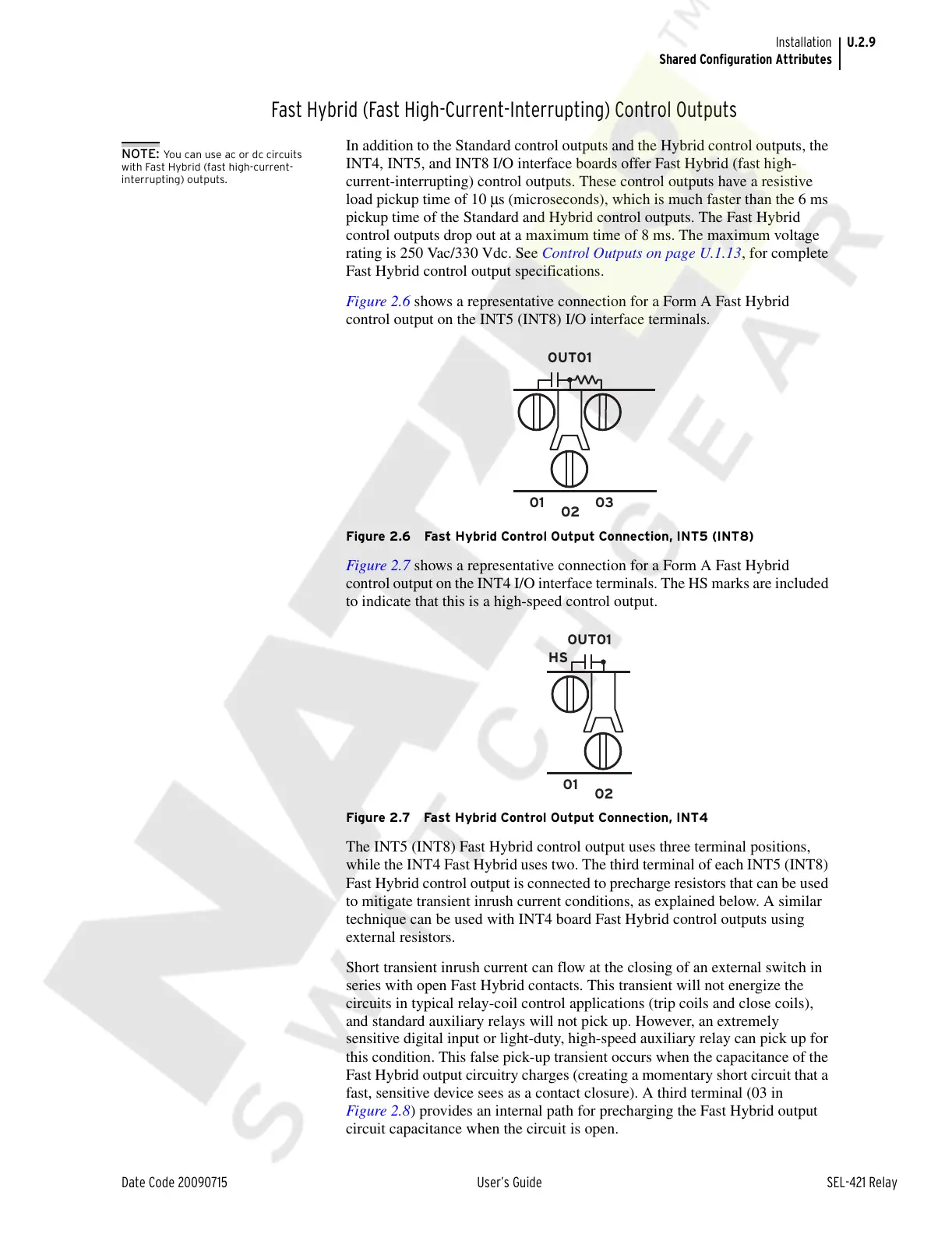
Figure 2.6 shows a representative connection for a Form A Fast Hybrid
control output on the INT5 (INT8) I/O interface terminals.
Figure 2.6 Fast Hybrid Control Output Connection, INT5 (INT8)
Figure 2.7 shows a representative connection for a Form A Fast Hybrid
control output on the INT4 I/O interface terminals. The HS marks are included
to indicate that this is a high-speed control output.
Figure 2.7 Fast Hybrid Control Output Connection, INT4
The INT5 (INT8) Fast Hybrid control output uses three terminal positions,
while the INT4 Fast Hybrid uses two. The third terminal of each INT5 (INT8)
Fast Hybrid control output is connected to precharge resistors that can be used
to mitigate transient inrush current conditions, as explained below. A similar
technique can be used with INT4 board Fast Hybrid control outputs using
external resistors.
Short transient inrush current can flow at the closing of an external switch in
series with open Fast Hybrid contacts. This transient will not energize the
circuits in typical relay-coil control applications (trip coils and close coils),
and standard auxiliary relays will not pick up. However, an extremely
sensitive digital input or light-duty, high-speed auxiliary relay can pick up for
this condition. This false pick-up transient occurs when the capacitance of the
Fast Hybrid output circuitry charges (creating a momentary short circuit that a
fast, sensitive device sees as a contact closure). A third terminal (03 in
Figure 2.8) provides an internal path for precharging the Fast Hybrid output
circuit capacitance when the circuit is open.
NOTE: You can use ac or dc circuits
with Fast Hybrid (fast high-current-
interrupting) outputs.
Courtesy of NationalSwitchgear.com


 To Next Page