10.5.2 ServoStop motor adapter with brake (MB)
In this chapter, you will find the description and technical data of the motor adapter with brake.
10.5.2.1 Properties
• Electrically actuated spring-loaded brake for dry running
• Featuring backlash-free plug-in coupling (jaw coupling) for easy removal of the motor with the axis
braked in any position
• Electrical release monitoring in the terminal box of the motor adapter
• Manual monitoring of wear via air gap checks with a feeler gauge
• Manual release (optional)
• Radial shaft seal rings made of FKM with two sealing lips
• Four oil drain holes to protect the brake from oiling up in case of leakage
• Diverse-redundant system in accordance with ENISO13849-1
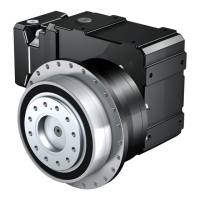
Fig.1: Motor adapter with ServoStop brake and directly attached EZ synchronous servo motor
10.5.2.2 Brake
A failsafe brake is integrated into the motor adapter. It has the function of a holding brake. Braking from full
speed, e.g. in case of a voltage drop or an emergency off in hazard situations, is still possible.
The brake can be used as a single brake or together with the motor brake as a redundant brake system.
Function
The brakes installed in the motor adapter are electrically actuated spring-loaded brakes for dry running. In
the de-energized state, braking takes place using spring force. The brake is released by an electromagnetic
DC coil before the motor is switched on. The switch-on time t
2B
(release time) is the time until the anchor
plate releases from the axially moving brake disc and is magnetically held to the coil body. In this state, the
brake is released and the coupling hub can rotate. In order to switch off (motor and brake), the residual
magnetic flux of the iron parts (anchor and coil body) must be reduced; the associated time t
11B
until the
start of torque generation is defined as a response delay when linking. The link time t
1B
is the time until the
braking torque has built up to the nominal braking torque.
Manual release
Optionally, the brake can be equipped with a manual release.
Pressing the manual release deactivates the electronic actuation of the brake. Before pressing the manual
release, you must establish the safety of the machine (e.g. protection against falling).
10.5.2.3 Electrical connection
• Terminal box (standard)
• Plug connector (optional, not possible in combination with release monitoring)
10.5.2.4 Monitoring
For monitoring the brake system, there are generally two options:
• Manual monitoring of wear via air gap checks with a feeler gauge
• Electrical release monitoring in the terminal box with a non-contact and wear-free proximity switch
10 Khelical bevel geared motors 10.5 Product description
355


 To Next Page