This RT 60 measurement method requires impulse sound source like pistol, petard or other sound source
which emits impulse signal with very high sound pressure level.
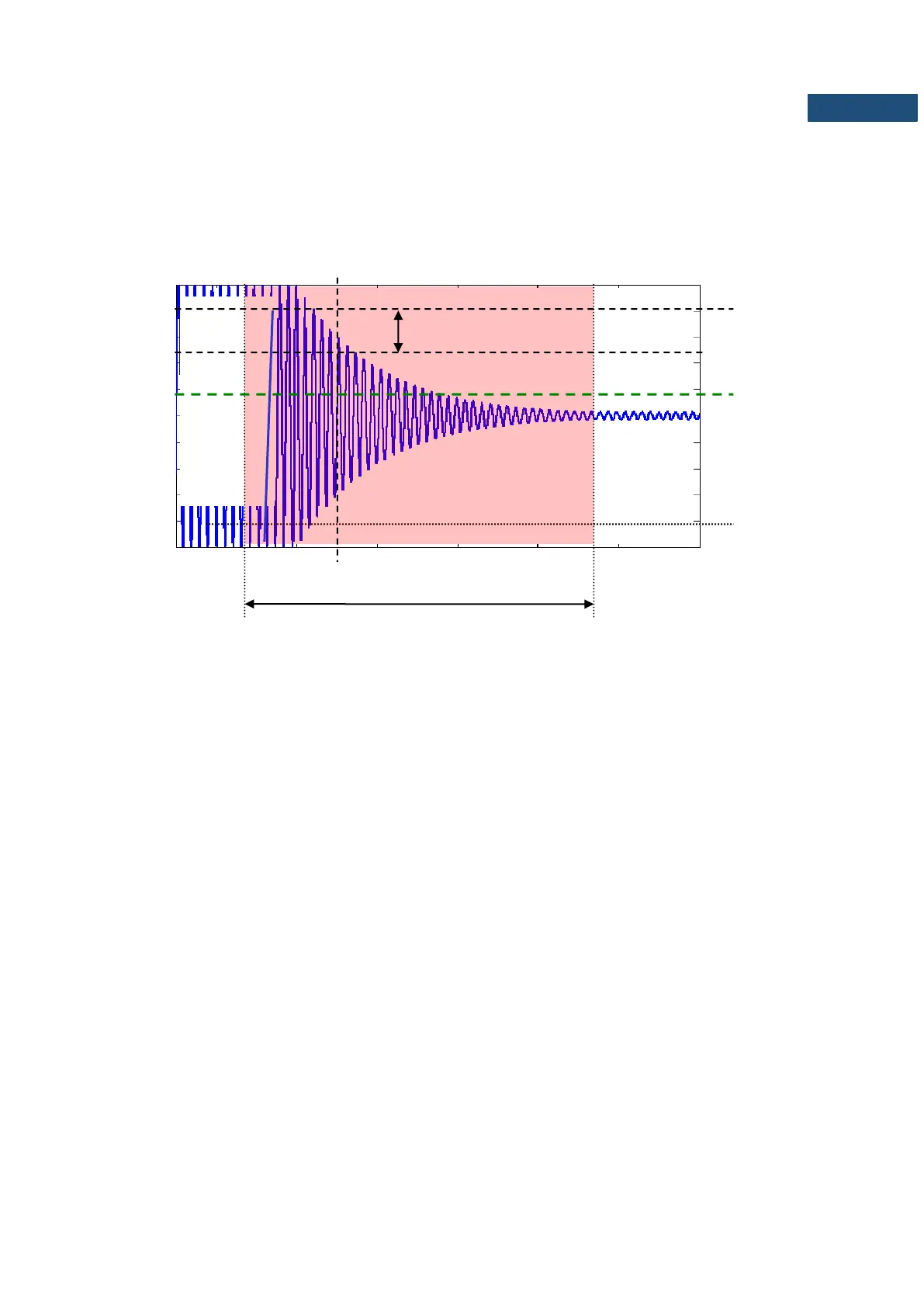
The graphical illustration of data registering in this method is presented in Figure 7.
The measurement time in this method consists of:
• The time before marker t
trig
in which the SVAN 958A analyser measures the actual sound pressure level
and waits for the very high impulse sound pressure level which will fulfil the trigger condition. The trigger
conditions will be fulfilled only when emitted impulse has maximal sound pressure level higher than L
t
level
(cf. Fig. 6). The L
t
level in the SVAN 958A analyser is adjusted by parameter Level (path: <Menu> / Input
/ RT60 Results).
• The time between markers t
s
and t
trig
registered since the trigger condition fulfilment back till point t
s
to allow
recognising the beginning of the decay region. In the SVAN 958A instruments this time is equal to the
Time Step (path: <Menu> / Input / RT60 Results) parameter value multiplied by 50.
• The time between markers t
trig
and t
e
registered since t
trig
forward to record whole decay curve together with
significantly long period of the noise level. This time in SVAN 958A instruments is adjusted by
Recording Time (path: <Menu> / Input / RT60 Results) parameter.
The above graph shows that the proper setting of the Recording Time value is very important. The registration
time has to be long enough to acquire sufficient number of background noise level values. In other case the
decay curve region could not be properly analysed or decay region could not fulfil the dynamic condition
mentioned above. It is recommended to set the Recording Time parameter two times longer than expected
reverberation time.


 To Previous Page