If an impulsive sound is generated in a room with reflecting boundaries, repeated reflections at the boundaries
result in the rapid establishment of a more or less uniform sound field. This field then decays as the sound
energy is absorbed by the bounding materials. The rate at which the sound energy decays is determined by
the absorptive properties of the reflecting surfaces and the distances between them. The time taken for the
sound intensity or the sound pressure level to decay by 60 dB is called the reverberation time (RT). The values
of RT may range from fractions of a second to a few seconds and depend upon the size of the room and the
nature of the materials used in its construction.
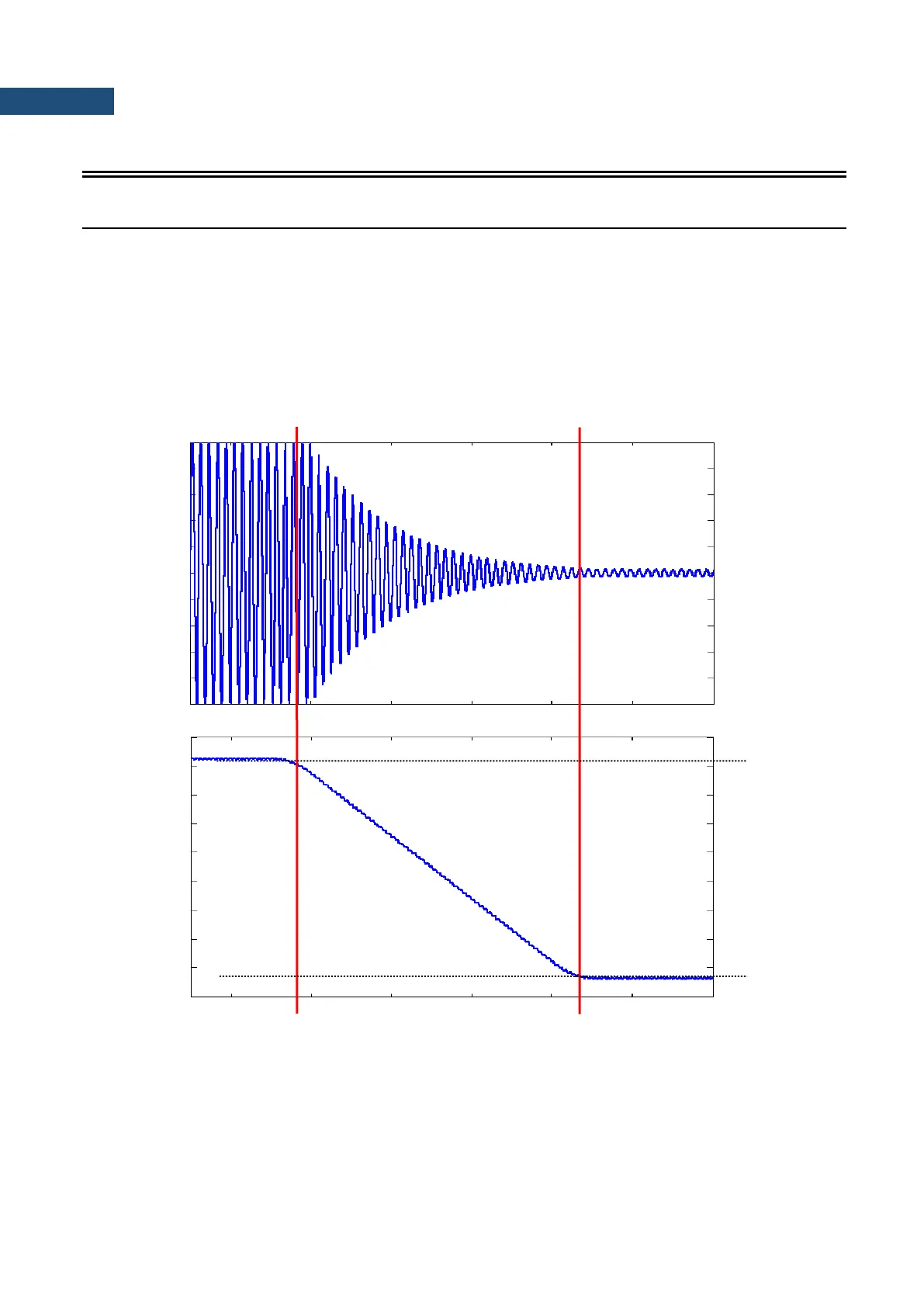
The graphs below present the reverberation time nature (in the case when only one frequency is emitted):
Fig 1. Acoustic pressure versus time (a) and value of the sound pressure level
versus time, so-called decay curve (b)


 To Next Page