12 Maintenance
This chapter explains:
•
Periodic Inspections
•
Storage and Disposal of the product.
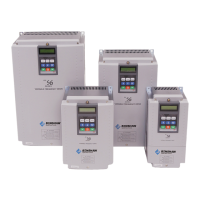
The Benshaw model H2 series inverters are an industrial electronic product with advanced
semiconductor components. A reasonable life expectancy of 8 to 10 years can be expected however,
there are factors that may affect their continued long-term operation. Environmental issues
(temperature and humidity) and mechanical issues (vibration and connections) are the most common
reasons for premature failure of inverters. To avoid problems, it is recommended to perform periodic
inspections of the inverter.
12.1 Periodic Inspection Summary
Refer to the attached Table for specific frequency of inspection.
•
The conditions of the installed location
o Observe any physical damage to enclosure or enclosure degradation.
o Any signs of liquid leakage into the enclosure.
o Any signs of corrosion or rust resulting from leakage into the enclosure.
•
The conditions of the inverter cooling. Causes for abnormal heating are:
o Check for any deposits or dirt inside the enclosure, in the cooling fans/filters and the
inverter fan(s). Remove with compressed air.
o Check the rotating condition of the cooling fan(s).
•
Abnormal vibration
o Are there any loose nuts or bolts because of the vibration?
o Loose connections will show signs of heated connectors and wires. Tighten or replace.
•
Be sure to remove the drive’s power input while performing maintenance. Lock
out all sources of power.
•
Preventive maintenance should always be performed by a trained technician.
•
Be sure to perform maintenance only after checking that the DC bus voltage has
discharged. The voltage between terminal P1-N (or P2-N) should be less than
30VDC. The DC bus capacitors in the electronic circuit can still be charged even
after the power is turned off. The DC bus LED is not a definitive indication of the
absence of DC voltage.


 To Next Page
 Loading...