ComNav Commander P2 & P2VS Installation & Operation Installation
Document PN 29010074 V4.1 - 78 -
Speed Mode & Timing Outputs
The P Series SPU outputs two status signals on the
J6 – MISCELLANEOUS
15
connector. The
receptacle is supplied with a 10-pin mating plug.
In addition, a one pulse per second timing signal is output
16
on J6. It is about 5% accurate,
and is meant for general-purpose use – for example, some brands of Radar & other
navigation equipment require a “1 PPS” timing signal for proper operation.
These two status signals indicate:
•
If the system is operating with the Hi or Lo speed steering parameters in effect (see
page 126), in
AUTO
or
NAV
modes.
•
If the system is operating in
WORK
mode (see page 149).
The status signals are meant to be used to allow indication of those conditions on an external
alarm or indicator. Both conditions are indicated on the Control Head’s LCD display (see
Figure 82 & Figure 95) – but it is also sometimes useful to have them indicated with an
external alarm or lamp at locations other than where the Control Head is located.
These two outputs can also be used to control automatic deployment (& retrieval) of external
“stabilizer” equipment, to enhance the boat’s steering & stability when it is moving at a slow
speed, or when
WORK
mode is in effect. In both these situations, the boat is moving slowly,
and so there is not as much steerageway (i.e., less water flowing over the Rudder, so it does
not generate as much sideways force).
All three outputs are logic-level open-drain outputs directly from the SPU’s microcontroller,
and must be used only within the following voltage/current limits:
•
Each output requires its own external pull-up resistor, which
must
be wired
only
to
the SPU’s logic power supply (5 VDC, created by a linear regulator on the SPU, and
available at the V+ pin of
J6
), and to the external alarm, lamp &/or control circuit.
The resistor value plus the impedance of the load must total
no less
than 3K3 Ohms
(to limit the current into the pin in the “0 V” state to
less than 1.6 mA
).
•
If needed, the SPU’s Ground reference for these signals is on the GND pin of
J6
.
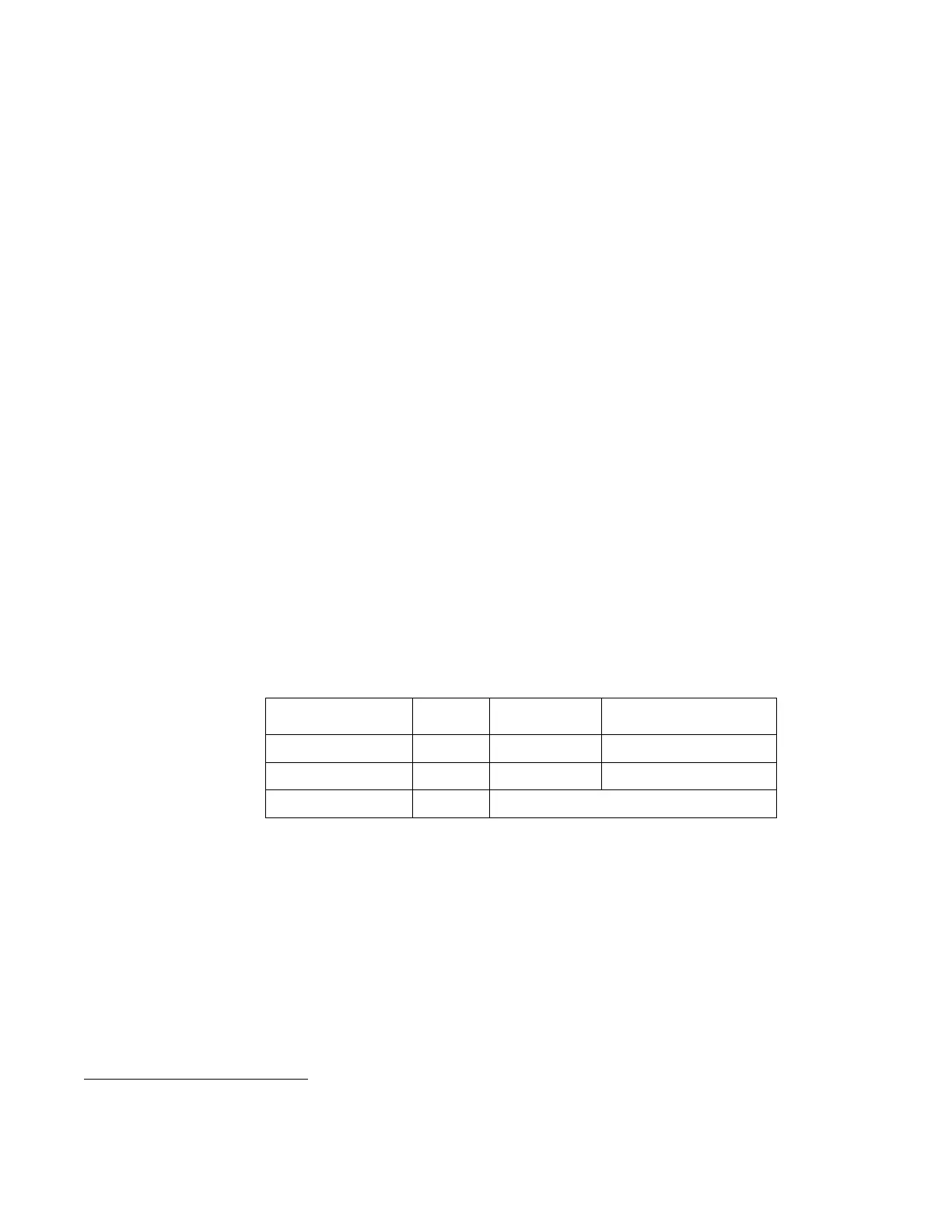
Signal J6 Pin When at 0 V When Open-circuit
WORK MODE WORK Normal mode WORK mode engaged
SPEED MODE HI
SPD Lo Speed Hi Speed
1PPS 1PPS (1 pulse per second, ~50% duty cycle)
Table 3 – Speed Mode & Timing Outputs
All outputs are ESD-protected – but you still must use them with care:
•
Do not use more than about 0.5 m of cable to connect them to the external
alarm/indicator or stabilizer-control circuit.
•
If you must connect to something farther away than that, use a suitable buffer or
isolator circuit – a transistor, a relay or (preferred) an opto-isolator block. With a
relay, be sure to wire a flyback-suppressor diode across the coil.
•
If shielded wire is used, connect the shield only at the SPU – to the GND pin of
J6
.
Note: unused pins on J6 are reserved for possible future use.
15
These status & timing signals are not provided on P2 firmware versions prior to v4r0. All the pins of J6 are unused, on
those prior versions (this connector was labelled J6-
E
NGINE
I’
F
ACE
on P Series SPUs manufactured before 2008).
16
The timing output is not provided on the P2VS, and the 1PPS pin on J6 is reserved.


 To Next Page