5. Icy or snowy weather
Due to the low friction coefficient of icy or snowy
road, the braking distance will be greatly
extended and will increase as the vehicle speed
increases during braking, so you should pay
special attention to controlling the vehicle speed
and keeping a large safety distance from the
vehicle in front and the lateral vehicles during
driving on an icy or snowy road.
6. Brake disc surface rust
If the vehicle is parked for a long time, the brake
discs may rust and the brake pads may be dirty.
It is recommended that you drive at a low speed
and apply the brake several times to clean the
brake discs before formal driving.
7. Brake system fault
If you find a sudden increase in braking distance
or longer brake pedal travel, the brake system
may be faulty. Adjust the driving style with
driving safety ensured, apply a greater force to
the brake pedal during braking, and drive at low
speed to the nearest authorized dealer.
When the brake system is completely
disabled, do not drive forcibly, but pull over
safely and contact the authorized dealer for
assistance.
8. Brake overheating
Do not place a foot on the brake pedal when
braking is not required. This may cause brake
overheating, reduce braking efficiency, extend
braking distance and increase the wear of brake
pads and discs.
Brake wear indicator
The brake pad is equipped with an audible wear
indicator. If a harsh squeak or scratch is heard
when the brake pedal is depressed during
driving (which is different from a braking
extrusion sound generally caused by dust on the
brake surface during slight braking), it indicates
that the brake pad needs to be replaced.
Hydraulic brake system
The hydraulic brake system transmits hydraulic
pressure to the brake through the dual circuit. If
one of the circuits fails, the other circuit will
continue working. In this case, drive at a low
speed to the nearest authorized dealer for
inspection while ensuring safety. In this case, a
greater force should be applied to the brake
pedal for braking.
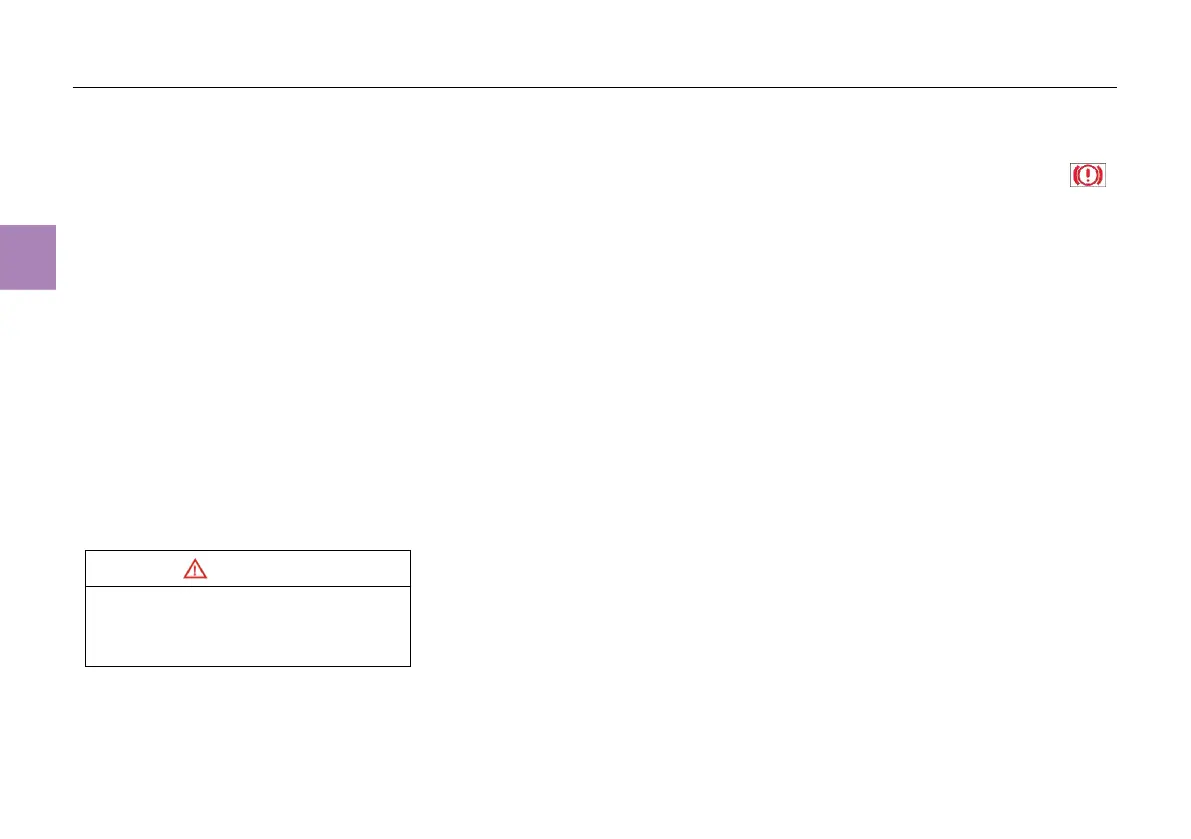
Brake system fault warning lamp
If the brake system fault warning lamp
comes on during driving, it indicates that the
brake system is faulty. In this case, check the
brake fluid level. If the brake fluid level is normal,
it indicates that there is another fault in the brake
system. In this case, pull over immediately with
driving safety ensured and contact the
authorized dealer for inspection.



 To Next Page