Section IX Power Supply and Other Electrical System
I. Overview
This section covers battery, power distribution network, rear defrost system, electric horn system
and electronic clock.
II. Battery
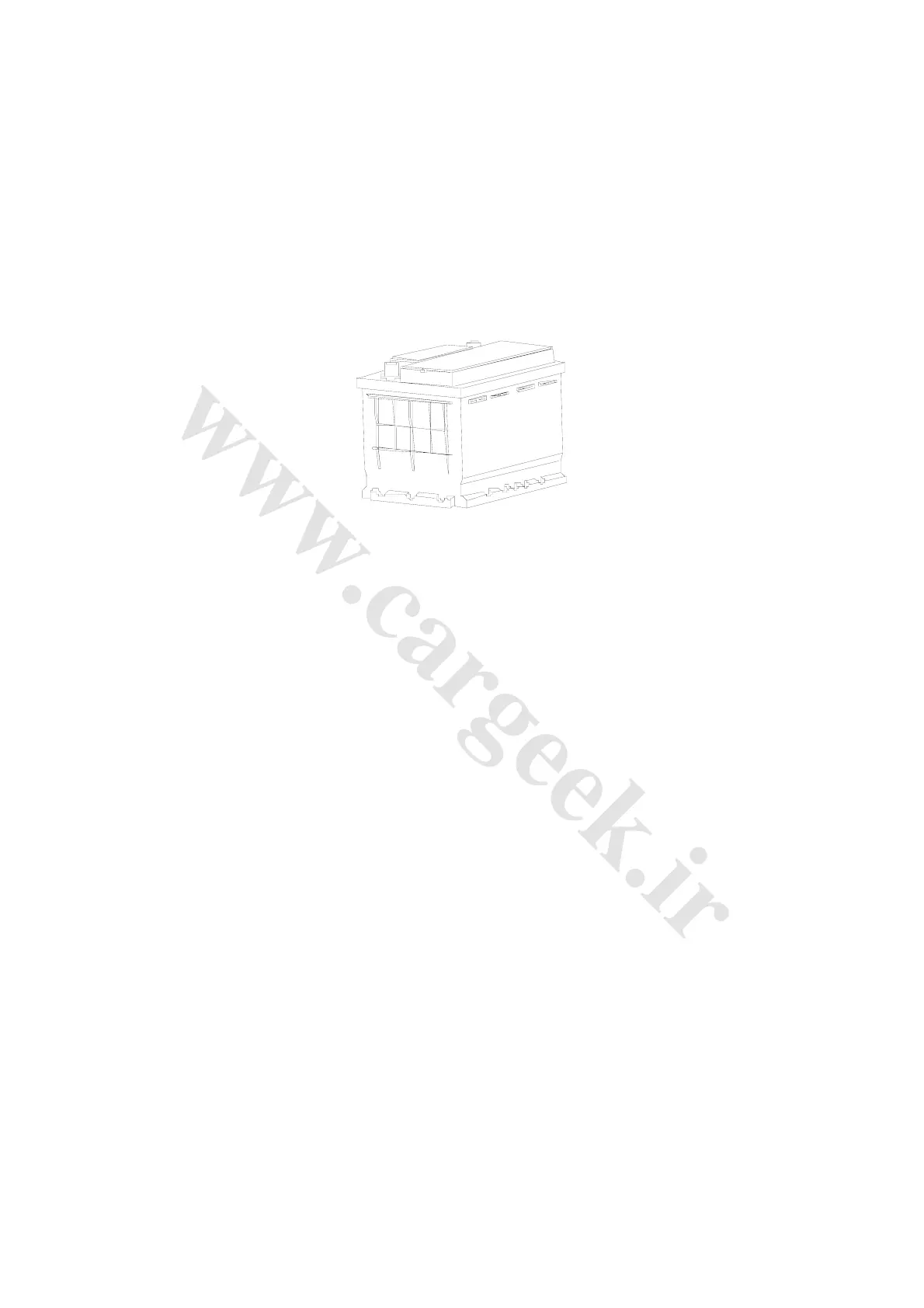
Fig. 4-116
Note:
①: If an auxiliary battery and a jumper cable are required for engine starting, please apply the
battery of 12V.
②: After connecting battery cable, make sure the cable is fastened to the battery tightly to ensure
a good contact.
How to use battery
①: Battery surface (especially the top) shall always keep dry and clean. If the surfaces are wet or
electrolyzed, battery will make electric discharge.
②: Shall remove the negative cable for long time not using intention.
Note: Do not make electrolyte contact with skin, eye, textile or painted surface. After contacting,
wash with water for 15min and seek for medical assistance.
③: Sulphation of battery. If battery is not used for a long time and the proportion of electrolyte is
less than 1.1, sole battery pole plate sulphation caused by complete electric discharge will happen.
Compared with normal battery, although sulphation battery has higher voltage in early stage of
charging, the electric current is not stable.
To protect battery, the battery shall be maintained in good charging state. Note: For battery
maintenance, operate according to notes on the battery.
III. Power switch system
1. If the fuse is blown, renew it after clearing the related fault causes.
2. Employ the fuse with the designated specifications, no fuse exceeding the given specifications
can be accepted.
3. Don’t install the fuse obliquely, ensure it to install correctly in the fuse box.
Relay mainly includes: normally open, normally closed and the mixed type.



 To Next Page