R.6.6
SEL-421 Relay Reference Manual Date Code 20111215
DNP3 Communications
DNP3 in the SEL-421
In both the unsolicited report-by-exception and quiescent polling methods
shown in Table 6.4, you must make a selection for the PUNSOL setting. This
setting enables or disables unsolicited data reporting at power up. If your
master can send the DNP message to enable unsolicited reporting from the
SEL-421, you should set PUNSOL to No.
While automatic unsolicited data transmission on power up is convenient,
problems can result if your master is not prepared to start receiving data
immediately on power up. If the master does not acknowledge the unsolicited
data with an Application Confirm, the relay will resend the data until it is
acknowledged. On a large system, or in systems where the processing power
of the master is limited, you may have problems when several relays
simultaneously begin sending data and waiting for acknowledgement
messages.
Collision Avoidance
If your application uses unsolicited reporting, you must select a polled mode
(polled static or polled report-by-exception) or a medium that includes carrier
detection to avoid data collisions. EIA-485 two-wire networks are half-
duplex. EIA-485 four-wire networks do not provide carrier detection, while
EIA-232 systems can support carrier detection.
The relay uses Application Confirmation messages to guarantee delivery of
unsolicited event data before erasing the local event data buffer. Data
collisions are typically resolved when messages are repeated until confirmed.
The SEL-421 pauses for a random delay between the settings MAXDLY and
MINDLY when it detects a carrier through data on the receive line or the CTS
pin. If you use the settings of 0.10 seconds for MAXDLY and 0.05 seconds for
MINDLY, the SEL-421 will insert a random delay of 50 to 100 ms
(milliseconds) between the end of carrier detection and the start of data
transmission.
Transmission Control
If you use a media transceiver (for example, EIA-232 to EIA-485) or a radio
system for your DNP network, you may need to adjust data transmission
properties. Use the PREDLY and POSTDLY settings to provide a delay
between RTS signal control and data transmission. For example, an EIA-485
transceiver typically requires 10 to 20 ms to change from receive to transmit.
If you set the pre-delay to 30 ms, you will avoid data loss resulting from data
transmission beginning at the same time as RTS signal assertion.
Event Data
DNP event data objects contain change-of-state and time-stamp information
that the SEL-421 collects and stores in a buffer. You can configure the
SEL-421 to either report the data without a polling request from the master
(unsolicited data) or hold the data until the master requests it with an event
poll message.
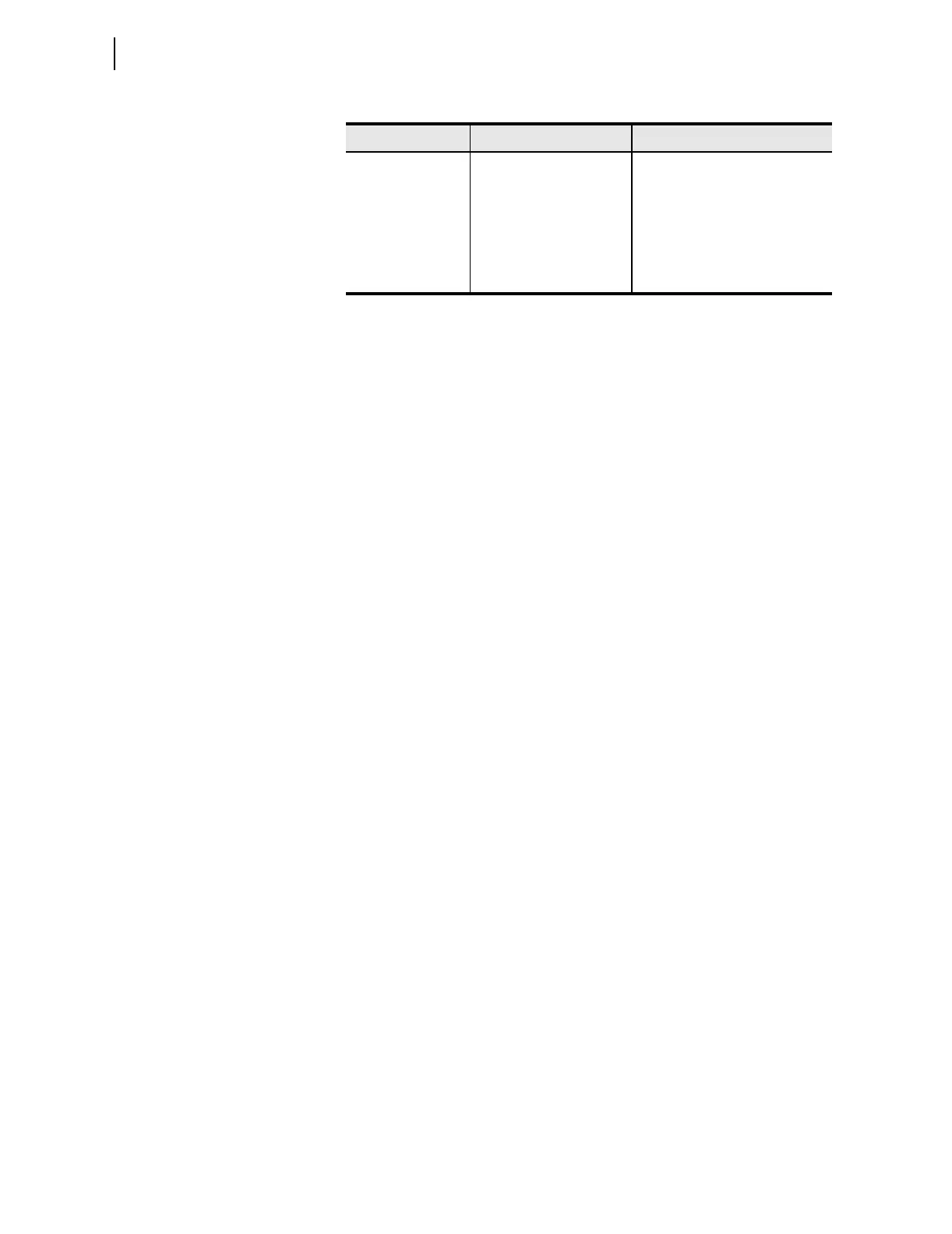
Unsolicited report-
by-exception
Class 0 occasionally,
optional Class 1, 2, 3 less
frequently, mainly relies on
unsolicited messages
Set ECLASSB, ECLSSC,
ECLASSA, ECLASSV to the
desired event class, set UNSOL to
Yes and PUNSOL to Yes or No.
Quiescent Class 0, 1, 2, 3 never, relies
completely on unsolicited
messages
Set ECLASSB, ECLSSC,
ECLASSA to the desired event
class, set UNSOL and PUNSOL to
Yes .
Table 6.4 DNP Access Methods (Sheet 2 of 2)
Access Method Master Polling SEL-421 Settings


 To Next Page