6.4 ACTIONS BEFORE ASSEMBLY 6 SERVICE, DISMANTLING, ASSEMBLY
82
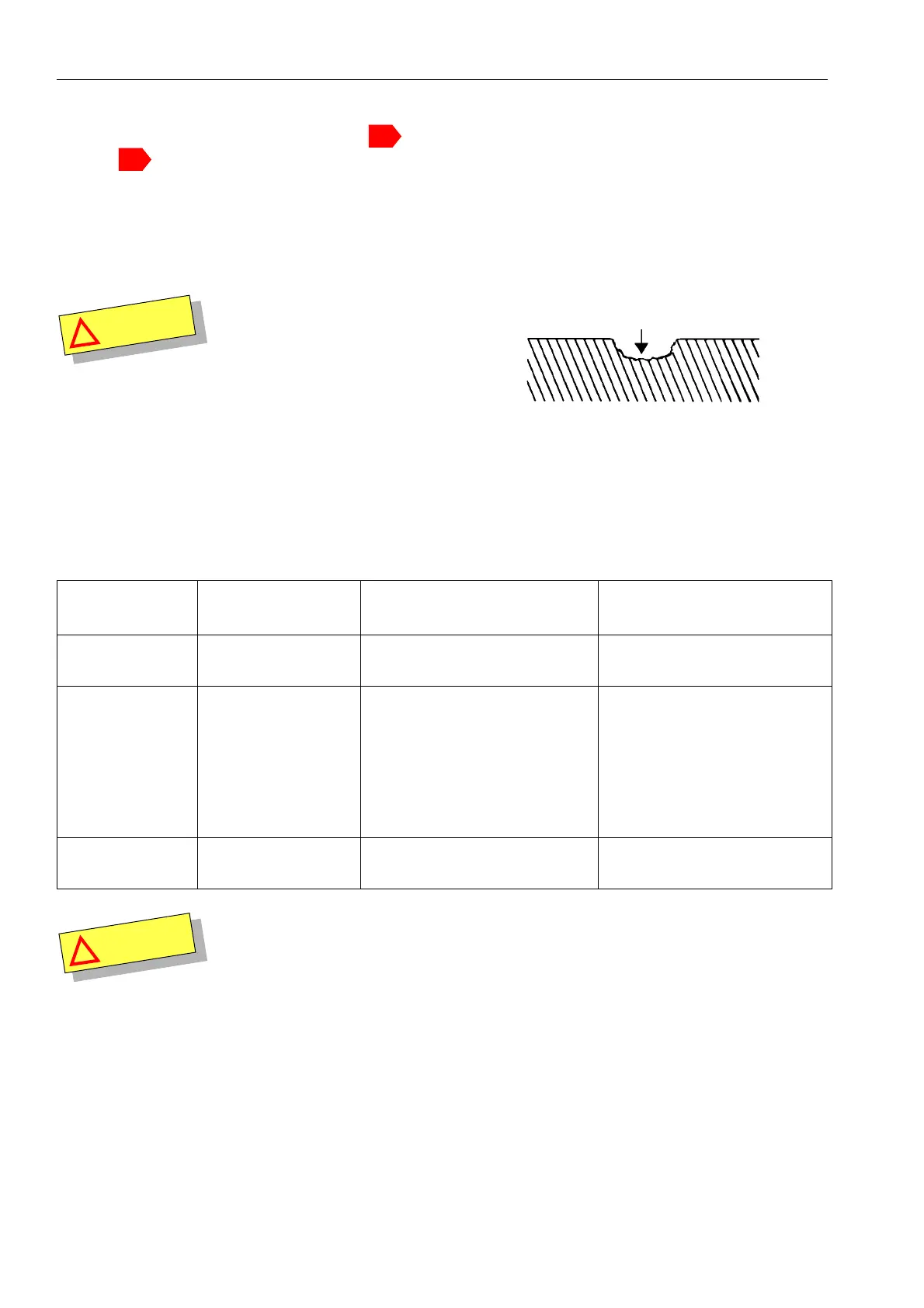
6.4.2 Inspection for corrosion
Inspect the separator parts for corrosion.
Evidence of corrosion attacks should be looked
for and rectified each time the separator is
dismantled.
W
A
R
N
I
N
G
!
Disintegration hazards
Always contact your Alfa Laval representative if you
suspect that the depth of the corrosion damage
exceeds 0,2 mm for bowl body and bowl hood (0,5
for other parts) or if cracks have been found. Do not
continue to use the separator until it has been
inspected and given clearance for operation by Alfa
Laval.
Material Type of corrosive
environment
Appearance Measure
Non-stainless steel
and cast iron parts
Water or dampness Rust If damage exceeds 0,5 mm, contact
Alfa Laval.
Stainless steel Chlorides or acidic
solutions
Acidic solutions cause general
corrosion.
Chloride corrosion begins as small
dark spots that can be difficult to
detect, and goes on to local damage
such as pitting, grooves or cracks.
Polish dark-coloured spots and
other corrosion marks with a fine
grain emery cloth. This may prevent
further damage.
If damage exceeds 0,5 mm (0,2 mm
for bowl body and bowl hood)
contact Alfa Laval.
Other metal parts “Aggressive”
environment
Possible corrosion damage can be
in the form of pits and/or cracks.
If damage exceeds 0,5 mm, contact
Alfa Laval.
W
A
R
N
I
N
G
!
Disintegration hazard
Pits and spots forming a line may indicate cracks
beneath the surface.
All forms of cracks are a potential danger and are
totally unacceptable.
Replace any part where corrosion can be
suspected of affecting its strength or function.
i
o
G0205241
Max. 0,2 mm



 To Next Page