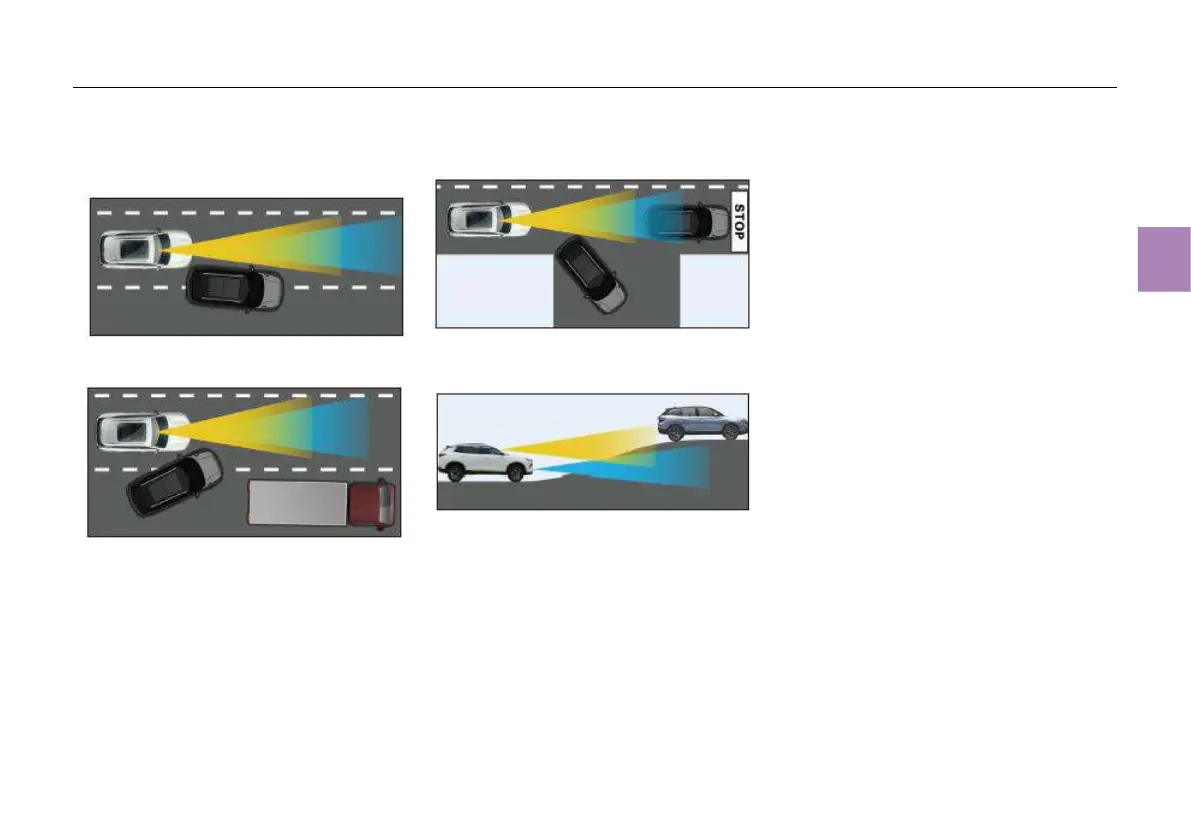
In addition to the above, when using the ICA
system, drivers should be alert and ready to take
measures or brake and turn off the ICA system if
necessary under the following conditions:
● The ego vehicle approaches the lead vehicle
too quickly or the lead vehicle brakes
suddenly, so that the ICA system cannot
apply sufficient braking force.
● The ego vehicle encounters a vehicle with a
high chassis such as a truck or trailer.
● Surrounding vehicles splash water or snow
accumulated on road, which may affect the
radar operation.
● During driving in tunnels, the radar and
camera sensors will be affected and may fail
to detect vehicles farther away or work
unstably.
● In bad weather such as heavy fog, rain,
snow, sandstorms, etc., the operation of
sensors will be affected.
● When the road friction coefficient is low, rapid
changes in tire traction can cause the vehicle
to skid.
● The sensor performance will be affected
when the lighting conditions around the
vehicle are poor (insufficient or too strong
light).
● When objects such as road tracks and metal
plates exist in front of the road, the sensor
may be disturbed.
● Vehicle collision, violent vibration and other
situations that may change the sensor
position.
● The lead vehicle is loaded with objects
protruding from its side or rear end, which
cannot be recognized by the ICA system.



 To Next Page