USTER®
HVI 900
Instruction Manual
Uster Technologies, Inc..
Chapter 9
Version 4.0 (1.99) HVI Applications - Page 9-3
5 Applications of HVI Results
for Spinning Mills
The speed of the HVI instrument allows every bale of cotton to be
tested. The challenge then becomes how to effectively use the
information to improve the spinning process. All cotton has a natural
variation of fiber properties. Some of these variations are small but
others may be quite large. This variation is greatest between bales of
cotton grown with different seed varieties. We also find variation of
fiber properties within a cotton seed variety. Many factors influence
the variation of fiber properties. These include growth area, climate,
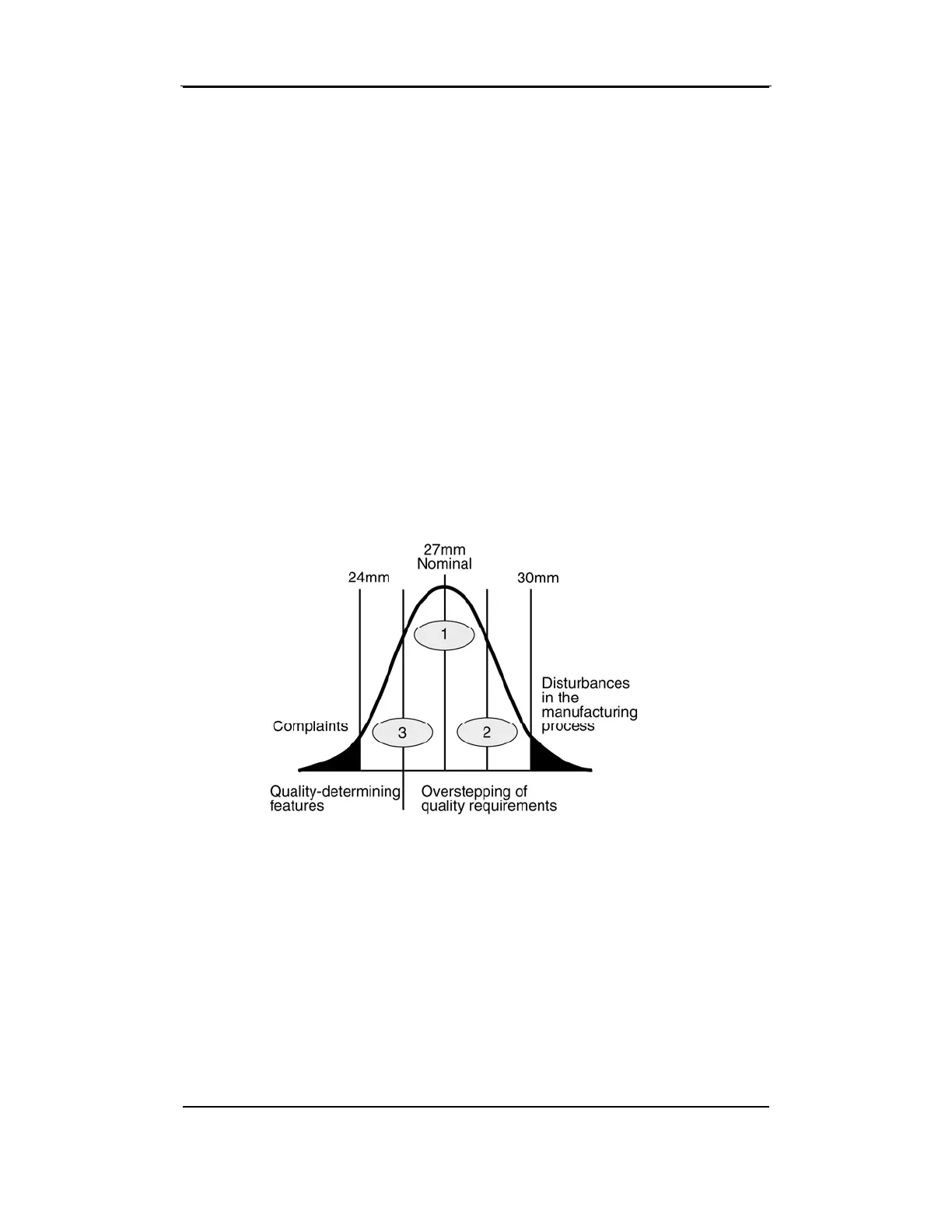
planting and harvesting practices. A typical distribution of the length
variation of cotton with a 27-mm staple length is shown below. These
types of normal distributions apply to almost all of the fiber properties
measured by the HVI instrument.
Yarn must finally either be knitted or woven into fabric. The increase of
weaving speeds and efficiency has placed new demands on the yarn
produced by modern spinning mills. The graph below shows what
happens when new high-speed looms are put into production without
an accompanying improvement of yarn quality. Because of the higher
loom speeds, yarn that produced acceptable end breaks per 100,000
picks now becomes unacceptable, producing very low weaving
efficiency. Single end yarn strength is one vital influence in yarn end
breaks in weaving.



 To Next Page