Visual inspection of wheels and tires
Four tires shall be inspected before driving, and
the tread and sidewall shall be inspected
regularly for bulge, scratches, abnormal wear,
cracks, and iron nailing. If the any of above
phenomena occurs, please contact the
authorized dealer for inspection and
replacement.
The damage of the tire is not easy to be found. If
the vehicle involves abnormal vibration, noise or
deviation during the running, it means a fault
may occur in one of the tires. In this case, stop
the vehicle immediately and inspect the wheels
and tires for damage while ensuring safety.
Please contact the authorized dealer for
inspection when necessary.
Common causes of tire damage:
● Impact or friction against the curb.
● The vehicle quickly passes through the deep
pit on the road.
● The tire pressure is too low or too high.
Regularly inspect the tread depth and tread
condition along the entire tire width. A low tread
depth will reduce the tire adhesion. Especially on
slippery roads, it will increase the risk of
hydroplaning and seriously affect the safety of
driving.
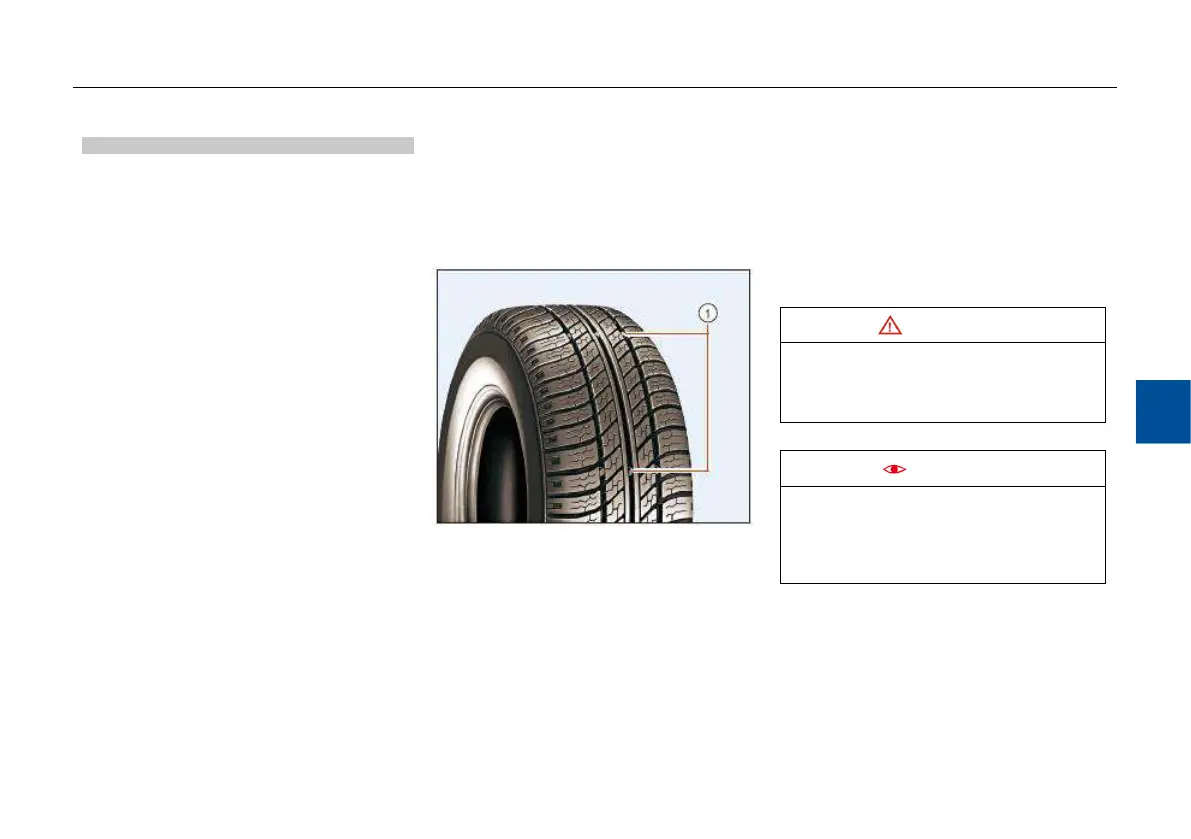
Tread wear mark ① indicates the safe use limit
of the tire.
If the tread is worn to the wear mark, replace the
tire.
Inspect if all wheels are equipped with valve
caps and inspect the valve for dirt and air leaks.
Do not install any parts on the valve.
Inspect the condition of the rim. If the rim is
distorted, cracked, corroded or severely
scratched, it shall be replaced in time. If the
wheel bolts are often loosened, the wheels and
wheel bolts shall be replaced.
After the tire has a bulge, crack, etc., it is
impossible to continue driving the vehicle, as
the tire burst may occur during driving,
causing a traffic accident and personal injury.
For vehicles stored for a long time, inspect
the tire pressure in time and move the tires to
avoid long-term pressure on the part
contacting the ground of the tires, resulting in
permanent tire deformation and affecting use.



 To Next Page