If the tire pressure is obviously insufficient,
and the vehicle continues to run at a high
speed, the tire will continue to be deformed,
which will easily lead to overheating of the
tire and cause the tire to burst.
Tire rotation
The tire rotation aims to make all tires be worn
evenly and to extend the overall life of the tire.
Tire rotation should be carried out every 10,000
km or so.
Before the tire rotation, inspect the tires and
wheels for damage. If no damage is found,
perform tire rotation and wheel alignment.
● The front wheel shall be kept in a better
condition before tire rotation.
● If a tire is unevenly or excessively worn,
the wheel alignment shall be done at the
authorized dealer.
● For vehicles equipped with a DDS, DDS
initialization is required after the tire
rotation. (See page 186 for details)
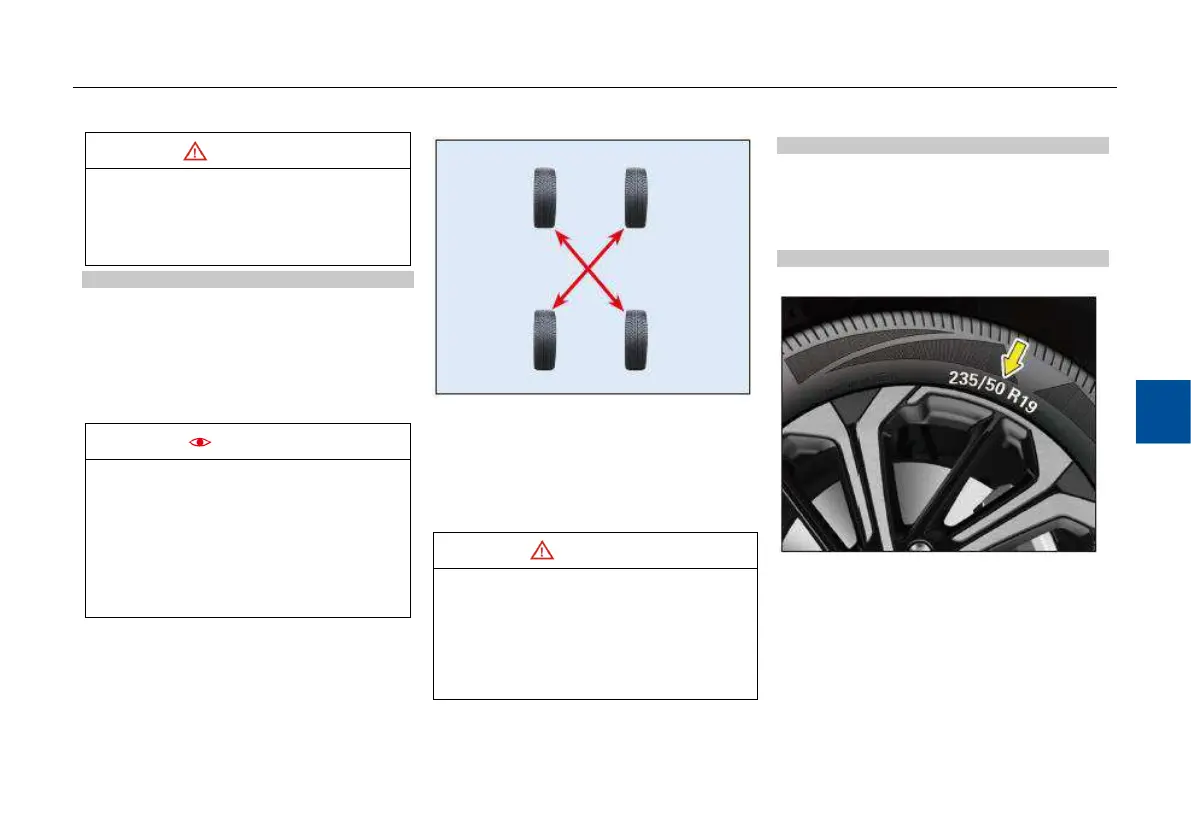
The tire rotation shall be done in a diagonal
manner. The spare wheel does not involve tire
rotation. After the tire rotation, make sure that all
wheel bolts are tightened to
100Nm. Adjust the air pressure of all wheels to
the specified value. Inspect the tightening of the
wheel bolts after driving 1,000 km.
Dirt on the joint surface between the wheel
and the brake disc may cause the wheel
bolts to loosen, which may cause the wheels
to fall off and even cause a traffic accident.
Therefore, when replacing the wheel, the rust
or dirt on the joint surface between the wheel
and the brake disc shall be removed.
Inspecting wheel dynamic balance
The dynamic unbalance of vehicle will cause that
the wheels sway, the tires are worn improperly,
and the driving stability is affected. Therefore,
you should inspect the wheel balance regularly
at the authorized dealer.
Selecting and replacing tires
Purchasing new tires
View the “Tire Information Label” to find out the
tire model and size you need.
The tires of the same brand, model, size, thread
pattern, and age must be used for the same
axle.



 To Next Page