a Position to stake out
b Sur
face grade to stake out
c Left line
d Right line
e Centreline
f Stake chainage
g Chainage
h CL offset
i Difference in chainage
j Difference in offset
k Difference in height
a Surface grade to check
b Left line
c Right line
d Centreline
e Chainage
f Difference in offset
g Difference in height
h Surface grade offset
i Surface grade ht diff
•
Sur
f
aces such as the final carriage way, are often staked/checked using
surface grades. A surface grade consists of a combination of two lines.
•
Refer to "43.6.3 Road - Basic Elements for Stake and Check Measure-
ments" for information on the usage of surface grades.
A 3D design of the road is required.
45.3.7 Measuring Manual Slopes, Local Manual Slopes and Design Slopes
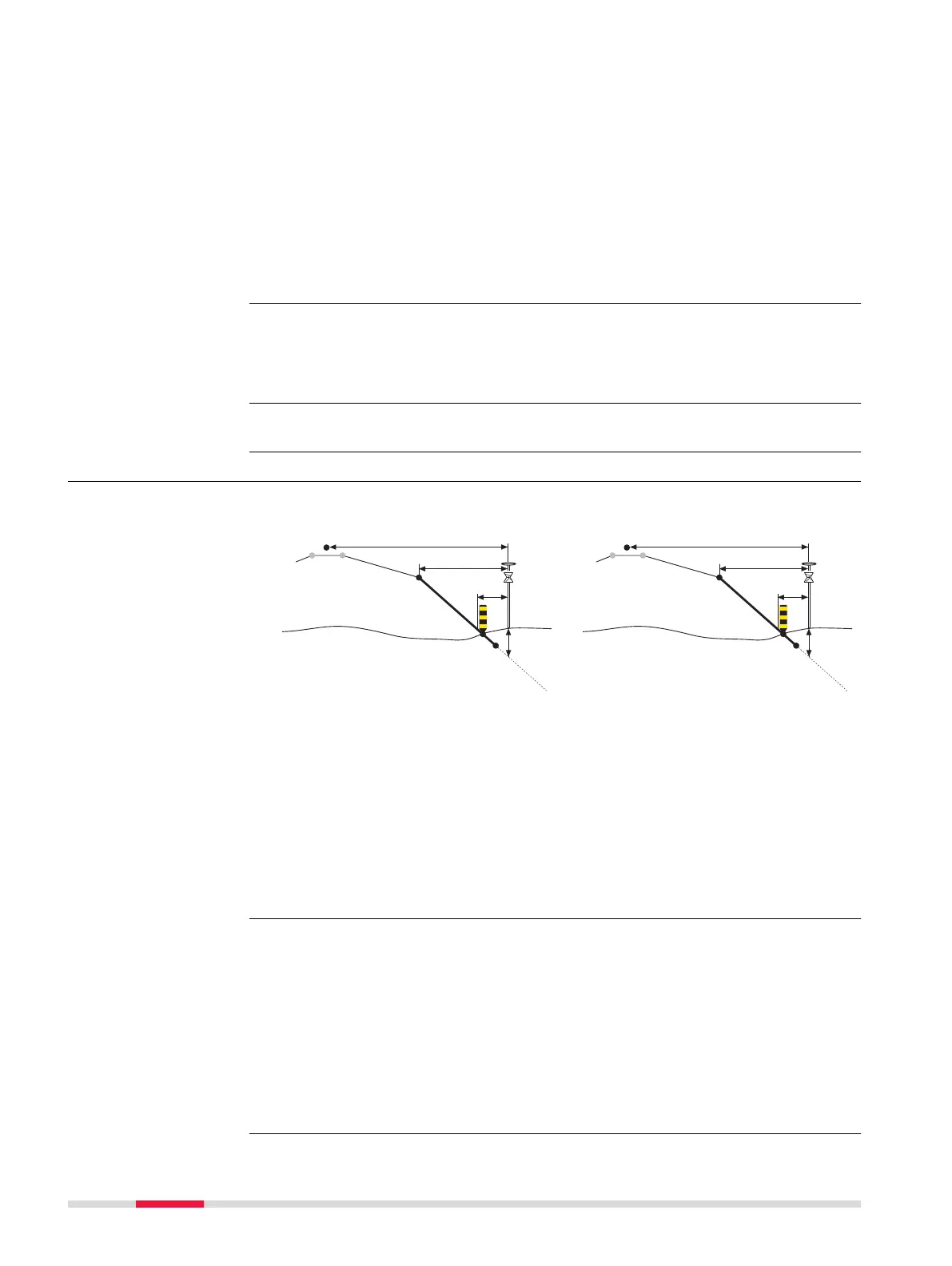
Stake road Check road
a Catch point
b Cen
treline
c Slope to stake out
d Hinge point = left line
e Second/right line
f Natural surface
g Hinge offset
h CL offset
i Difference in offset
j Difference in height
a Catch point
b Centreline
c Slope to check
d Hinge point
e Second line of the slope
f Natural surface
g Hinge offset
h CL offset
i Slope offset
j Slope height diff
•
Surf
aces, such as the end slopes of a cut or fill, are staked/checked using
slope methods.
•
Slopes are defined by two lines. Refer to "43.6.3 Road - Basic Elements
for Stake and Check Measurements".
•
When staking slopes, the point of interest is the intersection of the
defined slope with the natural surface (= catch point). Refer to "45.2.3
Advanced Slope Settings" for information on the slope staking methods
supported.
•
When checking slopes, the slope check is independent of the slope
method selected.
Description
Required elements
Graphical overview
Description
764 Roads - Road









 To Next Page