Preparation of trenches
Page 114 OmniTrax Product Guide
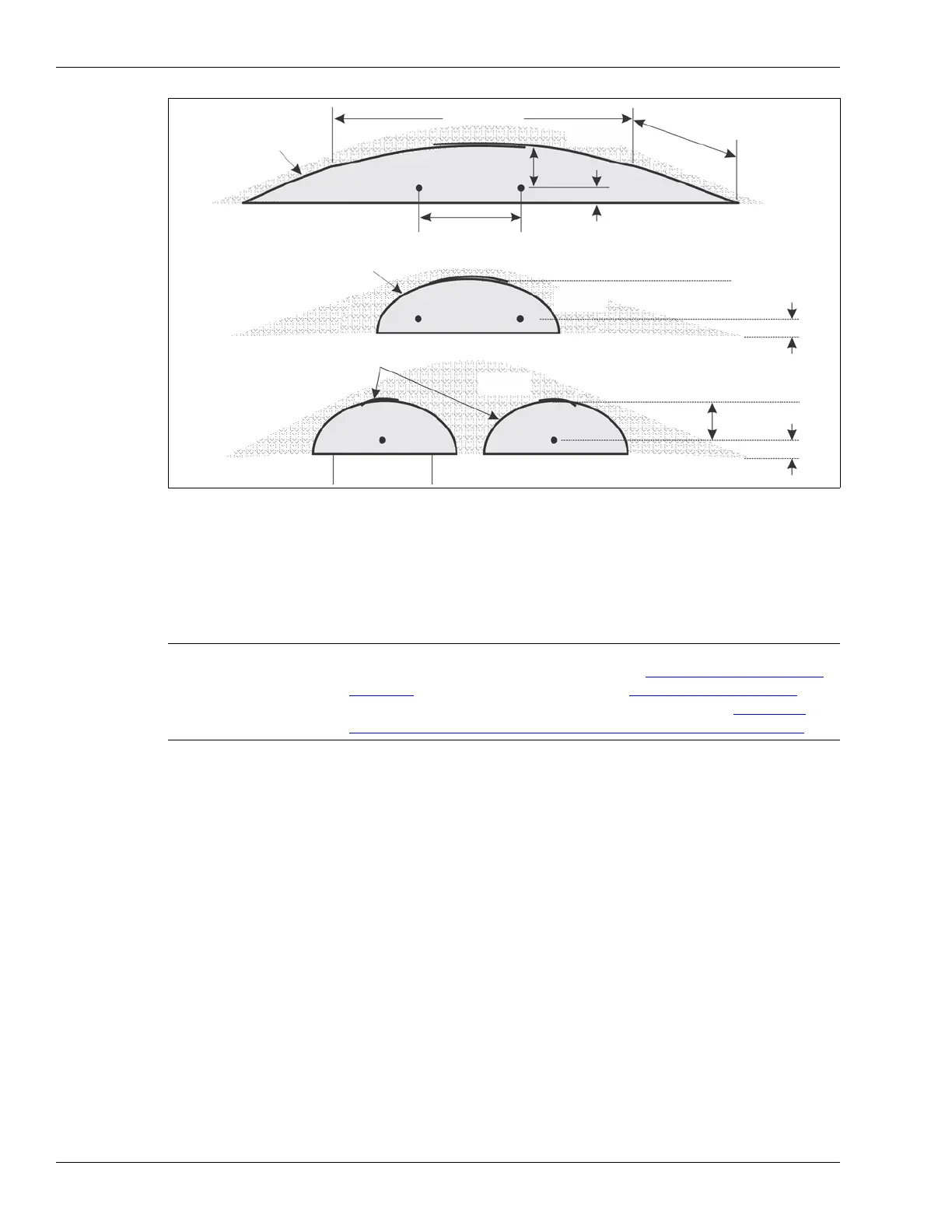
1. Remove any debris and stones from the ground’s surface, then roll out the geotextile fabric on
the ground.
2. Cover the portion of the fabric where the sensor cables will lay with a 7.5 cm (3 in.) deep layer
of stone dust or sand.
3. Lay the sensor cables on top of the 7.5 cm stone dust or sand layer.
4. Pull the cables taut and cover the sensor cables with an additional 23 cm (9 in.) layer of stone
dust or sand.
5. Slope the sides of the berm with a minimum 1:3 ratio (depending on the severity of erosion
expected).
6. Fold the geotextile fabric over the stone dust or sand and cover the fabric with a layer of
crushed stone that is at least 2.5 cm (1 in.) deep. Additional crushed stone may be needed if
erosion is severe.
7. Ensure that the geotextile fabric is completely covered with crushed stone.
Figure 78: Above ground installation in a berm
Note Before covering the cables, install the Ferrite beads and connectors, but
do not seal the heatshrink at this time (see Installing cable fittings
on
page 121). Next, do the cable tests (see Cable tests on page 146) and
then do a sensitivity profile to verify the installation (see OmniTrax
calibration - Sensitivity Profile and Transmitter Power on page 197).
geotextile fabric
3 m (10 ft.)
gravel
90 cm (3 ft.)
gravel
gravel
10 cm to 2 m
(4 in. to 6.5 ft.)
23 cm
7.5 cm
geotextile fabric
geotextile fabric
7.5 cm (3 in.)
23 cm
min. 30.5 cm
(12 in.)
7.5 cm
23 cm (9 in.)
stone dust or sand
stone dust or sand
stone dust or sand
stone dust or sand


 To Next Page