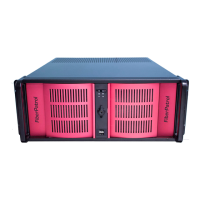
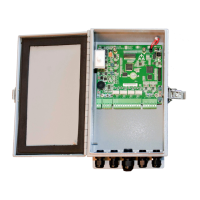
OmniTrax components
Page 18 OmniTrax Product Guide
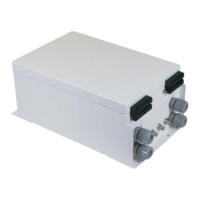
The telecom enclosure
The telecom style enclosure is used for outdoor installations, to provide additional security and
protection from the elements. The telecom enclosure is ground mounted in a concrete base. The
concrete base must be set above ground level in areas prone to ice and on high ground in areas
prone to flooding. Once the telecom enclosure is installed in the concrete base, a custom bracket
is installed inside, and an OmniTrax enclosure is mounted on the bracket. The telecom style
enclosure comes with a tamper switch that connects to the OmniTrax processor to indicate when
the telecom enclosure is opened.
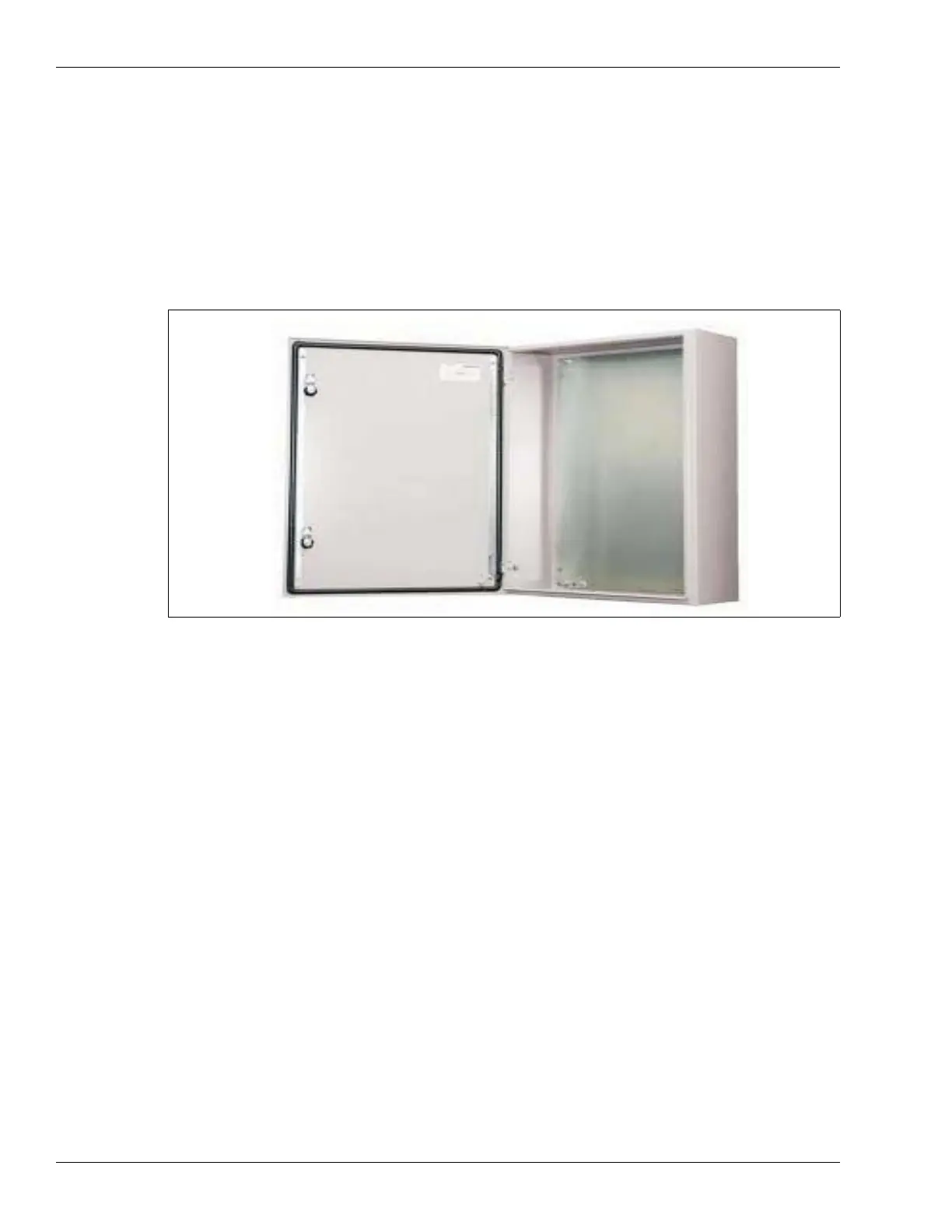
Customer supplied enclosure
A Customer supplied enclosure must be large enough to accommodate the OmniTrax enclosure
with a service loop for the sensor cables, power cables and I/O wiring. If the OmniTrax processor
will use the local battery option, the enclosure must be properly ventilated. It is also possible to
mount a power supply beside the processor if the enclosure is large enough. The recommended
size for a Customer supplied enclosure without a power supply and using lightning arrestors is
69 cm W X 58 cm H X 20 cm D (27 in. W X 23 in. H X 8 in. D). For a Customer supplied enclosure
that includes space for a 48 VDC network power supply and lightning arrestors the recommended
dimensions are 69 cm W X 69 cm H X 20 cm D (27 in. W X 27 in. H X 8 in. D). If lightning arrestors
are not being used the height of the enclosure can be reduced by 10 cm (4 in.). A Customer
supplied enclosure should include an internal mounting plate for the OmniTrax enclosure.
Sensor cables
There are three types of sensor cables available with the OmniTrax system. The type of cable you
choose depends on the length of your perimeter, the installation media, the installation space, the
type and number of obstacles, and the cable path. When designing your site, you should plan on
using approximately 5% more sensor cable than the total length of the perimeter.
• OC2 sensor cable - requires one or two trenches, or two slots, available in lengths of 300 and
400 m of detecting cable + 20 m lead-in
• SC2 sensor cable - requires one or two trenches, or two slots, available in lengths of 50, 100,
150 and 200 m of detecting cable + 20 m of lead-in
• SC1 sensor cable - requires one trench, available in lengths of 50, 100, 150 and 200 m of
detecting cable + 20 m of lead-in
Figure 3: Customer-supplied enclosure


 To Next Page