Overview
X
TRA Operator’s Manual 20077/021 US 2-3
How the XTRA System Works
Intraoperative and postoperative processing involves three major subsequent processes: collection
and anticoagulation, processing, and reinfusion. The X
TRA system collects and anticoagulates blood,
processes, and provides blood for reinfusion in a safe, fast, effective, and easy-to-operate fashion.
Collection and Anticoagulation
Before (and during) processing, blood is aspirated from the surgical or trauma site via an aspiration
line. The aspirated blood is mixed with an anticoagulant near the tip of the suction cannula, and the
anticoagulated blood is collected in a sterile blood collection reservoir, filtered, and contained. After a
sufficient amount of blood has been collected, processing may be started.
Processing
The XTRA processes the blood in three stages, each named for what is occurring in the centrifuge
bowl:
Fill In the Fill phase, blood is introduced from the reservoir into the spinning centrifuge bowl.
The higher density red blood cells are packed against the outer wall of the spinning bowl as
the centrifuge is filled. The plasma and the waste components flow into the waste bag. The
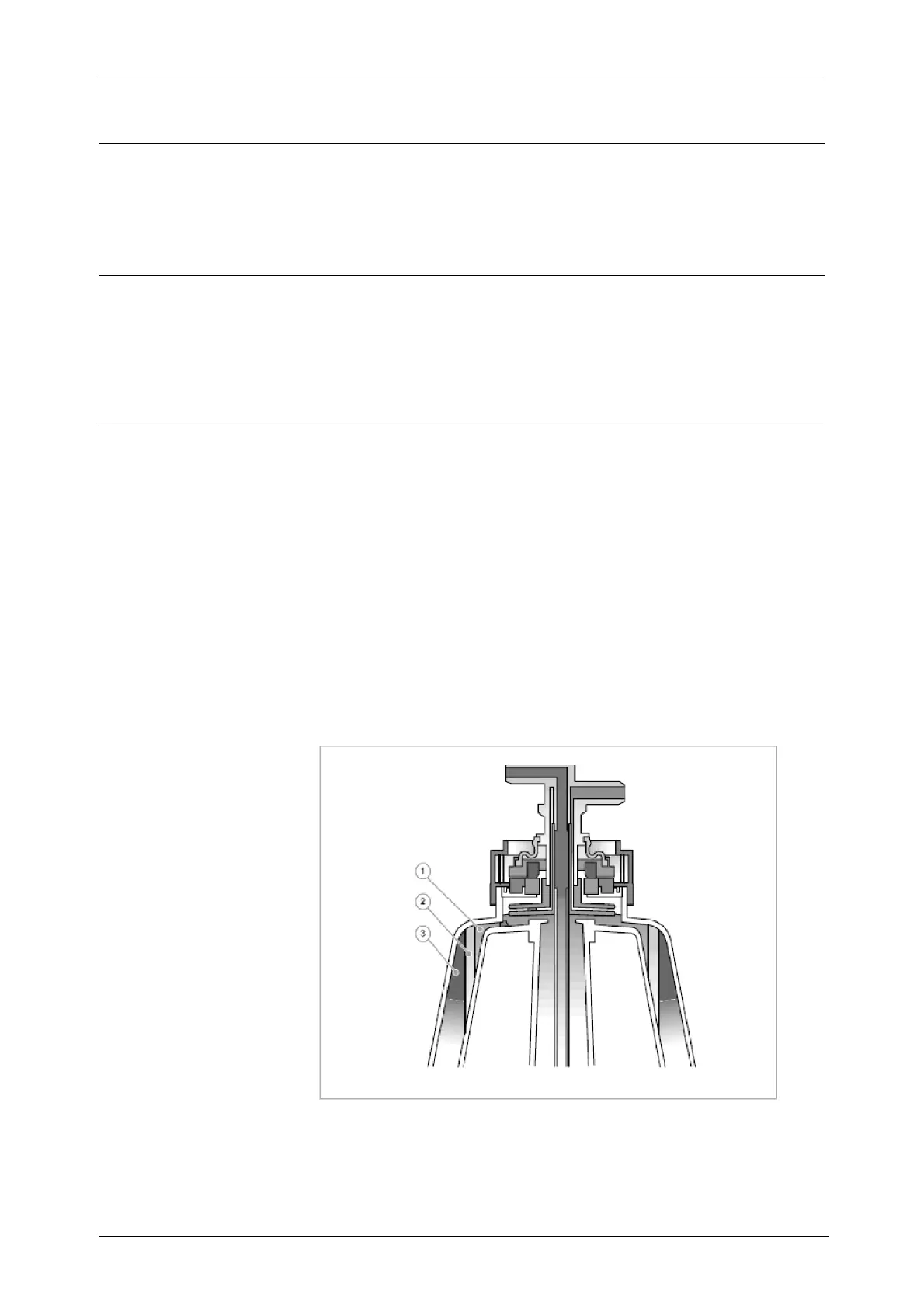
result is concentrated red blood cells. Figure 2-1 shows the blood components during bowl
centrifugation: red cells (3), buffy-coat (2), supernatant (1).
Wash During the Wash phase, saline is pumped into the spinning bowl and displaces material that
is less dense than the red blood cells. Washed out materials include cellular stroma, plasma
free hemoglobin, activated clotting factors, and anticoagulant. The waste material from the
Wash phase flows into the Waste bag.
Empty In the Empty phase, the packed and washed red cells—suspended in saline at a hematocrit
variable between 50-65%—are pumped from the centrifuge bowl into the primary RBC bag.
Figure 2-1 Position of Separated Whole Blood Components in Centrifuge Bowl





 To Next Page