CDM-840 Remote Router MN-CDM840
Appendix J Revision 3
J–11
• In this mode, the minimum bandwidth (CIR) for all rules – excluding the default rule – will be
served first in Round-robin fashion.
In this example, the total minimum bandwidth for Rules 1 and 2 is 5000 kbps. Since the total
bandwidth is 20000 kbps, it has enough bandwidth to serve.
• After serving the minimum bandwidth, the leftover bandwidth is 15000 kbps (20000 – 5000
= 15000).
• Leftover bandwidth will be served among all rules in Round-robin fashion until it hits
maximum bandwidth limitations.
• Each rule’s bandwidth is 15000 / 3 = 5000 kbps.
• Since Rule 1 maximum clipping was set to 4000 kbps, and minimum bandwidth has already
taken 2500 bytes, it will use 1500 kbps more before reaching the maximum clipping. The
leftover 3500 kbps (5000 – 1500 = 3500) is again given to the main pool.
• Rule 2 does not have enough traffic coming in, so it will use only 2500 kbps (5000 – 2500 =
2500); the remaining bandwidth (5000 – 2500 = 2500) is again given to the main pool.
• Rule 3’s input stream is 7000 kbps; it will take its share of the 5000 kbps allocation. Still, it
needs 7000 – 5000 = 2000.
• After serving the fair share, the total leftover bandwidth is 6000 kbps (3500 + 2500 = 6000).
• Since Rule 3 needs the bandwidth, the leftover bandwidth is applied to that rule.
• After serving Rule 3, the leftover bandwidth 4000 kbps will be applied to the default queue.
• The default rule will see the data rate of 4000 kbps.
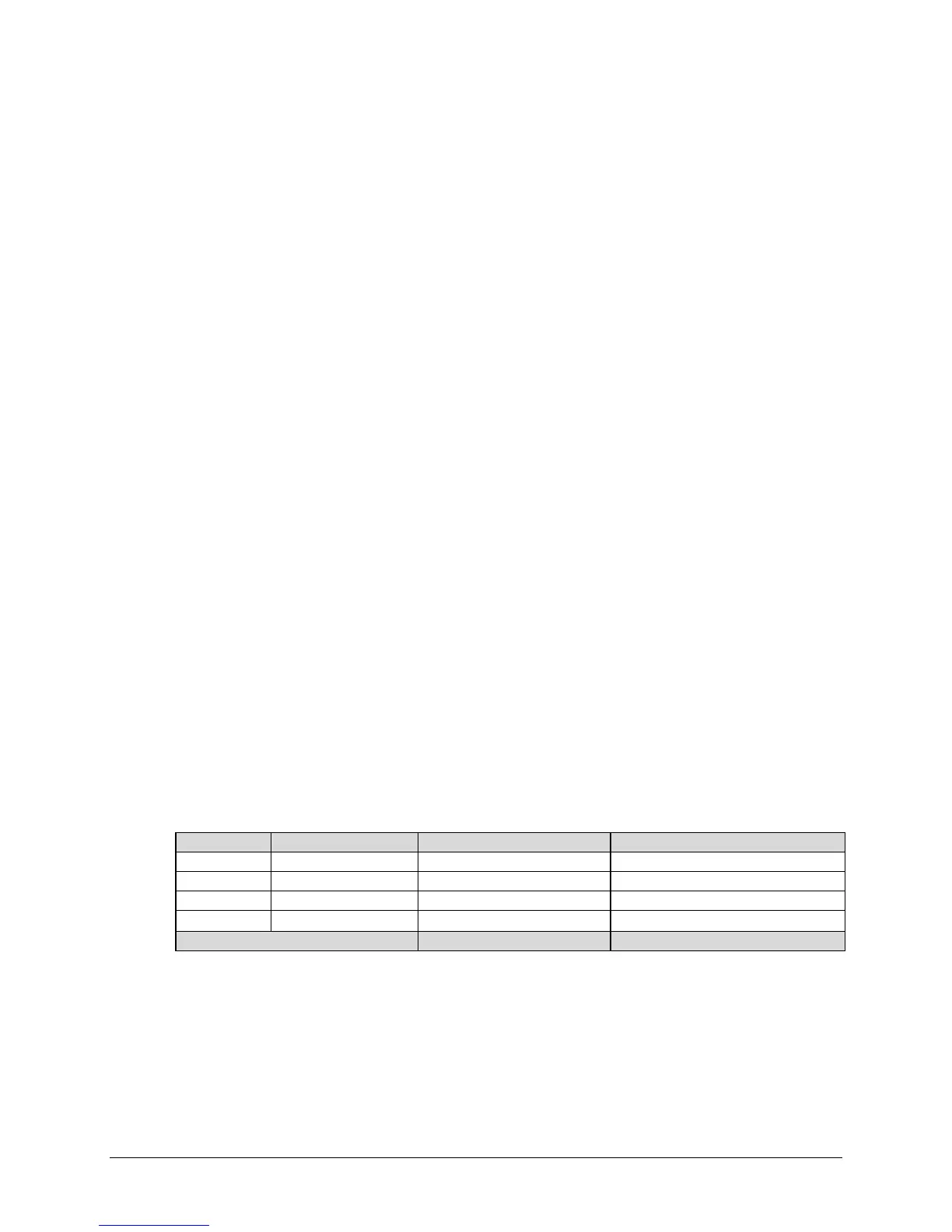
The individual rule’s data rates are as follows:
QoS Output Data Rate (kbps)



 To Next Page