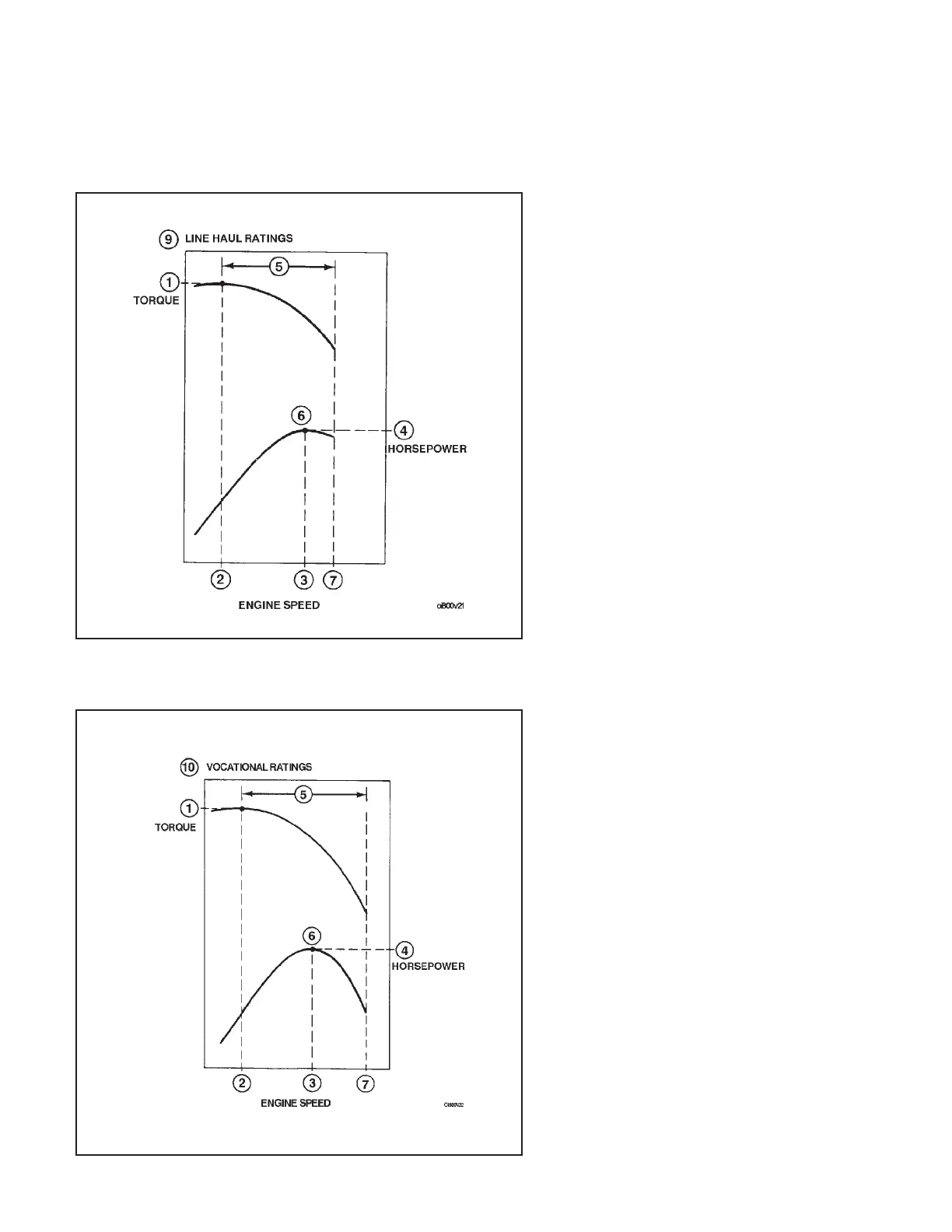
Definition of Terms On Engine Performance Curve
Cummins N14 Heavy Duty Engine Operating Curve Definitions:
Fig. 1
Fig. 2
1. Peak Torque (N•m [ft-lb]) - Maximum
torque that the engine will produce. Also,
sometimes referred to as COMMAND
TORQUE. This is listed on the engine data
plate.
2. Peak Torque RPM (RPM) - Engine speed
at which peak torque is generated. This is
listed on the engine data plate.
3. Maximum HP RPM (RPM) - Engine speed
at which maximum power is developed.
This is listed with Advertised Horsepower
on the engine data plate.
4. Advertised Horsepower (HP) - Maximum
power that the engine will develop. This is
provided on the engine data plate with its
corresponding engine speed.
5. Command Range (RPM) - The engine’s
operating range from COMMAND
TORQUE or Peak Torque up to the en-
gine’s governed speed.
6. COMMAND Point - The point on the per-
formance curve where maximum horse-
power and optimum fuel economy come
together. This is the point where Adver-
tised Horsepower occurs.
7. Full Load Governed Speed (RPM) - De-
fined as the upper end of the engine’s full
load operating range. This is listed on the
engine data plate.
8. No-Load Governed Speed (RPM) - (not
shown) Maximum unloaded engine speed.
This value is listed on the engine data sheet
and in the FPEPS publications.
9. Line Haul Rating - An engine that has a
line haul rating has a narrow operating
range (RPM). A line haul rating is typically
used for on-highway applications. These
engines are used with larger (more gears,
13 speed, etc.) transmissions with close
ratio splits between gear shifts.
10. Vocational Rating - A vocational rated en-
gine has a wider operating range (RPM).
This rating is typically used for on and off,
or off-highway applications. These engines
are used with smaller (fewer gears, 9
speeds, etc.) transmissions with large ra-
tio splits between gear shifts.
Engine Testing Definition of Terms On Engine Performance Curve
N14 Page 8-3



 To Next Page