
 Need help?
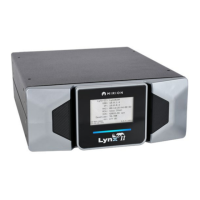
Do you have a question about the Mirion Technologies Lynx II DSA and is the answer not in the manual?
Provides a reference to the manual's capabilities and operations of the Lynx II DSA.
Lists the essential capabilities and functionalities of the Lynx II Digital Signal Analyzer.
Lists common abbreviations and acronyms used throughout the manual for clarity.
Describes various acquisition modes like PHA, DLFC, MCS, MSS, and List Modes.
Details Auxiliary Counters, Digital Storage Oscilloscope, and Single Channel Analyzers.
Guides users on accessing and interacting with the Lynx II system.
Introduces the Lynx II Web Client interface and its basic views.
Details accessing the system, changing network settings, and managing security.
Covers hardware settings, acquisition parameters, and sample energy calibration.
Details the instrument status and activity displayed on the front panel LCD screen.
Summarizes rear panel connectors including HVPS outputs, signal inputs, and advanced panel I/O.
Explains rear panel LEDs for status indication and Lynx II system power.
Details system power connection and available communication ports (USB, Ethernet).
Describes the power switch, self-test, fault indication, and factory reset control.
Describes the Lynx II as a low-power, solid-state device and its components.
Covers rack-mounting options and setting up Genie 2000 analysis software.
Explains MID files, the MID Editor, and procedures for editing MCA settings.
Guides on using definition tables, loading/unloading databases, and the MID Wizard.
Details defining an MCA, interpreting entries, and setting up devices.
Covers Sample Changer configuration and input settings like name and detector type.
Explains Stabilizer settings and DSP Gain parameters for optimization.
Details DSP Filter settings and High Voltage Power Supply parameters.
Covers acquisition setup, coincidence logic, and external controls.
Illustrates detector system connections, including BNC and power cables.
Explains communication methods and default network settings.
Guides on setting up UPnP for device discovery and network access.
Covers initial setup tasks for administrators and users.
Guides on accessing the Lynx II via a web browser and its login page.
Describes the Navigator, Data, and Acquisition Panel views of the web client.
Explains the acquisition panel's LEDs, input selection, and start/stop/clear controls.
Details spectral plot interaction, context menus, ROIs, and calculations.
Covers expanding plots, zooming, and viewing acquisition/calibration data.
Introduces the digital oscilloscope for signal examination and waveform analysis.
Details miscellaneous, axes, and colors settings for graph customization.
Explains acquisition settings, modes, and calibration options.
Covers general acquisition settings and coincidence logic configuration.
Details external control options and MCS mode settings for Input 2.
Provides access to Hardware settings like HVPS, Gain, Digital Filter, and Stabilizer.
Covers Auxiliary Counters and External Synchronization settings.
Details Sample Changer settings and Single Channel Analyzer configurations.
Lists maintenance features and categorizes network settings.
Explains diagnostics, readings, monitors, and firmware update procedures.
Covers changing administrator password, backup/restore, and factory reset.
Details device lock/unlock, release notes, application info, and rebooting.
Details specifications for input connectors like ENERGY, TRP INH, HV INH, MCS, PHA SS, MCS SS.
Covers CHAN ADV, SWEEP ADV, GATE, CHGR RDY inputs and GP I/O, PWR, outputs.
Details ETHERNET, OTG, USB ports and rear panel indicator LEDs.
Explains Gain, Conversion Gain, LLD Mode, LLD/ULD settings.
Details TRP Inhibit, Digital Filter, Rise Time, Flat Top, PUR Guard settings.
Covers Slow Disc settings, PUR/LTC, Overload Recovery, BLR Mode, Auto Pole Zero.
Details oscilloscope sweep, trigger, and stabilizer settings.
Covers Sample Changer control and synchronization settings.
Details performance metrics like spectrum broadening and pileup rejection.
Describes PHA, MCS, MSS, DLFC, List, and TLIST acquisition modes.
Details HVPS output ranges and HV INHIBIT input modes.
Covers physical dimensions, environmental conditions, and ordering details.
Provides network connection requirements and factory settings for Lynx II.
Guides on preferred wired IP network setup and direct PC connection.
Summarizes IP setup, PC configuration, and connectivity testing.
Guides browser access and configuring UPnP settings.
Details DHCP setup changes and configuring PC for DHCP.
Provides step-by-step instructions for installing USB drivers.
Guides on setting up multiple Lynx II devices using USB connections.
Demonstrates pileup rejection using a live source and gain adjustments.
Details steps to verify Live Time Correction effectiveness using a two-source method.
Explains the PUR Guard function and how to adjust it using a live spectrum.
Details Pole/Zero compensation and manual fast discriminator threshold adjustment.
Explains adjusting the digital baseline restorer based on detector conditions.
Guides on configuring preamp reset mode and pole/zero for reset preamps.
Describes using the reset input and inhibit function, including automatic inhibit mode.
Explains manual inhibit time adjustment using the oscilloscope.
Details the components included in the Lynx II Rack Mounting Kit.
Provides step-by-step instructions for rack-mounting a single Lynx II unit.
Provides instructions for rack-mounting two Lynx II units side-by-side.
Guides on mounting Lynx II and 1st generation units side-by-side in a rack.
Guides on replacing the MCA and RTC batteries in the Lynx II.
Guides on saving spectrum data in CAM and N42 formats via Maintenance menu.
Explains methods for determining peak values like centroid without fitting.
Details calculations for FWHM, FWTM, Area, and continuum.
Explains the calculation of standard deviation for net peak area.
Lists considerations for RFI/EMC minimization and compliance.
States no periodic cleaning is required; covers cleaning procedures and service.
Provides notices required by FCC rules Part 15, Subpart A regarding interference.
Advises on proper disposal of electronic equipment according to WEEE directive.
Details warranty terms, limitations, remedies, and exclusions.
Outlines the limited license grant and restrictions on software use.
Covers severability, governing law, assignment, export, and agreement clauses.
 General
| Brand | Mirion Technologies |
|---|---|
| Model | Lynx II DSA |
| Category | Measuring Instruments |
| Language | English |





 To Next Page