8.3
Date Code 20150130 Instruction Manual SEL-787 Relay
Front-Panel Operations
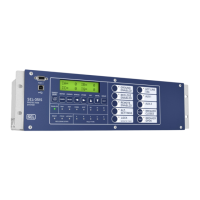
Human-Machine Interface
Front-Panel
Automatic Messages
The relay displays automatic messages, overriding the rotating display, under
the conditions described in Table 8.1, with the relay failure having the highest
priority, followed by trip and alarm when the front-panel setting
FP_AUTO := OVERRIDE.
If the front-panel setting FP_AUTO := ROTATING, then the rotating display
messages continue and any TRIP or ALARM message is added to the rotation.
Relay failure will still override the rotating display.
Front-Panel Security
Front-Panel Access Levels
The SEL-787 front panel typically operates at Access Level 1 and provides
viewing of relay measurements and settings. Some activities, such as editing
settings and controlling output contacts, are restricted to those operators who
know the Access Level 2 passwords.
In the following figures, the padlock symbol indicates restricted activities.
Figure 8.2 Access Level Security Padlock Symbol
Before you can perform a front-panel menu activity that is marked with the
padlock symbol, you must enter the correct Access Level 2 passwords. After
you have correctly entered the password, you can perform other Access
Level 2 activities without reentering the password.
Access Level 2 Password Entry
When you try to perform an Access Level 2 activity, the relay determines
whether you have entered the correct Access Level 2 password since the front-
panel inactivity timer expired. If you have not, the relay displays the screen
shown in Figure 8.3 for you to enter the password.
Table 8.1 Front-Panel Automatic Messages (FP_AUTO := OVERRIDE)
Condition Front-Panel Message
Relay detecting any failure Displays the type of latest failure (see Section 10: Testing
and Troubleshooting).
Relay trip has occurred Displays the type or cause of the trip. Refer to Table 9.1
for a list of trip display messages.
Relay alarm condition has
occurred
Displays the type of alarm. The TRIP LED is also flashing
during an alarm condition.



 To Next Page