IPECS Release 5
Feature Description & Operation 5.0
2-125
Feature Server UMS Group
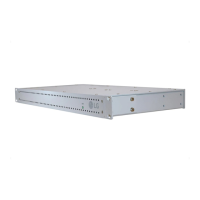
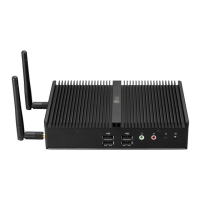
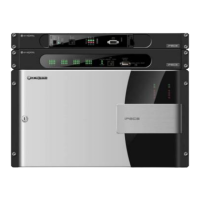
The Feature Server is a PC based TAPI application with high-end Auto Attendant, Voice Mail and
Unified Messaging Service (Voice/Fax and e-mail). The iPECS Feature server receives calls, plays
announcements, stores voice messages and forwards them as wave file attachments to the user’s e-
mail. The application also receives Faxes and forwards them as attachments to e-mail. The Text-to-
Speech option permits listening to e-mails as well as voice mails.
Net VM
This group is defined to support a Centralized Voice Mail system for a networked environment. At
supported systems, the group is used to handle the AA/VM requirements from the central iPECS.
The Net VM group may be an external VM system or the iPECS Feature Server.
UCS Group
This group is defined to support the Unified Communication Solution available with the iPECS
system.
Group Announcements
Station Group routing can be augmented with announcements recorded in the VMIM/VSF AA/VM.
Callers can be routed to one of several user-recorded announcements. The system answers the call
and plays the defined 1
st
announcement to the caller. The announcement may provide the caller
with routing options for Caller Controlled Routing. The 1
st
announcement may be “Guaranteed”
meaning it will play in full before routing the call. A 2
nd
announcement can be provided to the caller
should queue timers expire.
Operation
Conditions
1. The number of groups and member stations per group are given in Table 1.2-1.
2. Station Group calls are not routed to member stations that are in DND.
3. When a member of a Circular, Terminal, or Ring Group activates Call Forward, calls to the
group may still route to the member based on the Member Forward option.
4. A call transferred to a Station Group will follow the routing for the group and will not initiate the
Transfer Recall process.
5. Calls to a Station Group receive either ring-back tone or MOH while queued to the group.
6. Calls, which are not answered in the Overflow time, are routed to the defined Overflow
destination, station, group, etc. If no Overflow destination is defined, the call is dropped after
expiration of the Overflow timer.
7. One of the 70 VMIM/VSF announcements may be assigned as the Overflow destination.
These announcements allow for Caller Controlled Routing.
Programming
STATION GROUPS 1. Station Group Assignment (PGM 190)
2. Station Group Attributes (PGM 191)
3 Pickup Group (PGM 192)


 To Next Page