AP-578
2/21/97 12:57 PM 24329102.DOC
INTEL CONFIDENTIAL
(until publication date)
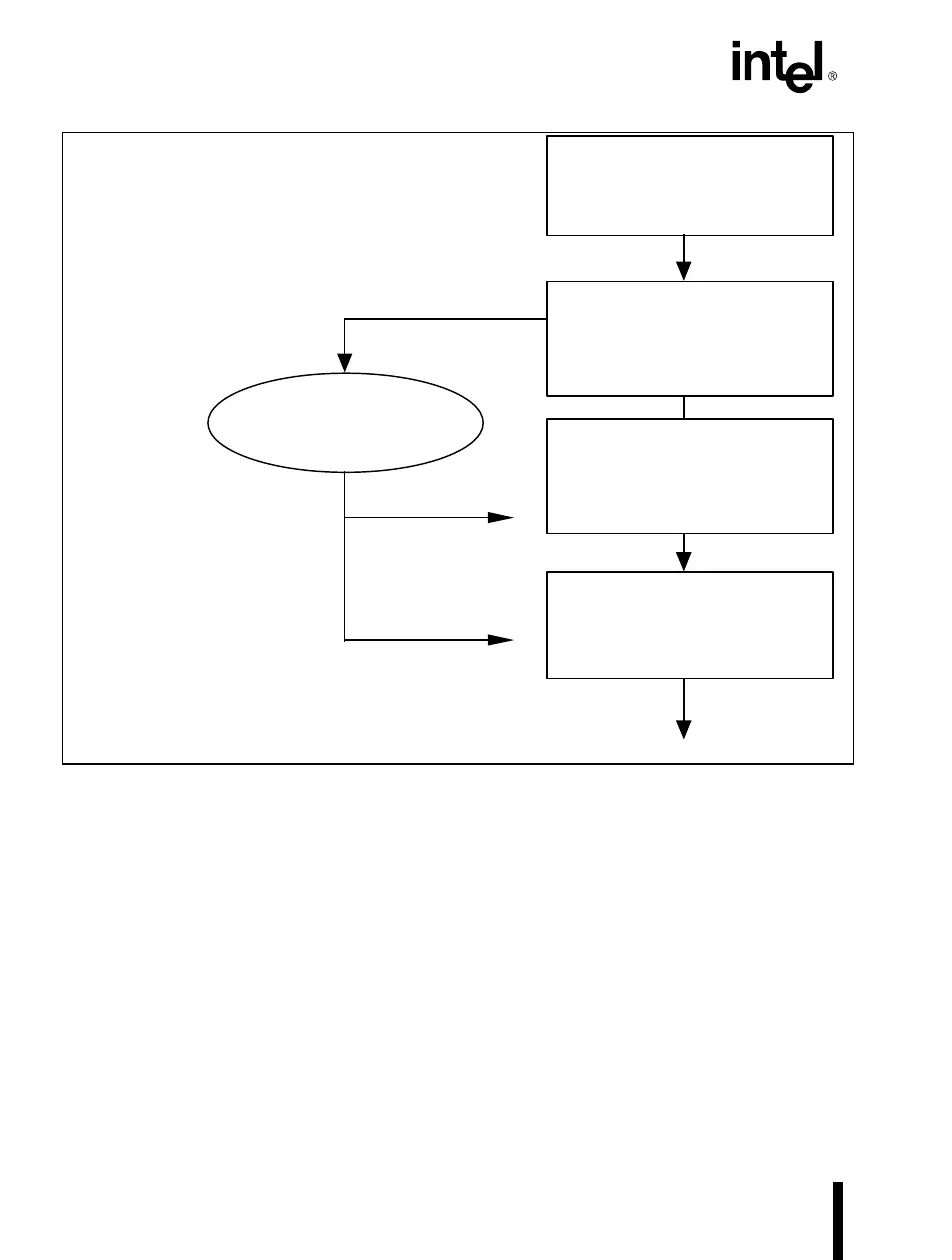
Exception generating
FP instruction
Start of the
“No-Wait” FP
instruction
Assertion Of FERR#
by the processor
System Dependent
Delay
External Interrupt
Sampling Window
Window CLOSED
Case I
Case II
Assertion Of INTR
pin by the system
Figure 3: Timing of Receipt of External Interrupt
Figure 3 assumes that a floating-point instruction
which generates a “deferred” error (as defined
above in the Section 2.3.1), which asserts the
FERR# pin only on encountering the next floating-
point instruction, causes an unmasked numeric
exception. Assume that the next floating-point
instruction following this instruction is one of the
“No-Wait” floating-point instructions. The FERR#
pin is asserted by the processor to indicate the
pending exception on encountering the “No-Wait”
floating-point instruction. After the assertion of the
FERR# pin the “No-Wait” floating-point instruction
opens a window where the pending external
interrupts are sampled.
Then there are two cases possible depending on
the timing of the receipt of the interrupt via the INTR
pin (asserted by the system in response to the
FERR# pin) by the processor.
Case 1
If the system responds to the assertion of FERR#
pin by the “No-Wait” floating-point instruction via the
INTR pin during this window then the interrupt is
serviced first, before resuming the execution of the
“No-Wait” floating-point instruction.
Case 2
If the system responds via the INTR pin after the
window has closed then the interrupt is recognized
only at the next instruction boundary.
There are two other ways, in addition to Case I
above, in which a “No-Wait” floating-point
instruction can service a numeric exception inside
its interrupt window. First, the first floating-point
error condition could be of the “immediate” category
(as defined in Section 2.3.1) that assert FERR#


 To Next Page