3/24/97 4-23 CPU Organization
split into 2 pieces: the high priority portion, and the lower priority portion. The high priority
portion remains associated with the original interrupt vector. The lower priority portion is
associated with the interrupt vector for software interrupt 5. At the completion of the high
priority portion of the ISR, the code sets the request bit for software interrupt 5, then returns. the
remainder of the ISR, now actually the ISR for software interrupt 5, executes when it becomes
the highest priority pending interrupt.
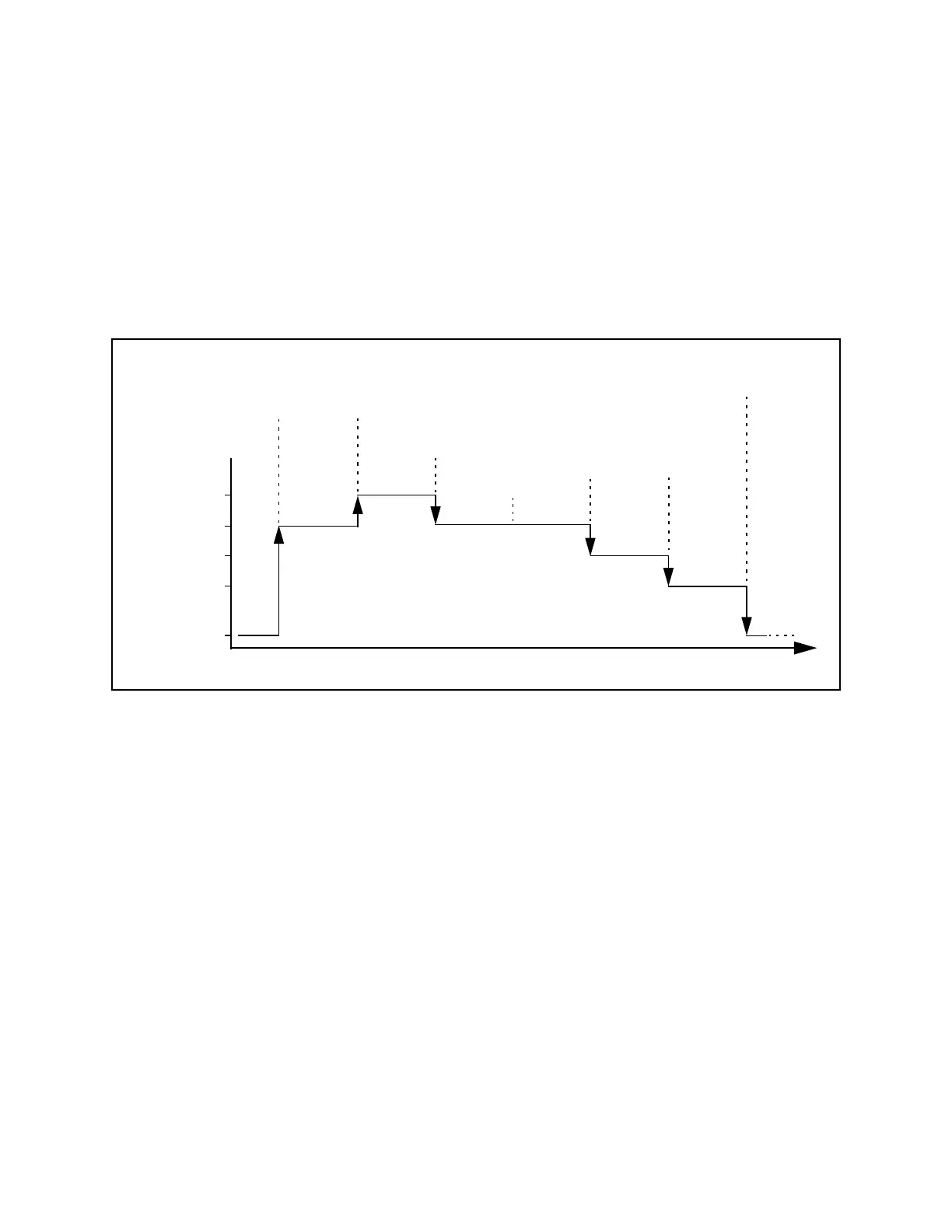
The diagram in Figure 4.16 shows the same sequence of events as in the example of priority
inversion, except using software interrupt 5 as just described. Note that the code now executes in
the correct order (higher priority first).
Trap Interrupts
Trap Interrupts are generated by the TRAP instruction. TRAP 0 through TRAP 15 are defined
and may be used as required by applications. Trap Interrupts are intended to support application-
specific requirements, as a convenient mechanism to enter globally used routines, and to allow
transitions between user mode and system mode. A trap interrupt will occur if and only if the
instruction is executed, so there is no need for a precedence scheme with respect to simultaneous
traps.
The effect of a TRAP is immediate, the corresponding TRAP service routine is entered upon
completion of the TRAP instruction.
See Chapter 6 for a detailed description of the TRAP instruction.
4.8.2 Interrupt Service Data Elements
There are two data elements associated with XA interrupts. The first is the stack frame created
when each interrupt is serviced. The second is the interrupt vector table located at the beginning
Figure 4.16 Example use of software interrupt (see text)
Level 12
interrupt
occurs
Level 10
interrupt
occurs
Level 8
interrupt
occurs,
but waits
for level
10 to
complete
Software
interrupt
5 issued,
return to
level 10
Return
from level
level 10,
level 8
interrupt
serviced
Return to
level 0
Time
Execution
Priority
0
8
10
5
12
Return
from level
8, level 5
software
interrupt
serviced


 To Next Page