6 Mounting
Maschinenfabrik Reinhausen GmbH 202060 3587317/21 ENTAPCON
®
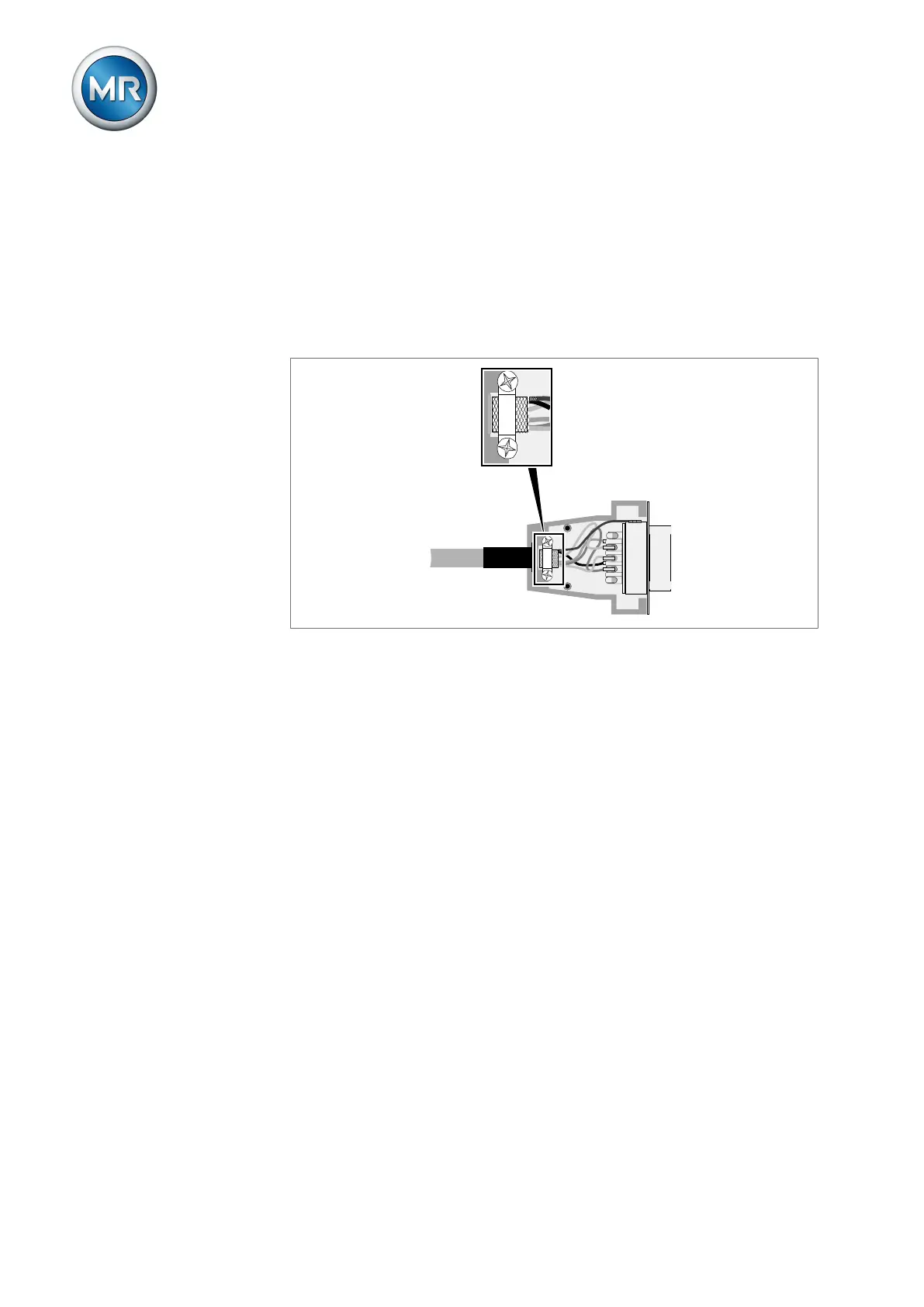
D-SUB 9-pole plug connection
Only use 9-pole D-SUB plugs with the following characteristics:
▪ Plug housing is metallic or metal-plated
▪ Cable shielding is connected with the plug using one of the two following
variants:
– Shielding is screwed down with traction relief.
– Shielding is soldered with plug housing.
Figure43: Example of a soldered shielding on a plug housing
6.6.3 Information about laying fiber-optic cable
To ensure the smooth transfer of data via the fiber-optic cable, you must en-
sure that mechanical loads are avoided when laying the fiber-optic cable and
later on during operation. Also observe the information from the manufac-
turer of the fiber-optic cable and the following instructions:
▪ Radii must not fall below the minimum permissible bend radii (do not bend
fiber-optic cable).
▪ The fiber-optic cables must not be over-stretched or crushed. Observe the
permissible load values.
▪ The fiber-optic cables must not be twisted.
▪ Be aware of sharp edges because they can damage the fiber-optic cable's
coating during laying or can place mechanical loads on the coating later
on.
▪ Provide a sufficient cable reserve near distributor cabinets. Lay the re-
serve such that the fiber-optic cable is neither bent nor twisted when tight-
ened.


 To Next Page