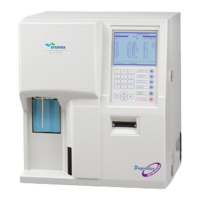
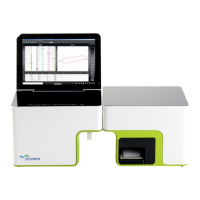
Sysmex XP-300 7-7
Sample Analysis
January 2012
7.7 Specimen requirements
Type of specimen
Blood specimens should be collected either by venipuncture for
processing in whole blood mode or micro sampling by skin puncture
for capillary mode processing. For micro sampling the blood can be
obtained from the earlobe or finger of an adult (preferably the latter)
or from the heel of an infant. Ideally, large drops of blood should
exude slowly but spontaneously, and only the very gentlest
squeezing is permissible. If it is necessary to squeeze firmly to obtain
blood, the results are unreliable.
Conditions of collection
Venipuncture specimens should be collected into EDTA
anticoagulant (EDTA-2K, EDTA-3K or EDTA-2Na) and processed
within 4 hours of collection. If specimens cannot be processed within
4 hours, they should be refrigerated at 2 - 8ºC. Before processing
refrigerated specimens should be allowed to warm up to room
temperature (minimum 15 minutes), then mixed, preferably by
rotation, for at least 2 minutes.
Micro-sampling specimens may be diluted directly into the diluent
without utilization of anticoagulant, or may be collected into micro
collection devices with EDTA anticoagulant for dilution at a later
time.
Stability of whole blood specimens
When the specimen is left unrefrigerated for more than 4 hours
certain changes occur within blood cells, which may produce
misleading results of clinical significance. Erythrocytes swell, the
MCV increases, as does the RDW-SD. Platelets also swell resulting
in an increased MPV and P-LCR. The total WBC count may
decrease and the reliability of the electronic differential leukocyte
count diminishes. The degree of change is variable depending on the
specimen and the temperature at which it is stored. These changes are
largely prevented by storage at 2 - 8ºC.



 To Next Page