Brake-6
4. Adjust the stroke of pedal if necessary
a. Rotate the pedal push bar to adjust the free stroke if the stroke
length is improper.
b. Start the engine to confirm the free stroke of pedal.
c. Check the height of pedal after adjusts the free stroke of pedal.
d. The height difference of brake pedal and clutch pedal to front
apron is 0
8mm.
e. The height difference of brake pedal and accelerator pedal to the
front apron is 45
5mm.
Vacuum assist
Remarks:
Use the vacuum assist tester to check the operation of vacuum
assist if possible.
1. Operation inspection
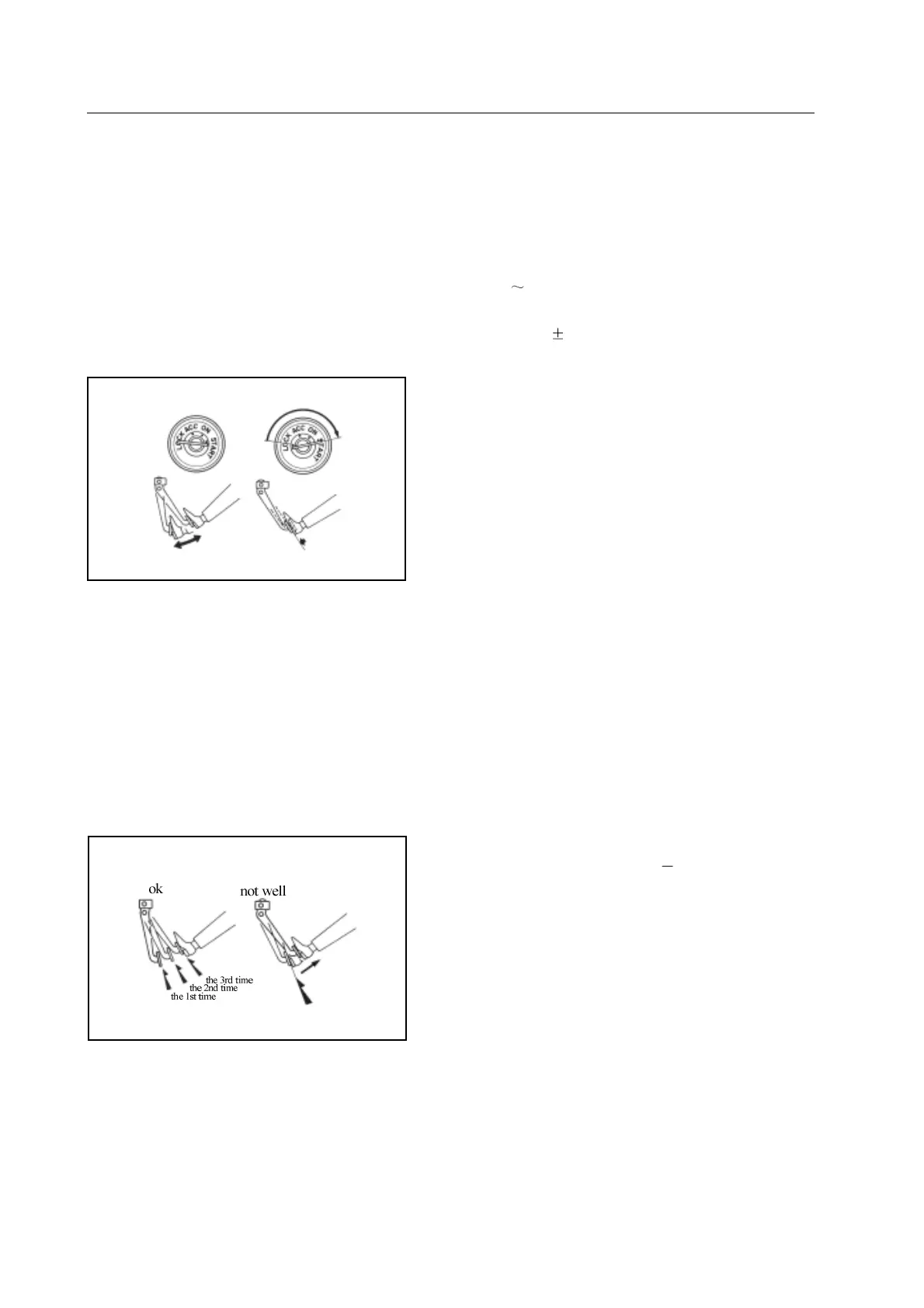
a. Step on the brake pedal for several times before start the engine
and check the reserved distance which should not be changed.
b. Step down the brake pedal and start the engine. If the pedal
moves downwardly a little, then it means the normal operation;
if the brake pedal moves upwardly, then it means the brake
assist is damaged.
2. Air tightness inspection
a. Start the engine and shut off it after 1
2 minutes. Step down the
brake pedal slowly for several times. If the pedal moves
downwardly all long at the first time, but moves upwardly little
by little after second or third times, then it means the vacuum
assist has the sound air tightness. If the pedal height is without
variety, then it means the brake assist is damaged.
b. Step down the brake pedal when the engine is operating; then shut
off the engine but step down the pedal, if the pedal keeps the
stroke without variety within 30s, then it means the vacuum
assist has the sound tightness; if the brake pedal moves upwardly,
then it means the brake pedal assist is damaged.



 To Next Page