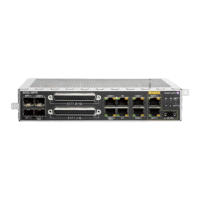
Chapter 2. 9500 MXC Terminals
Vol. II-2-24 Alcatel-Lucent
IDU ES Applications
IDU ES may be used to provide single-hop connections or used as a radio
backbone in multiple-hop star or ring networks.
Refer to:
• Basic Network Applications on page 2-24.
• Ring Applications on page 2-26
Basic Network Applications
Simple Link
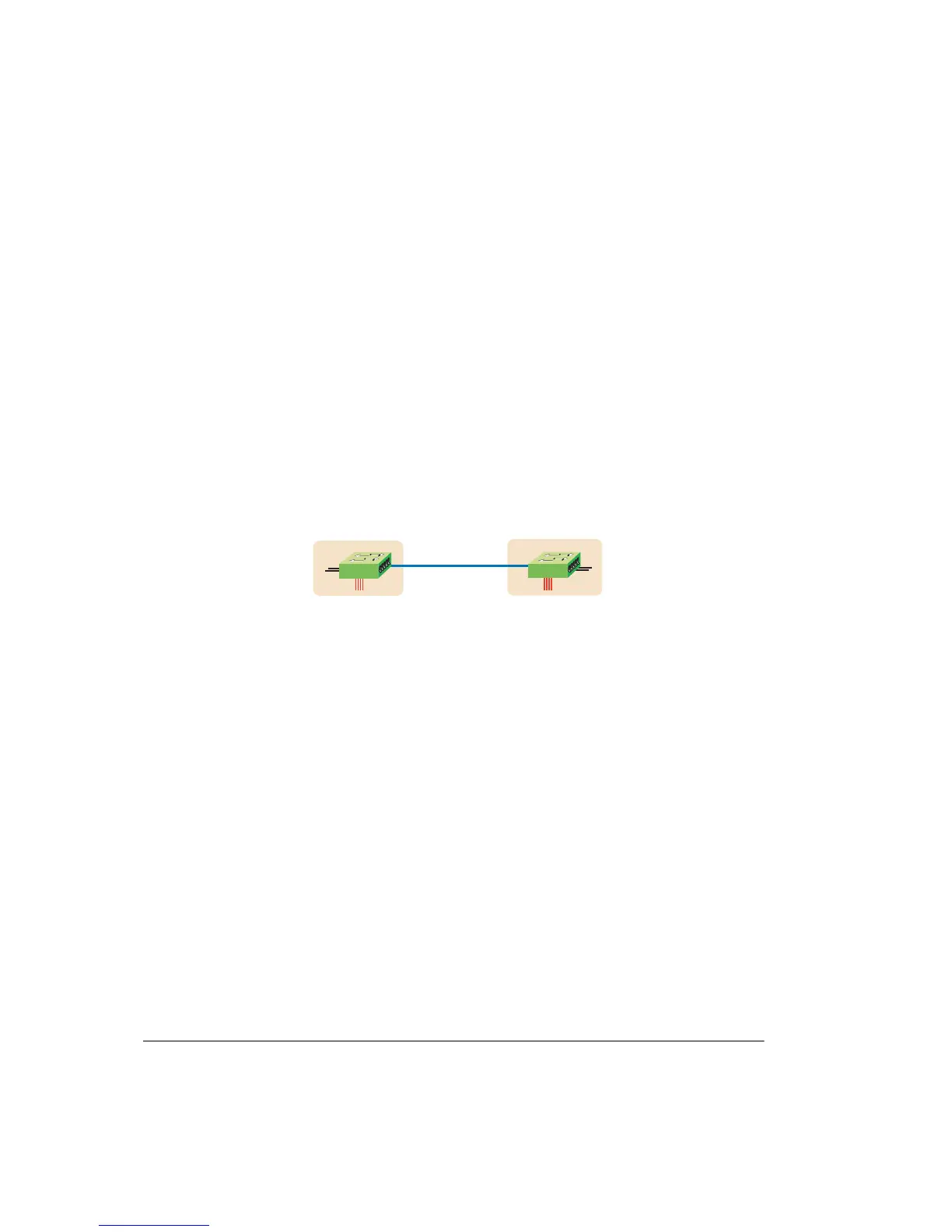
Figure 2-9 illustrates basic link operation where the IDU ES directly supports up
to 4 hosts, which may all be on a common LAN, or prioritized in VLAN mode on
up to four LANs over two independent link transport channels, C1 and C2.
Figure 2-9. Basic IDU ES Link
Using one transport channel, IDU ES supports Ethernet capacities to 98 Mbps.
Using both channels, IDU ES supports two separate LANs to a combined
Ethernet maximum of 196 Mbps (IDU ES 200 Mbps option).
Link capacity may be configured to support Ethernet together with E1 or DS1
wayside tribs, up to a maximum 8 waysides in 1xE1/DS1 increments. For
example, a radio configured for a throughput of 106 Mbps (IDU ES 100 Mbps
ETSI option) may be used to support:
• 106 Mbps Ethernet using both transport channels and no E1 tribs. The split
between channel (LAN) assignments may be 53/53 Mbps through to 98/8
Mbps.
• 104 Mbps Ethernet and 1xE1, through to 90 Mbps Ethernet and 8xE1.
LANs supported on transport channels C1 and C2 cannot be paralleled without
use of an external aggregation or trunking switch, as doing so will create an IP
loop.
IDU ES
IDU ES
1- 4 10/100Base-T
LAN ports
1- 4 10/100Base-T
LAN ports
E1/DS1
trib options
E1/DS1
trib options
C1/C2 C1/C2



 To Next Page