Model 831 Manual Quality Indicators 15-27
cannot be edited, therefore individual decays cannot be
included or excluded from the ensemble.
Quality Indicators
The Model 831 provides a variety of measurement “quality
indicators” using criteria described in ISO 3382-2:2008(E).
For more information, including the equations used to
calculate each metric, please refer to ISO 3382-2:2008(E).
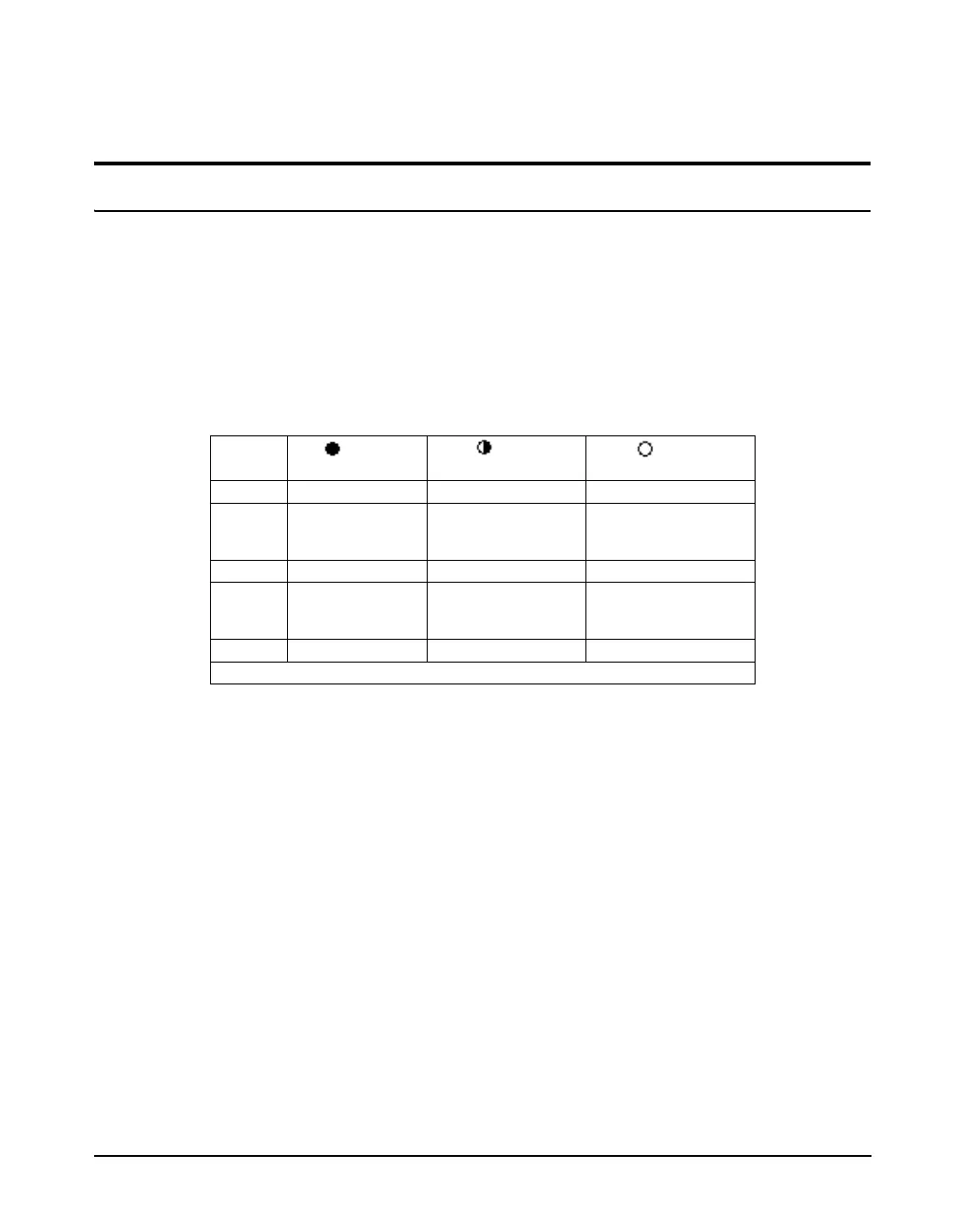
Each quality indicator is described below, and Table 3-2
shows the criteria for being considered “Good”, “Fair”, or
“Poor”.
Table 15 - 2 Quality Indicator Criteria
BT – BT is the product of the filter bandwidth and the T20
or T30 decay time for that frequency. BT is used to
determine if the measured reverberation time may have been
influenced by the filter response time. See ISO 3382-
2:2008(E) Section 7.3 equation 4.
BK – BK is a measure of the dynamic range between the
excitation signal and the background noise level. BK is
calculated from LZmax when using the Impulse method, and
from LZeq when using the Interrupted Noise method. See
ISO 3382-2:2008(E), Sections 5.2.1 and 5.3.2.
NL – NL is the degree of non-linearity of the T20 or T30
portion of the decay curve, and is reported as permillage
(parts per thousand) deviation from perfect linearity. See
ISO 3382-2:2008(E), Annex B.2.
=Good =Fair =Poor
BT >16 NA ≤ 16
BK
≥ 35 dB (T20)
≥ 45 dB (T30)
NA
< 35 dB (T20)
< 45 dB (T30)
NL ≤ 5‰ 5‰ < NL ≤ 10‰ > 10‰
Cu 0%≤ Cu ≤ 5%
5% < Cu ≤ 10%
-5% < Cu < 0%
> 10%
≤ -5%
SD ≤ 5% 5% < SD ≤ 10% > 10%
NA = Not Applicable


 To Next Page